
Cape Town needs a Budget of belonging - IOL
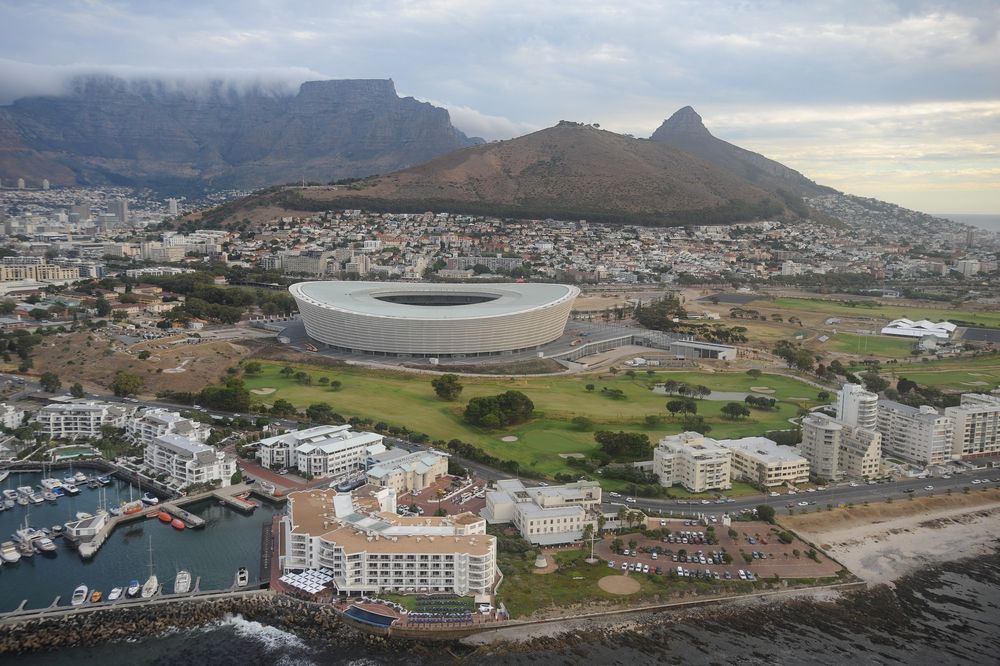
The author calls for a Cape Town budget focused on affordability, housing, jobs and a stronger sense of belonging.
In April, I wrote an open letter to Mayor Geordin Hill-Lewis.
I said Cape Town's proposed budget was not a Budget of Hope. It was a Budget of Anxiety.
Perhaps the more important response, however, is not another argument between politicians. It is the experience of you, Capetonians yourself.
Ask the family opening its municipal account.
Ask the worker travelling from the Cape Flats to work every morning.
Ask the young person looking for their first job.
Ask the family who has been waiting years for housing.
Ask the small trader trying to build something.
Does Cape Town feel more affordable? More accessible? More hopeful? More ours?
Cape Town has money. Cape Town has assets. Cape Town has land. Cape Town has skills and institutional capability.
So scarcity cannot always be the answer.
What are Capetonians getting for their R87 billion?
The final budget changed after my April letter because of the public outcry.
The City says it will invest around R40 billion in infrastructure over three years and that 75% of that investment will directly benefit lower-income households.
Words.. Lets see and measure it in people's lives. For every billion rand spent, tell us:
I call this the People's Return on the Rand. A budget is not successful merely because government spent the money. It succeeds when people's lives improve.
There is another balance sheet alongside the City's financial statements.
The household balance sheet. Electricity. Water. Rates. Rent. Transport. Food. School. Childcare.
Families experience these costs together. That is why the April tariff controversy matters.
On 30 April, the Western Cape High Court declared Cape Town's 2025/26 city-wide cleaning, water and sewerage charges unlawful, invalid and unconstitutional. Despite public outcry, this did not produce remorse and humility. Where is the apology Mr Mayor…
Make legitimate municipal relief easier to access. Design systems so qualifying households are identified wherever lawfully and administratively possible rather than forcing vulnerable residents through unnecessary bureaucracy. Examine the municipal costs imposed on early-childhood-development centres and other community institutions.
A capable city should make people's lives easier, not make difficult in red tape.
Cape Town also imposes another economic burden.
It doesn't appear on your municipal account.
Live far from work and you pay it every morning.
Taxi fare. Petrol. Travelling time. Childcare complications. Time away from your children. Opportunities you cannot reach.
That is why housing cannot be separated from economic policy. Here the DA has failed …
A home close to opportunity is an income intervention.
Yet we repeatedly hear about land being “identified”, “packaged”, “released” and placed in a “pipeline”.
But Capetonians cannot live in a pipeline.
Identified. Released. Approved. Financed. Built. Occupied. After 20 years of Democratic Alliance rule in Cape Town they have build very few homes but sold lots of public land for private developers.
Salt River Market demonstrates why that distinction matters. The planned 970-unit project is real, but construction had still not started when the site was used this week to launch another housing pledge.
Tafelberg taught us an even bigger lesson about public land: land owned by the people carries public obligations.
Public land is not simply property on a balance sheet.
It is a strategic resource for building an integrated inclusive city.
Cape Town can build infrastructure while still asking whether enough of the economic value created by that spending circulates through Cape Town households.
What skills remain when the project ends?
How many local enterprises move from survival to sustainability?
A billion-rand project should leave behind more than concrete.
It should leave behind skills, enterprises, livelihoods and capability.
This is why I am standing as a candidate.
Not because Cape Town has nothing that works. It does. It must work better for more Capetonians.
The deeper question is whether a capable, wealthy city can make its capability work harder for all its people.
A city where you can afford to live.
Where you can find work and build a business.
Where public land creates public value.
Where infrastructure connects people to opportunity.
Where the budget is judged not only by what government spends, but by what households gain.
This requires co-creation with Capetonians, because council does not possess all the wisdom of a city.
After more two decades under the same governing party, Capetonians are entitled to interrogate the record and compare alternatives. Capetonians deserve better.
The question is bigger than whether Cape Town “works”.
Does Cape Town work for you and us ?
And when R87.8 billion is spent in our name:
My April letter diagnosed the anxiety.
Now I want us to build the alternative.
Affordability. Housing. Jobs. Dignity. Opportunity. Belonging.
A Cape Town economy for the many. JOIN ME…
* Faiez Jacobs is a former Member of Parliament, founder of The Transcendence Group, Capetonian, Activist, and Servant of the People.
** The views expressed do not necessarily reflect the views of IOL.


