
Canada’s car theft crisis was fuelled by tech. Now it’s powered by rocks and violence - Toronto Star
Naz Tokhi, 19, was convicted of 10 home invasion car thefts — and charged with more while out on bail. Inside his terrifying crime spree.
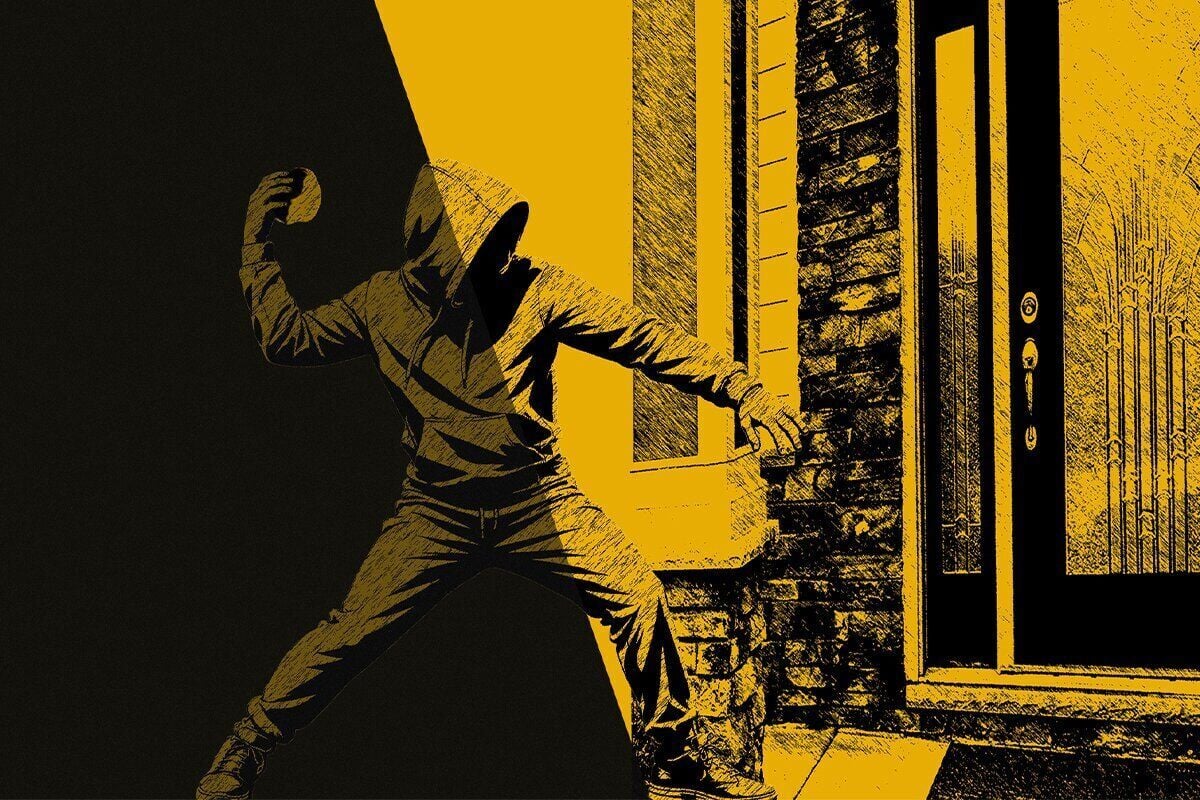
With the grace of a major league pitcher, Naz Tokhi’s partner-in-crime plants his feet, transfers his weight back, then explodes forward with a snap of his right arm, firing a carefully selected rock through the glass of a front door. He reaches in, turns the lock, and both men enter the Toronto home, running shoes crunching over shattered glass.
Tokhi’s goal is to obtain the car keys belonging to a $140,000 BMW parked in a Toronto driveway. He will do this 10 times over a span of two months. When he is caught, he will be released on bail, then allegedly go back to stealing cars. The vehicles he and his crew take are worth between $80,000 and $200,000.
Many of these cars are shipped out of Canada’s ports to the Middle East and West Africa — many ending up in Russia where the cars can be sold for twice their value.
In cop jargon, young men like 19-year-old Tokhi are the “recruits” or “thieves.” They split a few thousand tax-free dollars for each job.
This is the state of car theft these days — from thefts exploiting cutting-edge technology a few years ago to literal Stone Age methods.
What police have called Canada’s “car theft crisis” began during the COVID-19 pandemic. For three years, thefts exploded to record levels as criminals took advantage of technology to silently make off with cars and SUVs in the dead of the night, as you and your neighbours slept. By 2023, more than 80 vehicles were being stolen every day in the Greater Toronto Area as teams of thieves used a “relay attack,” employing a modified iPad to pick up the radio signal between a key fob inside a house and the car in the driveway. It allowed them to unlock the car door, clone the key fob and drive off. I know, because that’s how my Toyota Highlander was stolen in the fall of 2021. I tracked it to a Halifax port where it was nestled with a second Highlander, about to set sail for the Middle East.
Police and homeowners have since fought back. They purchased signal-blocking Faraday bags and boxes to shield their key fobs. Some figured a microwave would do the trick, so they saved the cash. There were other hacks. When it was discovered that thieves used the 17-character Vehicle Identification Number (VIN) visible under a car’s windshield to clone the key fob, people covered the VIN using something thin enough to fit between the dashboard and glass. (I used a CD — Bruce Springsteen.) Another popular one was purchasing a “port blocker” to lock the access port under the dashboard, which mechanics use to diagnose your car and thieves use to hook up their key-cloning device.
The bad guys were stymied, briefly.
By 2026, the rate of thefts has fallen from the height of the pandemic, along with overall crime rates. But the rate of car thefts today is still much higher than before the pandemic. Thefts have become less reliant on technology. Today, “relay thefts aren’t even remotely common,” says Durham Regional Police Det. Josh Brown, and some auto manufacturers have even changed key fob technology so they go to sleep when not moving — there is no signal to pick up outside the house.
Meanwhile, many young, low-level criminals have been arrested. But some of these same thieves are already out of jail, new ones have been recruited, the serious organized criminals at the top were never caught, and rather than go back to how it was before the pandemic, the state of the car theft crisis has settled into a new, often more violent normal.
Which brings us to Naz Tokhi. His tale is one part of the story of how cars get stolen in Canada in 2026.
That is what this five-part series is about. Each will tell a part of the tale, from how it’s done to the hunt for the elusive Mr. Bigs, who police have been unable to catch because they hide behind encrypted apps like Telegram, Signal and WhatsApp.
Today, the story of home invasion car thefts in one crime spree, one front door at a time.
Bradley Rosenberg happened to be visiting his parents in August 2023, staying overnight at their spacious bungalow on Restwell Crescent, a heavily treed street in North York. His mother drove a 2024 Mercedes-Benz C300, and she kept it tucked in the garage, so Rosenberg parked his brand-new blue BMW X7 on the brick driveway. They had a nice evening catching up, and everyone was long asleep when two hooded, masked men showed up on the front porch at 12:38 a.m. Tokhi was one of them.
Their arrival a few minutes earlier had triggered a motion sensor on the Rosenbergs’ garage, and a light had snapped on. From the road, the driver of a white SUV, wearing a light grey hoodie, scans the front porch with a flashlight. Seeing no movement, he gets out and saunters up the driveway, as calmly as if he is making a daylight delivery. He checks the double doors in the front. Locked. Both have a large glass pane; he peers in, but the blinds are closed on the doors. Stooping, he runs his hand along the porch to the left of the door in case there is a key. No luck. Straightening, he walks around the house and onto the rear deck. No luck with the back door either. He returns to the white SUV. Tokhi is in the passenger seat, wearing a dark hoodie. They drive away.
Rosenberg, his mother and father are oblivious to what is happening outdoors. Though they have security cameras, both outside and in the front foyer, the system — like most — does not loudly alert the homeowner; it just records what is happening.
Just after 2 a.m., the white SUV returns. It parks across the end of the driveway. Both men get out: Grey Hoodie and Tokhi. Grey Hoodie has never been identified. They leave their driver and back passenger doors open, headlights on. Tokhi rummages in the back seat and emerges with a square paving stone. If the door was solid with a narrow sidelight, they’d choose a smaller rock to break the glass with a clean throw.
They check out the back deck entrance again, then walk up the steps to the front porch. A vigorous discussion takes place, likely: Who is going to throw the stone? How best to throw the stone? Tokhi hands the paver to his partner; they slap hands, then Tokhi covers his ears against the noise. The flat stone bursts through the glass, collapsing the blinds, too. With a kick of their shoes to clear the remaining glass, they enter.
Rosenberg wakes up. Groggy, clad only in boxers, he walks out of his bedroom to see two men in his mom and dad’s house. Both are slim, medium height, one slightly taller than the other. They’re early 20s, Rosenberg thinks. They grab his mother’s purse from a table and run out the door. The keys in the purse belong to his mother’s car in the garage. When they don’t start Rosenberg’s BMW, the men run back in.
“Give me the keys to your car,” Tokhi barks at Rosenberg, shining a light in his eyes. Rosenberg stands his ground.
Tokhi commands Grey Hoodie. “Go over there and f--- him up.”
Rosenberg moves toward them, waving an arm, stepping gingerly in his bare feet, trying to avoid the glass shards spilled across the tile floor.
“Get the hell out of the house; the police are coming,” Rosenberg yells. In reality, he has not had time to call.
Both men retreat, stepping through the centre of the broken door. They walk past the still-locked BMW, jump in the white SUV they arrived in and drive off, leaving Rosenberg to call the police and sweep up glass.
Over the next six weeks, Tokhi will move across the city looking for other cars, with some failures, then increasing success. Footage from 9 other homes shows a similar pattern.
On Sept. 11, 2023, just after 3 a.m., Tokhi and another man roll up in front of Mary O’Donohue’s house on Glazebrook Avenue. O’Donohue is asleep upstairs. Her son and niece are in the house, too. Her red, three-year-old Mercedes GLE 450 had caught Tokhi’s eye. A crash downstairs makes O’Donohue sit up in bed. She heads downstairs slowly — she’d just had a hip replacement. There are two young men in her living room, masked, wearing hoodies. Tokhi is looking on cabinets and tables for the car keys. The tile floor is strewn with glass. The other man advances up the stairs toward her.
“We won’t hurt you if you give us the keys to the Benz.”
O’Donohue is groggy from sleep, and Tokhi is speaking so quickly she doesn’t understand his last word. She tells him so. She has never thought of her car as a “Benz.” He yells again, and her brain catches up. They can have the keys, but she needs to find them. The second man grabs her arm and pulls her down the stairs. It’s hard moving that swiftly, given her new hip. O’Donohue heads to the kitchen, which brings a warning shout from Tokhi.
Naz Tokhi, showing off in Mary O'Donohue's Mercedes.
“I’m looking for my purse,” she explains. “That’s where the keys are.” Then she remembers. It’s upstairs. With the second man in tow, she walks back up the stairs and finds her keys. She wants to take the fob off the ring, but her hands are shaking. The man beside her tries, then gives up and throws the keys over the banister. Tokhi gets the fob off, and both men run out the door, jump into her Mercedes and speed off.
O’Donohue realizes they’ve taken her cell phone. She calls police with another phone. While she waits, she rings her father, who has an idea. She’d left her iPad at his house, and her dad’s a bit of a “techie.” He gets a hit on the Find My app. Her phone, and presumably her car, is stopped at an apartment building. Later, it moves to a mosque in Thorncliffe Park.
A few hours later, a man in another neighbourhood finds O’Donohue’s laptop and personal papers strewn on his front lawn. Police say that is typical. It’s best not to have anything in a stolen car that obviously links back to the owner. Two days later, Tokhi and another man use O’Donohue’s car to steal an electric Porsche Taycan from the driveway of Frank Gomberg’s home on Broadway Avenue in Midtown. Electric cars are rarely stolen, statistics show. Not in as much demand overseas. Gomberg had his keys in a signal-blocking Faraday box on a shelf inside the front door. Gomberg’s wallet and credit cards were also stolen and used to make hundreds of dollars of purchases at convenience stores at nearby gas bars. One gas station video later shows Tokhi, unmasked, returning to the same gas station and using Gomberg’s stolen credit card to fill Tokhi’s own blue Honda Civic with gas. That was a key piece of evidence leading to Tokhi’s conviction.
When police arrest Tokhi two months later, they find a video on his phone. It shows him, music blasting from O’Donohue’s red Mercedes, dancing around her SUV, pointing out its features, likely to whoever was going to ship it overseas.
From walk-up to drive-off, the theft of Frank Gomberg's Porsche took about 60 seconds.
As part of their investigation, police also charged Tokhi with two carjackings, but a jury acquitted him of those. One of these incidents was caught by a street camera in Markham. On a rainy Aug. 17 night, Chan Huang is in gym shorts and a T-shirt, driving home from a badminton game in his black Mercedes. He stops at an intersection and is about to proceed when a black BMW rams him from behind, pushing his car forward. Huang snaps on his hazards, and so does the SUV that hit him. When Huang gets out to check for damage, he sees a man in a dark hoodie bending over the bumper of the BMW. Suddenly, the man turns and brandishes a pocket knife. Another man comes out of the SUV, and they push Huang against his own car.
“Give me your keys, give me your keys,” the first man yells. It sounds to Huang like a Russian accent. Huang, thinking there is no point in dying over a car, hands over his keys.
Before the first man drives off, Huang hears him say to the other, “Call it in, call it in!” Huang can then be seen stumbling away along the sidewalk, dazed, watching his car disappear into the rain, followed by the SUV that hit him.
Naz Tokhi was acquitted of this carjacking. Chan Huang was left stranded in the rain.
A white BMW is parked in a driveway on Etobicoke’s The Kingsway on Sept. 25, 2023. The side mirrors — “ears” some call them — are folded out. Just after 2 a.m., that catches the eyes of Tokhi and a partner cruising west-end streets. In that model of BMW, the mirrors fold in when the car is locked. In the game of poker, that’s a “tell.”
Tokhi and his partner stop their black SUV at the end of the driveway. Tokhi hurries to the white BMW, knowing the door is unlocked. He’s wearing a Thrasher hoodie, which will ultimately be one of the pieces of evidence that leads to his conviction. Tokhi sits in the driver’s seat, opens the centre console and rifles around, most likely looking for keys, either to the house or the BMW. Tokhi gets out, closes the door carefully and runs back to the waiting SUV. A few minutes later, he is back. Keeping low, he runs up the sidewalk to the house and tries a series of keys in the front door. None open it. But he did find something helpful in the BMW: a garage door opener. He presses it and the door slides open. Inside, a Porsche: this one is a highly desirable 911 in mint condition, likely worth $150,000. But how to get it and the white BMW? There are only two of them, and somebody has to drive the vehicle they arrived in. Tokhi closes the garage door. They retreat to their SUV, and they drive off. An hour later, they are back with an extra man. It’s now 3:25 a.m.
Inside the home, Andrew Stasiw and his wife are fast asleep in bed.
Tokhi toggles open the garage door. Even if they do get the keys to the Porsche, they have a problem. A Mercedes sedan in the driveway is parked so close to the Porsche that getting it out will require a lot of manoeuvring that may take more time than they have. Tokhi and his partner confer. This time, they do not have their own rock. They spend a few minutes looking in the garden until they find an acceptable missile. They go to the front door. While Tokhi watches, his partner throws the rock through the sidelight glass pane on the right side of the door. As in most of the instances caught on camera, Tokhi covers his ears as it strikes the glass. It’s a bad throw. The rock bounces off the wood frame of the door. The second man picks it up and breaks the glass cleanly. They unlock the door and run in. One minute later, they run out, each carrying a leather bag that was just inside the door. One has the keys to the BMW, the other to the Porsche. Tokhi gets in the BMW and backs out. But the other man struggles to get the Porsche out. He drives forward, hitting the garage wall. Then back. Forward again. It’s too tight. The homeowners will be alerted now. Giving up on making an easy exit, he wrenches the wheel of the Porsche, bashes the Mercedes behind him, scrapes the passenger side of the Porsche and is out.
Tokhi has left the white BMW running and gets out to help his partner. The homeowner, Stasiw, runs out, wearing shorts and a T-shirt. He has bare feet and has run through the glass shards in his foyer. Tokhi confronts him on the driveway.
“What are you going to do about it?” Tokhi asks.
Stasiw, when he testified at Tokhi’s trial, said he thought to himself, “Yeah, you’re right … They’re just cars, right.”
He went inside and called police. In one of the videos entered into evidence from the Stasiw thefts, Tokhi’s mask has slipped down, and he is recognizable.
In another of Tokhi’s thefts, a homeowner, seeing his car about to drive off, asked if he could retrieve his golf clubs from the trunk. The thief said no. In retrospect, the homeowner was glad, because he had an Apple AirTag in the bag, which helped police find it before it was loaded into a container and shipped overseas.
One victim testified in uniform, which Tokhi’s defence lawyer objected to, concerned that it would taint the jury. She was unsuccessful. Toronto police Const. Stephen Schlender said he was asleep at his home on Hill Crescent in Scarborough on Oct. 2, 2023, with his wife and two young children when he heard a glass smash at 2:11 a.m. “Being a police officer for 12 years, I knew what was happening.” Schlender said he ran to the front door. In the driveway were two cars he owned, a black Mercedes GLS and a black Audi RS6. Three men had used a heavy piece of concrete to ram his door open. They entered his home and grabbed a plastic bag and his wife’s purse. Schlender ran out of his bedroom.
“Police! I’ll f---ing kill you. I’ll f---ing kill you,” he yelled, his voice captured by his video security system. “Get the f--- out of my house.” The men ran off, jumped into the vehicle they had arrived in and left.
As Schlender stepped down from the witness box, he locked eyes with Tokhi in the prisoners’ dock, and he kept looking at him as he walked slowly out of the courtroom.
Right after leaving Schlender’s house empty-handed, Tokhi and the other two men drove northwest across the city to North York, picking up a fourth man along the way. Thirty minutes later, they broke into the mud room of a stately home on Versailles Court. Three of the four men rushed into the house, opened a kitchen drawer and pulled out a handful of car keys. Video captures them dumping the pile of keys on the driveway and pressing each fob to see which cars lit up. A few minutes later, they left with a black 2023 BMW M4 CSL, a blue 2024 BMW i4 electric sedan, and a 2022 Audi RS6 wagon. Tokhi and his crew also took three bags from Foot Locker filled with new shoes from the mud room.
William Yow, upstairs in bed with his wife, woke up when he heard a “thunk” from downstairs. He locked their bedroom door and called 911.
Later that day, two of his cars were spotted by police, who saw men under one of them, trying to disable the GPS tracker. Police gave chase; the men jumped into the cars, drove off and crashed. Both men ran away. But a forensic team found Tokhi’s thumbprint on one of the cars — which was eventually used as evidence against him.
In this five-part series, Toronto Star chief investigative reporter Kevin Donovan takes you inside the escalating war for the city’s high-end vehicles.
Alice Bradstreet and Anjali Rajan prosecuted Tokhi. Criminal defence lawyer Sid Freeman represented him. The trial took place over two weeks in June 2026 in front of Superior Court Justice Rita-Jean Maxwell. Tokhi was facing 37 counts related to 13 home invasions and two carjackings. He was convicted by the jury of multiple counts related to 10 home invasions. His sentencing is set for October.
The trial turned on whether the jury believed that Tokhi was one of the two masked men caught on the high-quality home security videos submitted as evidence.
Bradstreet, in her closing submission, took the jury through the video evidence and said it is “plainly obvious” it is Tokhi. She pointed out that many of the theft videos showed a man Tokhi’s size, wearing a Thrasher-branded hoodie, a small bag with a distinct leather strap and a pair of Jordan shoes. Those items were found in Tokhi’s neatly organized closet when police searched his apartment after his arrest. She noted that a gas station camera captured Tokhi, unmasked, filling his own modest vehicle with gas, paying for it with a credit card stolen from one of the car theft victims. Bradstreet also pointed out that police recovered Tokhi’s fingerprint on one stolen vehicle, and his fingerprint was found on another vehicle that masked men tried unsuccessfully to steal.
In his apartment, police found a stack of cash — $11,000. She also showed the jury a video found on Tokhi’s phone of a person she said was Tokhi, “gleefully” dancing around one of the stolen vehicles, which in turn was used to steal another car. The Crown also introduced text messages from Tokhi during the crime spree where he texted a person that he had a “load car” and was “looking for payment.”
“This is proof beyond a reasonable doubt,” Bradstreet said, summing up the evidence. “This was a planned, co-ordinated effort to steal high-end vehicles without any regard for anyone sleeping soundly in their homes.”
Defence lawyer Freeman cautioned the jury not to jump to conclusions. She said the clothing on the man in the video, which was found at Tokhi’s apartment, was commonly available. As to the fingerprints, she said they must consider there could be a less ominous reason — beyond theft — that Tokhi’s prints were on those cars.
“Remember this is real life. Mr. Tokhi is a real person, and your decisions have real consequences. And the level of certainty required to convict someone of serious criminal offences is very different from the level of certainty that we need to have while sitting on our couches on a Sunday evening watching true crime or true crime documentaries.”
During Tokhi’s trial, the Crown elected to drop some of his charges. Although Tokhi’s jury was never asked to decide his involvement, one of these cases involved spectacularly brazen footage. The video from this Sept. 11, 2023, incident shows a man stealing a burgundy 2023 Land Rover Defender from a driveway at 3:50 a.m. The thief’s problem is that the homeowner has a Range Rover parked behind. The video shows the Defender, the heavier of the two vehicles, repeatedly ramming the mint-condition Range Rover until it is pushed out of the way. Then the thief drives off in the $116,000 Defender.
The jury of 11 convicted Tokhi on 10 counts.
His lawyer, Freeman, told the Star that at Tokhi’s October sentencing hearing the court will “learn all about his background.” In case after case in this series, the life stories of low-level criminals like Tokhi have ended up at the forefront when it comes time for sentencing. Many young car thieves have stories of racism, poverty, addiction, family violence and difficult immigrant experiences, and judges often cite these factors as reasons to reduce their time in custody.
It will be up to Justice Maxwell to decide how to take Tokhi’s background into account.
Naz Tokhi is accused of committing this theft while on bail for his 2023 home invasion spree.
Now, Bradstreet and co-Crown Rajan are preparing for the next trial involving Tokhi. He was released on bail after being arrested for the 2023 theft spree. Police allege he and a partner, Bilal Abdelmouniim, then carried out a new series of thefts in the summer of 2024, while Tokhi was on bail. Police have charged Tokhi and Abdelmouniim with 22 counts related to three car thefts. In one, on Montgomery Road south of Dundas Street West in Etobicoke, thieves smashed the front door glass to get in, then entered the garage, started up a man’s Mercedes-Benz GLS 63 and, to escape, rammed it backwards through the garage door. The Mercedes was found in Hamilton, along with a stolen Lamborghini. A knife and cash were found with the vehicles. Abdelmouniim’s trial is in November; Tokhi’s is next March.
The question of who Tokhi and others who steal cars get their marching orders from looms large over his case. Like many who do the grunt work, he is not talking. As the Star has found, the Mr. Bigs insulate themselves using encrypted chats — the bosses put out the word in a text blast that they are looking for a certain type of car.
“First three to respond get the job,” reads one blast.
Tomorrow: The hotel jobs. Read all the stories as they roll out at thestar.com/grandthefttoronto
Kevin Donovan is the Star’s chief investigative reporter based in Toronto. He can be reached at 416-312-3503 or via email: kdonovan@thestar.ca.


