Cachalia defends March and March interdict, says unannounced protests stretch police resources - IOL
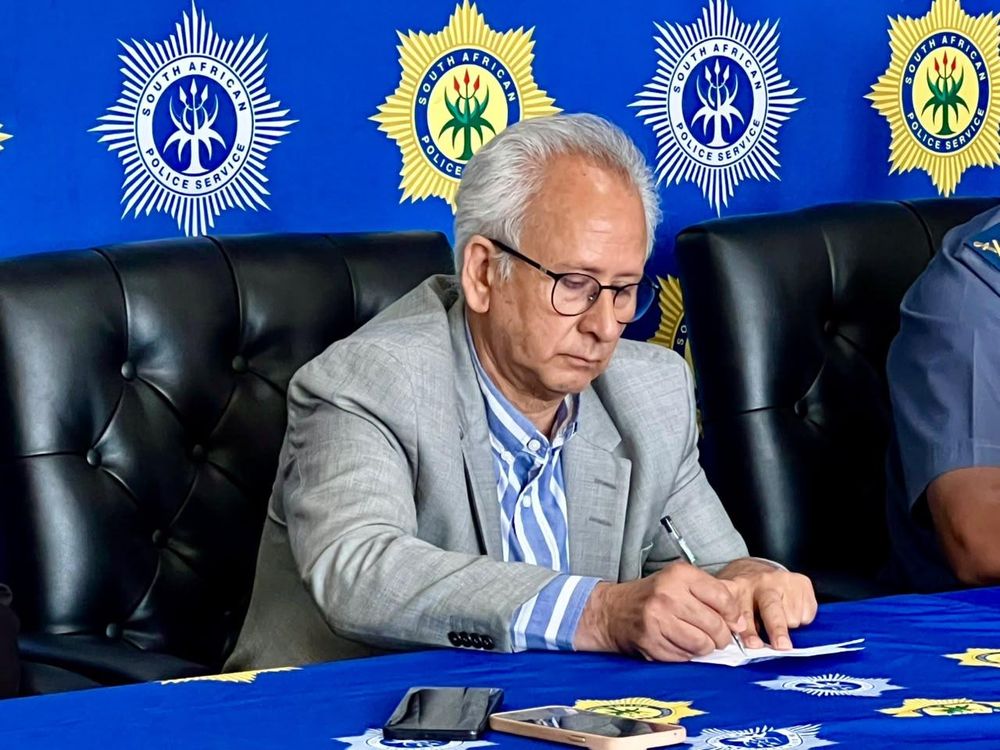
Acting Police Minister Firoz Cachalia has defended the court interdict against March and March, saying unannounced protests stretch police resources and can escalate into violence, arson and deaths.
Acting Police Minister Firoz Cachalia has defended the police's court action against the March and March movement, saying protests held without notice place additional pressure on law enforcement and can lead to violence, arson and loss of life.
Cachalia said police were being forced to divert officers and resources at short notice to deal with demonstrations that could escalate into violent confrontations, while officers themselves were also being put at risk.
He was speaking in Durban on Friday during a briefing on the South African Police Service's readiness for the November 4 local government elections, where he addressed the police's application for an interdict against the movement and several individuals.
He said marches that took place without police receiving prior notice required officers to be deployed on an unplanned basis, placing additional pressure on resources needed to maintain public safety.
He warned that such demonstrations could result in attacks on members of the public, arson and serious injuries or deaths.
Cachalia said organisers and leaders had a responsibility to ensure that demonstrations did not descend into violence, criminality and lawlessness.
He also highlighted the risks faced by police officers deployed to volatile situations, saying they were members of the same communities they were expected to protect.
“Place yourself in the position of a police officer, a 25-year-old police officer who has the responsibility to protect the people of KwaZulu-Natal in these situations. I don't think it's right. I have to be frank about that,” he said.
The minister said deploying large numbers of officers to KwaZulu-Natal came at a considerable cost to the police service, including transport, accommodation, protection and overtime.
“We are having to deploy large numbers of police officers once again in KwaZulu-Natal. We have to pay for their transport. We have to accommodate them. We have to protect them. We have to pay overtime,” he said.
Cachalia's comments come as he and KwaZulu-Natal police commissioner Lieutenant-General Nhlanhla Mkhwanazi seek to have an interim court interdict against March and March and several individuals made final.
The urgent application followed weeks of anti-immigration protests in Durban, which were accompanied by road blockades, damage to property, attacks on businesses and violence.
The Durban High Court granted an interim interdict on Wednesday, with the matter in court on Friday for the court to consider whether the order should be made final.
The application seeks to restrict the movement and named individuals from organising or participating in marches, processions, protest convoys and encampments in parts of eThekwini, including the Durban central business district and the area around the Department of Home Affairs Refugee Reception Centre on Che Guevara Road in Berea.
Police are also seeking restrictions on conduct including assault, intimidation, harassment, looting, arson, property damage and obstructing access to public facilities.
Cachalia said the application was not about denying people their right to protest, but about asking the court to clarify the legal parameters within which demonstrations should take place.
He said the police had a responsibility to protect property and the safety of people in the country, while ensuring that officers could carry out their duties without being unnecessarily exposed to danger.
“It's a very costly exercise, when the main responsibility of the police in this situation should be simply to ensure that there is a free and fair election, which is why the police officers on the ground in KwaZulu-Natal took the decision to launch this interdict, to ask the court to assist the police to establish the parameters of protest action, those parameters determined by the law,” he said.
He said the police needed the court's assistance to establish those boundaries and ensure that the right to demonstrate was not used to justify violence or criminality.