Building a firm foundation for China-US strategic stability
By continuing to browse our site you agree to our use of cookies, revised Privacy Policy and Terms of Use. You can change your cookie settings through your browser.
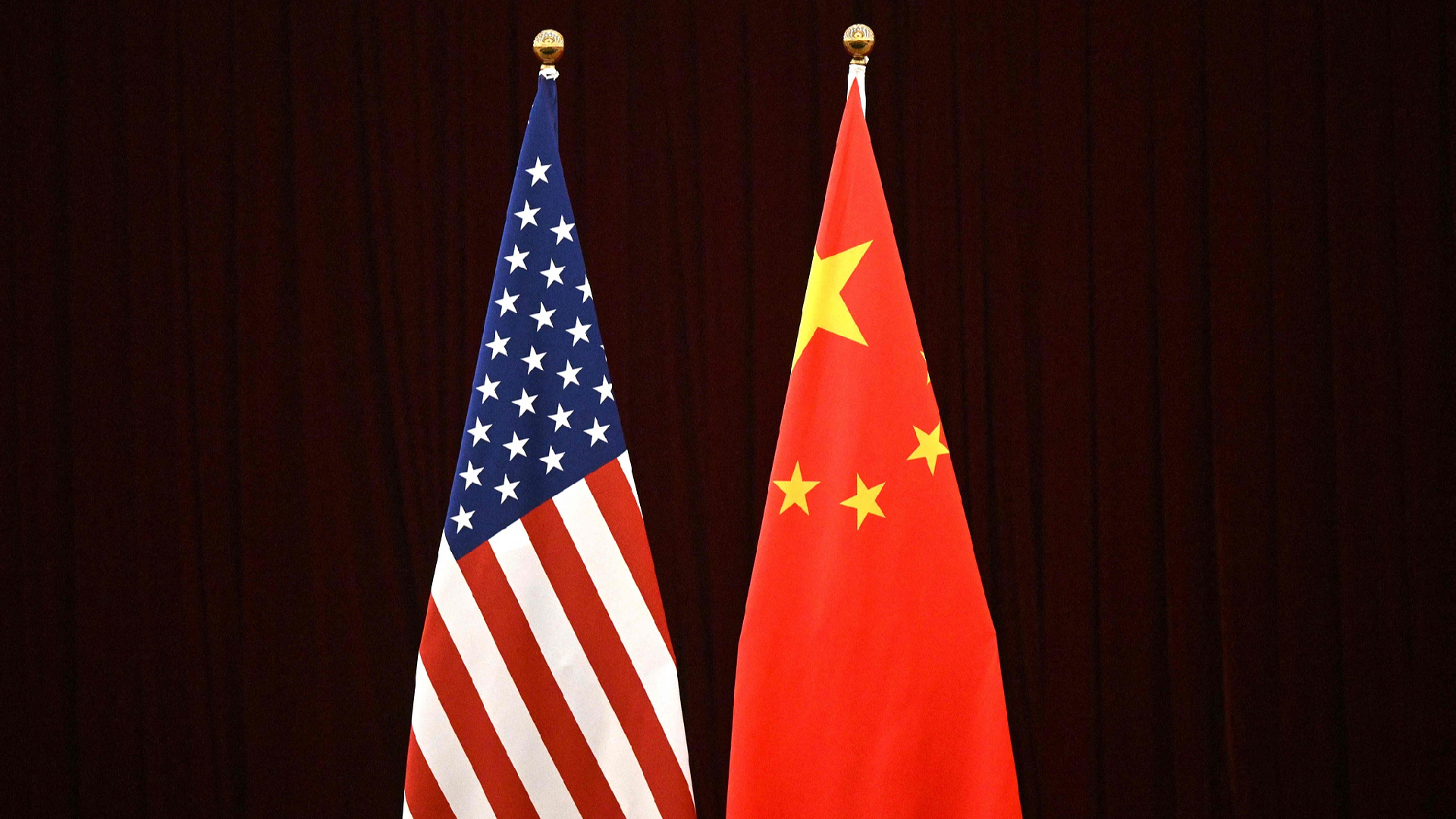
The national flags of China and the US in Guangzhou, south China’s Guangdong Province, April 5, 2024. /CFP
Editor's note: Wang Peng, a special commentator for CGTN, a research fellow at the School of Marxism and Institute of State Governance under the Huazhong University of Science and Technology (HUST). The article reflects the author's opinions and not necessarily the views of CGTN.
Chinese President Xi Jinping's three-day state visit to the US offers an opportunity to strengthen the foundations of a relationship whose consequences reach far beyond diplomacy. For people on both sides of the Pacific, its direction affects livelihoods, business confidence and expectations for the future.
It has been repeatedly emphasized that China and the US gain from cooperation and lose from confrontation. This judgment provides a practical starting point for constructive strategic stability: keeping competition within limits, managing crises and preventing conflict. Translating that understanding into durable arrangements is a responsibility both countries owe their citizens and the wider world.
For farmers in American Midwest and small Chinese exporters, predictable relations are essential to planning production, securing customers and sustaining household incomes. Crops follow growing seasons; goods have delivery deadlines. Political uncertainty can disrupt both long before any military confrontation occurs. Tariff threats and trade restrictions transmit strategic tensions through commercial networks. Buyers postpone orders, businesses delay investment, and disrupted shipping schedules add costs. A subsequent diplomatic thaw cannot immediately make up for a missed selling season or restore a customer's confidence.
This exposes a central weakness in economic coercion. Measures presented as defending national interests can impose substantial costs on the very people they are supposed to protect. In interconnected economies, pressure travels in both directions. Lost sales, higher prices and weaker employment prospects belong in any serious assessment of strategic competition.
Constructive stability therefore requires boundaries. Commercial disputes must remain open to negotiation, ordinary exchanges need protection from excessive security restrictions, and legitimate development interests deserve respect. Cooperation in agriculture, business and people-to-people exchanges can make stability tangible, giving both societies a continuing stake in preserving it.
The White House is seen in Washington D.C., the US, September 20, 2026. /CFP
The claim that China and the US are destined for war turns a historical analogy into an excuse for abandoning political responsibility. Changing power balances create pressures, but governments determine how those pressures are interpreted and addressed.
When every advance by the other country becomes evidence of hostile intent, mutual suspicion can overwhelm judgment. Restraint appears dangerous, compromise becomes politically costly, and confrontation acquires its own momentum. The greatest danger of fatalism is that it encourages decisions that help produce the catastrophe it predicts.
Rejecting inevitability also requires acknowledging real vulnerabilities. Diplomatic contact alone cannot guarantee that an incident at sea or in the air will remain contained. Information may arrive late, operational intentions may be misunderstood, and local responses may escalate the situation before senior officials establish what happened.
Existing communication arrangements need sufficient continuity and authority to withstand precisely such pressures. Periodic meetings and reviews of past incidents provide useful foundations, but their value depends on whether they improve communication during an unfolding emergency.
The costs of failure would extend throughout the global economy. A serious conflict could disrupt shipping, finance, energy supplies and industrial production while exposing neighboring countries to severe security pressures. Military gains could never compensate for the destruction of livelihoods and development opportunities. Interdependence raises the price of war; sustained political restraint and effective institutions help prevent it.
Strategic understanding becomes credible when it shapes everyday conduct. Regular high-level exchanges can clarify intentions, reaffirm fundamental commitments and ensure that agreements receive consistent follow-through. Respect for core interests and major concerns is essential to this process.
Military communication needs comparable reliability. Maintaining functioning channels, restoring disrupted contacts where necessary and strengthening links between defense authorities and relevant commands can reduce dangerous delays. Clear emergency procedures help ensure that information reaches officials able to act on it.
Hotlines also need to be backed by restraint. Their effectiveness diminishes when dangerous behavior repeatedly creates the emergencies they are expected to resolve. Responsible conduct at sea and in the air, alongside timely communication, reduces the likelihood that an accident becomes a broader confrontation.
Regular consultations on regional security can identify risks earlier and create room for de-escalation. Such dialogue must respect the interests of regional countries and complement existing multilateral mechanisms. Regional peace depends on their participation, with their security and development concerns fully represented.
The purpose of these arrangements is ultimately human. Farmers need dependable markets, workers need secure employment, and parents want their children to grow up free from war. Preventing a miscalculation protects the conditions that make these ordinary aspirations possible.
China and the US have the capacity to make their relationship a source of greater international confidence. Doing so requires mutual respect, consistent restraint and institutions that remain effective through disagreement. Their success would demonstrate that different political systems and development paths can coexist peacefully. Responsible leadership is measured by its ability to safeguard people's futures for generations ahead while creating space for others to prosper. That is the lasting significance of building a firm foundation for China-US strategic stability.
(If you want to contribute and have specific expertise, please contact us at opinions@cgtn.com. Follow @thouse_opinions on X to discover the latest commentaries in the CGTN Opinion Section.)