‘Blows kept coming’: Smit Machchhar recalls flydubai cockpit attack - The Indian Express
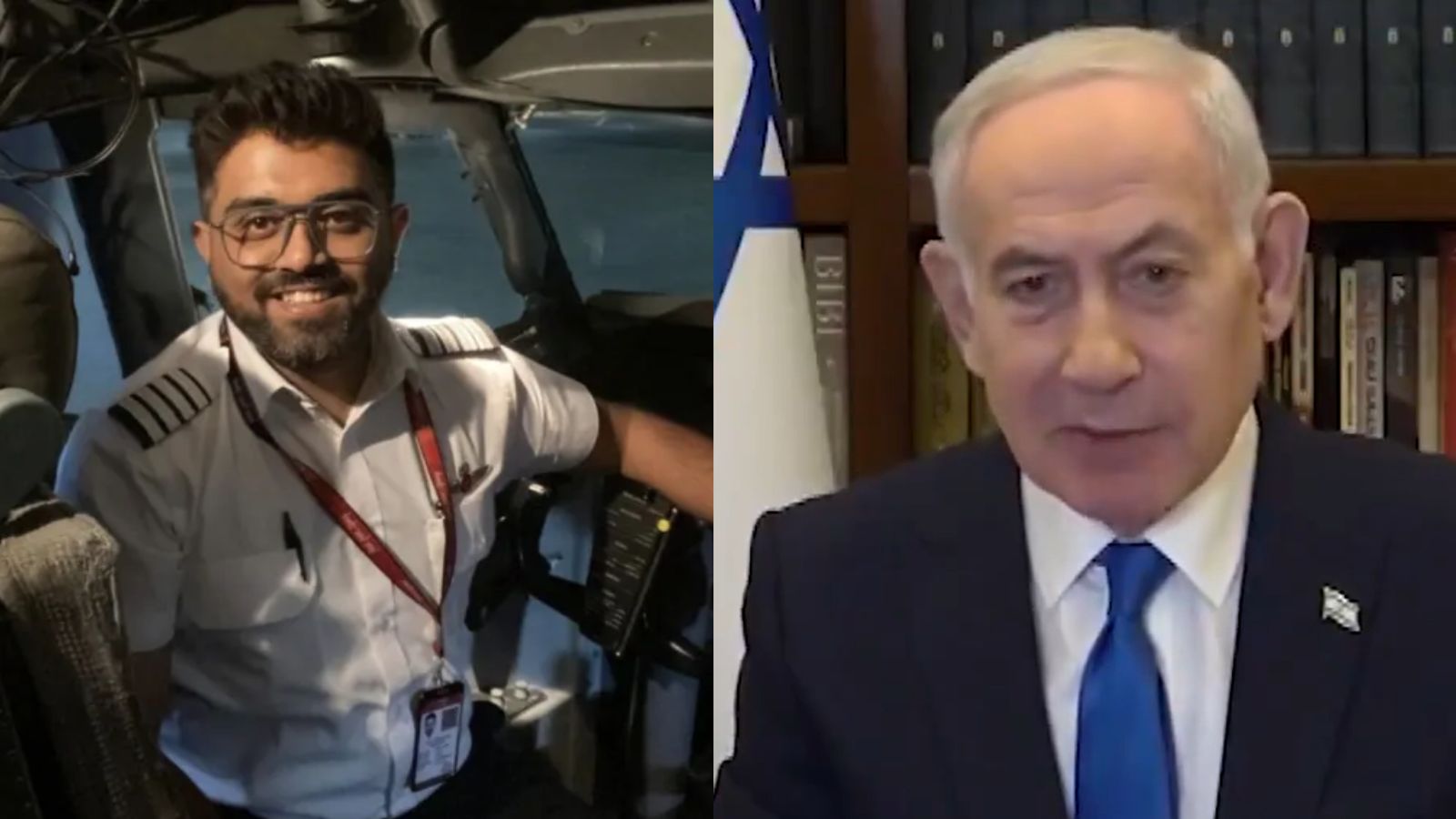
Indian pilot Captain Smit Machchhar has described how he was attacked by his co-pilot aboard flydubai flight FZ1073, telling Israeli Prime Minister Benjamin Netanyahu that the assault began after the co-pilot asked to pray. Machchhar said he suffered repeated blows to the back of his head before realising that the aircraft was plunging and making a final attempt to open the cockpit door.
In a phone call with Netanyahu on Saturday, Machchhar said he initially thought the repeated blows to the back of his head were caused by a problem with the aircraft. It was only after several blows that he realised the other person in the cockpit was attacking him.
The captain, who was seriously injured, eventually managed to open the cockpit door while the aircraft was plunging, allowing passengers to enter and help subdue the co-pilot. Two other flydubai pilots who were travelling on the aircraft then helped stabilise the plane before it made an emergency landing in Tabuk, Saudi Arabia.
ראש הממשלה בנימין נתניהו בשיחה עם הטייס ההודי מהטיסה מדובאי, קפטן סמית מאצ’הר: ״אתה גיבור עבור ישראל, הודו והעולם כולו. אני מזמין אותך ואת ראש ממשלת הודו מודי להשיא משואה ביום העצמאות הישראלי״
במהלך השיחה המרגשת שהתקיימה הערב, ראש הממשלה שאל את הטייס מאצ’הר איך הכל התחיל,… pic.twitter.com/ysnK5mxJNX
Machchhar told Netanyahu that the flight had been normal before the incident. The co-pilot, identified in media reports as Omani national Hamam al-Hammami, told him that he wanted to pray. Machchhar said he turned away out of respect.
Dubai to Tel Aviv, cruising normally, until the co-pilot got up to pray.
Captain Smit Machchhar says the co-pilot got up to pray. Then, “after four or five minutes”, the attack began.
Sources: Capt. Smit Machchhar’s account to Benjamin Netanyahu, via The Times of Israel; AP
A few minutes later, he felt a blow to the back of his head. “Suddenly, after four or five minutes, there was a big blow to the back of my head,” Machchhar said.
He initially thought the aircraft had suffered catastrophic damage.
“But after that, the blows kept coming, one after the other,” he said. “That’s when I realized it’s not the aircraft, it’s the other guy who was in the cockpit with me.”
It came from behind, without warning, and it did not stop.
Sources: Capt. Smit Machchhar’s account to Benjamin Netanyahu, via The Times of Israel. Illustration is AI-generated and is not a likeness of the people involved.
Machchhar said he tried to stop the co-pilot, but the initial blows had severely affected his vision. “I was completely blurred out,” he said.
He then realised that the aircraft was sharply descending.
In about 90 seconds, the jet lost more than half its cruising altitude.
Sources: AP; Flightradar24. Plane image is representational; motion is illustrative.
Machchhar said his memory of the attack remained fragmented. He recalled making an initial attempt to open the cockpit door, but said the co-pilot managed to close it again.
Injured and with his vision blurred, Machchhar tried to stop the co-pilot as the aircraft went down.
Sources: Capt. Smit Machchhar’s account to Benjamin Netanyahu, via The Times of Israel. Illustration is AI-generated; photo of Machchhar: Reuters.
He was eventually lying on the cockpit floor as the aircraft descended and he could hear people screaming. “I had one last fight left in me,” Machchhar told Netanyahu.
He said he knew that he had to make another attempt to reach the door. “That’s when I pushed against everything, I gave everything that I had, and just went for the door and opened the door and people were waiting to pounce back, and take control, and the rest is what you know, sir.”
Machchhar had earlier given Prime Minister Narendra Modi a similar account, saying he realised the aircraft was going down and made a final effort to open the cockpit door.
An unforgettable conversation with Captain Smit, filled with pride and emotions. pic.twitter.com/CCf46PKOWR
During the conversation, Netanyahu asked Machchhar how he had managed to open the cockpit door while seriously injured. Machchhar explained that the door could be opened from inside using a twist mechanism, while those outside normally needed a code to enter.
Help was right outside. The co-pilot made sure the door stayed shut.
Colleagues try the entry code. The co-pilot “was not allowing” it to work.
From inside, the door opens with a simple twist-to-open knob.
Sources: Capt. Smit Machchhar’s account to Benjamin Netanyahu, via The Times of Israel
He said passengers and crew outside tried to use the code, but the co-pilot prevented them from gaining access. Machchhar said he eventually managed to reach the internal knob and twist it open.
The opening of the door allowed passengers to enter the cockpit and intervene as the aircraft was in a severe descent.
On the floor, badly hurt, he realised the aircraft was going down. Twist the knob.
The door opens. Passengers and crew rush in.
Sources: Capt. Smit Machchhar’s account to Benjamin Netanyahu, via The Times of Israel
Once the cockpit door was opened, passengers moved in and helped subdue the co-pilot. Flydubai has said that on-duty crew members travelling on the aircraft helped stabilise the plane and land it safely. The airline has not publicly identified the two pilots.
What passengers heard in the moments after the door opened, from footage filmed near the cockpit.
Sources: Channel 12 passenger footage, via The Times of Israel. Not independently verified by The Indian Express.
Two pilots were reportedly travelling as passengers as part of a routine aviation practice known as deadheading, in which crew members are repositioned for a subsequent assignment. They were expected to operate the aircraft on its return journey.
The aircraft had plunged thousands of feet during the incident before being stabilised and diverted to Tabuk.
Nearly four hours after take-off, FZ1073 made an emergency landing in Saudi Arabia.
Netanyahu told Machchhar that he was amazed by his courage and ability to remain composed under extreme circumstances.
“You saved so many souls … You saved the spirit of the world,” Netanyahu said. He described Machchhar as a hero of Israel, India and the wider world and wished him a speedy recovery.
Netanyahu also invited Machchhar and Modi to participate in Israel’s next Independence Day ceremony by lighting a ceremonial torch. “You are a true hero of the brave peoples of India and Israel,” Netanyahu told him. “And you’re a hero of the entire world.”
During the conversation, Netanyahu also spoke about the medical treatment Machchhar received after the emergency landing. He said he had spoken to the dentist who treated the injured pilot and described the medical professional’s account of Machchhar’s courage. Machchhar said he wanted to meet the dentist.
“I would love to meet him as well. He saved my life, to be honest,” he said.
The flight eventually landed safely at Tabuk after the cockpit attack. The Indian pilot and the co-pilot were subsequently taken to the UAE.
The Indian Embassy in the UAE said Saturday that Machchhar remained under medical care and was “recovering well”.
The pilot’s latest account comes as the UAE-led investigation into the incident continues. UAE Attorney General Hamad Saif Al Shamsi said investigators had determined that the co-pilot attacked Machchhar with the aircraft’s crash axe and attempted to take control of the plane. The UAE has described the incident as an attempted “terrorist attack” and said investigators are examining its circumstances, motive and possible connections.
The co-pilot has been identified by multiple media reports as Hamam al-Hammami. Associated Press reported that he had previously been barred from flying in Oman over concerns about extremist views, although the investigation has not established his motive or whether he had links to any militant group.