Between Trump’s US and Xi’s China, the trap India must avoid - The Indian Express
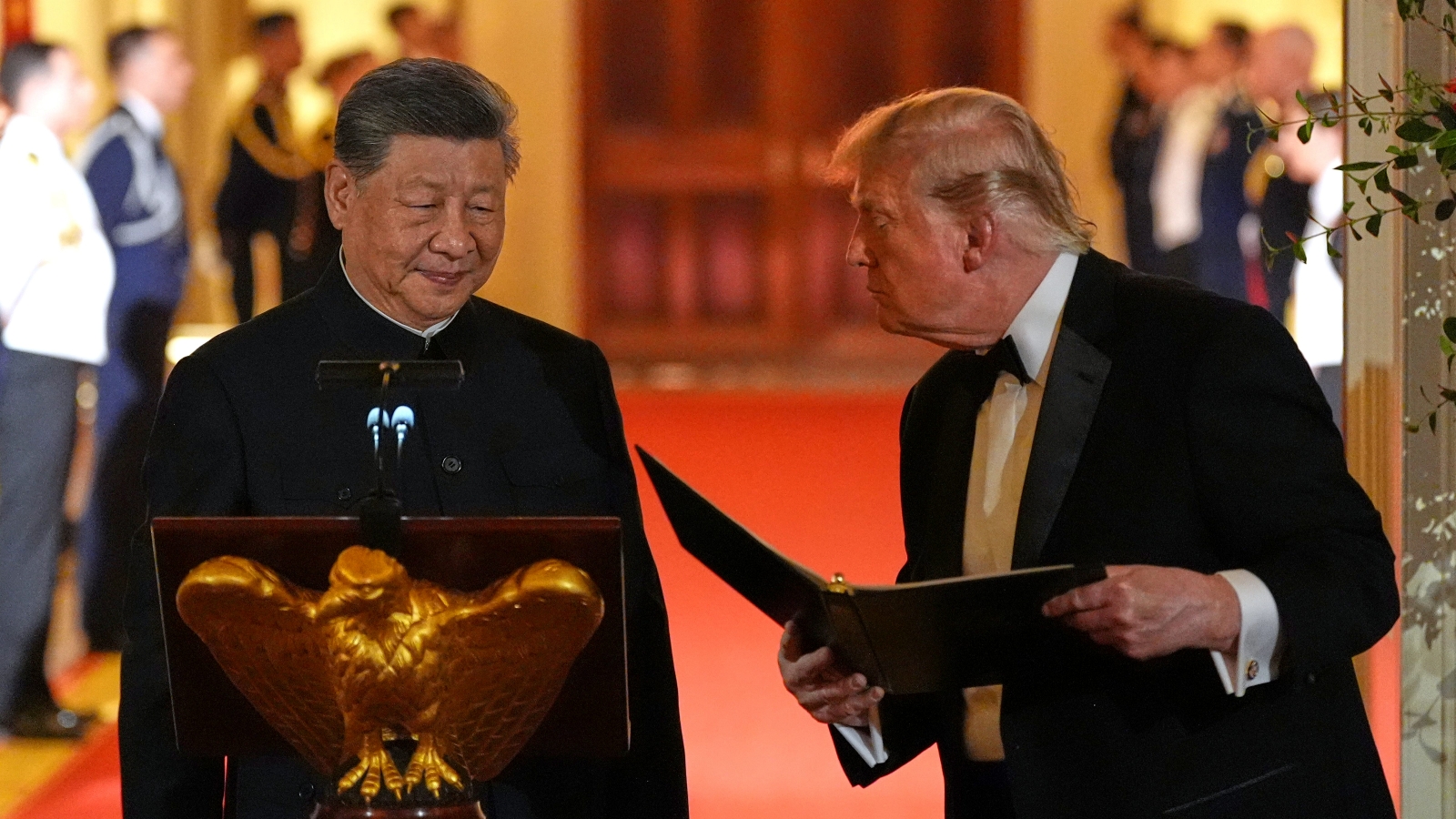
Confronted by global upheavals and cognisant of vulnerabilities, US President Donald Trump and Chinese President have met twice in 2026. The US-China rapprochement will increasingly shape geopolitics, geoeconomics and techno-capitalism. This evolving G2 framework may even restore a semblance of global order. Washington has paused its containment strategy, while Beijing recognises its limitations in dictating geopolitical outcomes. Both understand their shared interest in curbing global disruptions and the costs of economic decoupling. As China’s report “The Great Global Transformation and the Path to US-China Coexistence” asserted, China has weathered America’s offensive phase, forced a strategic stalemate and emerged as a “near-peer”, imposing an “inevitable peace”.
Living between two hegemons carving out rival global blocs poses structural questions for India and the Global South. After all, the “Thucydides Trap” Xi invoked is about established powers confronting rising ones, and great powers colluding to constrain third powers. Can we independently shape the emerging world order or influence the G2? If we cannot, will the G2 transcend self-interest to privilege systemic stability and a fairer world?
This means objectively assessing where we are, and where we should be. A section of the strategic establishment has long championed anchoring India’s future to Washington. This was predicated on the assumption that America would depend on India to contain China. However, the Trump administration’s insistence that Asian states shoulder their own defence suggests its acceptance of a Chinese sphere of influence for a temporary modus vivendi. Moreover, the White House’s 2025 National Security Doctrine implies India’s diminished strategic salience, rendering the Philippines and the “Squad” more valuable than India and the “Quad”. Washington is also seemingly drawing a Lakshman rekha by circumscribing New Delhi’s aspirations in the Indian Ocean Region and US Deputy Secretary of State Christopher Landau asserting that India won’t be allowed to grow like China.
Despite Prime Minister Narendra Modi’s efforts to court the Republican Party’s radical faction, the BJP government has kowtowed to Trumpian diktats, belying its decolonisation and strategic-autonomy rhetoric. It has acquiesced to Washington imposing punishing tariffs and stirring dangerous subcontinental dynamics while attacking our energy sovereignty and shipping. Instead of confronting these, the BJP government has committed to purchasing American goods worth $500 billion, is restructuring India’s AI/digital infrastructure around a US-led stack, and has ignored curbs on Indian immigration. These raise uncomfortable questions — does Washington view India as a sovereign equal, or merely a junior partner serving its interests? Most critically, does this enjoy bipartisan support in Washington?
On the other hand, China has violated India’s territorial integrity, weaponised our dependencies (the trade deficit has reached $100 billion), strived to forge a unipolar Asia, stymied India’s membership bids for the UNSC and Nuclear Suppliers Group, and empowered Pakistan. These factors have compelled India to strengthen Indo-Pacific partnerships as geopolitical insurance.
Faced with converging and competing Sino-American imperatives, India risks drifting into the Thucydides Trap. Unfortunately, the BJP government has mired India in asymmetric relationships and a performative foreign policy that prioritises optics over tangible national interest gains. This is compounded by the BJP’s intellectual and strategic inertia, manifested in clumsy navigation of global finance, trade and supply-chain disruptions, failure to foster a business-friendly environment and spark innovation in advanced industries and strategic sectors, and subordination of foreign policy to petty politics and hollowing out of institutions. All these are locking India into semi-peripheral status and constraining us at this historic geopolitical inflection.
A seat at the global high table means protecting our interests, and shaping the future. India must deepen bilateral relationships and thereby forge a value-aligned global community. Furthermore, only by recalibrating economic, industrial, and investment policy as instruments of statecraft can we reassert our strategic autonomy. This demands a multi-pronged approach: Building a durable industrial base, depoliticising and enhancing governance capabilities, cohesive federal leadership and substantively enhancing the quality of life for all peoples, forging an Indian Dream that hopefully outpaces the American myth. These necessitate mature leadership, a clear strategic vision, institutional coherence and deft global engagement rather than the BJP’s ideological, performative and reactionary internationalism. Only then can we reclaim our space in the world, and chart a credible course toward great-power status.