Before he passed away, my husband did an incredible act of love that helped me cope with the aftermath - Toronto Star
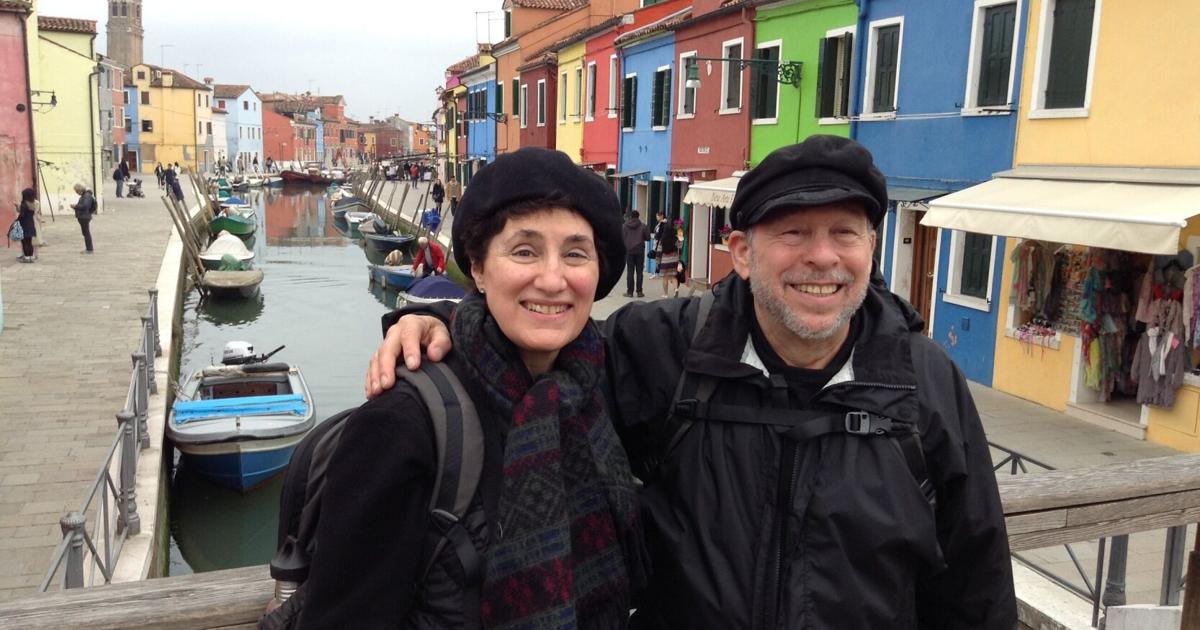
Before my husband Stephen died this April, after 40 years of marriage, he did something I consider to be an act of love. He left me three documents.
Stephen and Marsha Barber in Burano, Italy in 2016.
Marsha Barber is an award-winning poet and professor at Toronto Metropolitan University. She is a regular contributor to the Star.
This summer marked several death-related festivals across the globe. Buddhists and Taoists observe the Hungry Ghosts Festival, Japan observes the Obon, Thailand celebrates the three-day Boon Para Wate and Nepal holds the Hindu Gai Jatra.
Meanwhile, in North America, we often pretend death doesn’t exist and fail to prepare for it.
Not my late husband, Stephen Levitan, though. Before he died this April, after 40 years of marriage, he did something I consider to be an act of love. He left me three documents.
• The first one was labelled Important Information. From A (Accountant, Aeroplan, and Appliance Repairs) to W (Water Heaters, Warranties, Wills & Powers of Attorney), everything I could possibly need was explained: where to find documents, important phone numbers, you name it.
• The second document listed all Stephen’s passwords, a full three pages. That meant I could access his computer, phone and other areas of his life. I can’t imagine how challenging things would have been without that access.
• And the third document summarized bank accounts and investments. This was crucial. I’ve been the breadwinner since Stephen lost his ability to work in 2002 when he became a cardiac patient. But Stephen managed all our finances.
In addition to those documents, Stephen prepared a fireproof box that contained everything else I’d need, including our marriage certificate and passports.
Too few people prepare documents like this for their partners. And it’s a pity.
For those who have the kind of marriage we did, it’s impossible to imagine life without a spouse. How much worse it would have been if I hadn’t been steered seamlessly through the logistics.
What insurance did we have? When did we pay utilities? How did we get the treadmill serviced? Where was Stephen’s SIN card? It was all in there.
Not only that, but I even knew what Stephen wanted on his memorial stone.
We didn’t expect Stephen to die. At 74 he’d defied expectations and promised the children and me he’d live until at least 80. But he’d developed a nasty cough and finally, on a Sunday, I convinced him to go to the emergency department. They admitted him and put him on an antibiotic drip.
By Tuesday, though, doctors figured out it wasn’t pneumonia. Stephen was in congestive heart failure. He died Wednesday evening.
Death is often unexpected. You can never be ready for it.
But one thing you can do is to make sure your loved ones, who are in no position to think clearly, have everything they need. Because we live in a death-phobic society, that’s often not happening.
According to psychologist Matthew Whalley, research suggests that up to 10 per cent of people experience death anxiety and around 3 per cent have an intense fear of death.
But even for the rest of us, coming to terms with the greatest mystery of them all isn’t a cake walk.
Jon Radulovic, of the U.S. National Hospice and Palliative Care Organization, has been quoted as saying, “As humans, we’re not wired to accept death. It’s frightening and final. There’s so much apprehension surrounding the topic that it’s understandable why we don’t want to focus on it.”
And then there’s the issue of procrastination. We’re usually confident there will be more time. All of us believed Stephen had a few more years.
“According to the Angus Reid polling company, half of Canadians don’t even have a will,” writes Marsha Barber. “And this includes 1-in-5 Canadians over the age of 55.”
But planning goes beyond preparing documents for loved ones. According to the Angus Reid polling company, half of Canadians don’t even have a will. And this includes 1-in-5 Canadians over the age of 55.
Those who die intestate are unlikely to go the extra step, as Stephen did, and leave detailed information for a spouse for whom the absence is unfathomable.
There’s life after death. Your loved ones will be living it. Nothing will help with their grief. But, as a final act of caring, preparing the kind of documents Stephen did will help make their day-to-day a little easier.
Error! Sorry, there was an error processing your request.
There was a problem with the recaptcha. Please try again.
You may unsubscribe at any time. By signing up, you agree to our terms of use and privacy policy. This site is protected by reCAPTCHA and the Google privacy policy and terms of service apply.
Marsha Barber is an award-winning poet and professor at Toronto Metropolitan University. She is a regular contributor to the Star.
Opinion articles are based on the author’s interpretations and judgments of facts, data and events. More details