
Bangladesh’s rivers of ‘plastic’
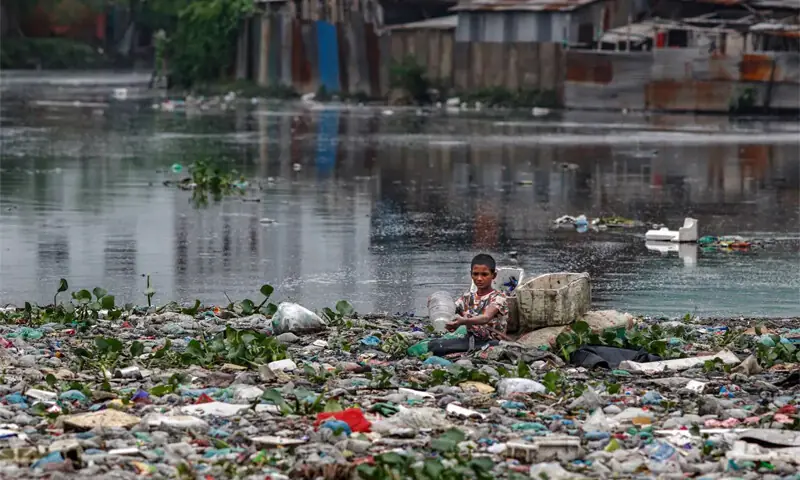
The use of single-use plastic started in Bangladesh in the 1980s. In about half a century, the Buriganga, Dhaka’s lifeline, has become choked with plastic waste.
The country generates around 3,000 tonnes of plastic waste every day, according to a 2022 study by the Environment and Social Development Organisation (ESDO). Experts say production has since increased significantly.
Much of this waste ends up in the country’s river system, clogging waterways, endangering aquatic life and posing a public health risk through microplastics in food. Polyethylene Terephthalate (PET), the polymer used in bottles and food packaging, takes an estimated 450 years to break down, quietly leaching microplastics and chemicals into the environment and contaminating food.
A 2025 study titled “Health risk assessment of microplastics contamination in the daily diet of South Asian countries” found microplastics were significantly more common in fish caught from the Buriganga than in fish from the Bay of Bengal.
Experts say unregulated manufacturing of single-use plastic, inadequate recycling systems, a lack of public awareness and weak enforcement of existing laws have brought the country’s rivers to this point.
The plastic industry is booming. It employs about 1.5 million people, with over 6,000 manufacturing units operating in Bangladesh, according to the government’s Invest Bangladesh website. About 80 percent of these are small and medium enterprises, while there are 450 export-oriented firms.
Bangladesh produces more than 2,500 types of plastic products across sectors including packaging, construction, textiles, consumer goods, pharmaceuticals, automotive, and electronics. Around 17pc of the sector’s output is exported, reflecting growing global competitiveness. The data puts the industry’s estimated growth rate at 20pc.
A World Bank report put Bangladesh’s annual plastic waste at close to 977,000 tonnes in 2020. In Dhaka, the daily total rose from 178 tonnes in 2005 to roughly 646 tonnes in 2020.
Polythene shopping bags are a daily part of that accumulation. According to the 2022 ESDO study, close to 1.4 million bags are discarded after a single use in Dhaka each day. On average, a family in Dhaka uses five polythene bags a day.
The 2020 World Bank report found that only 37pc of the plastic waste in Dhaka gets recycled, almost entirely by the informal sector clustered in places like Islambagh in Old Dhaka.
On a recent visit to Islambagh, The Daily Star spoke to Shamsul Alam, a trader who runs a plastic scrap shop supplying recycling factories. Plastic waste from different parts of the city reaches Islambagh, he said.
After sorting and making plastic chips, they sell them to factories that use the chips to make plastic products.—ANN
Published in Dawn, October 5th, 2026

