Artist seeks parliamentary hearing over SA flag design claim - IOL
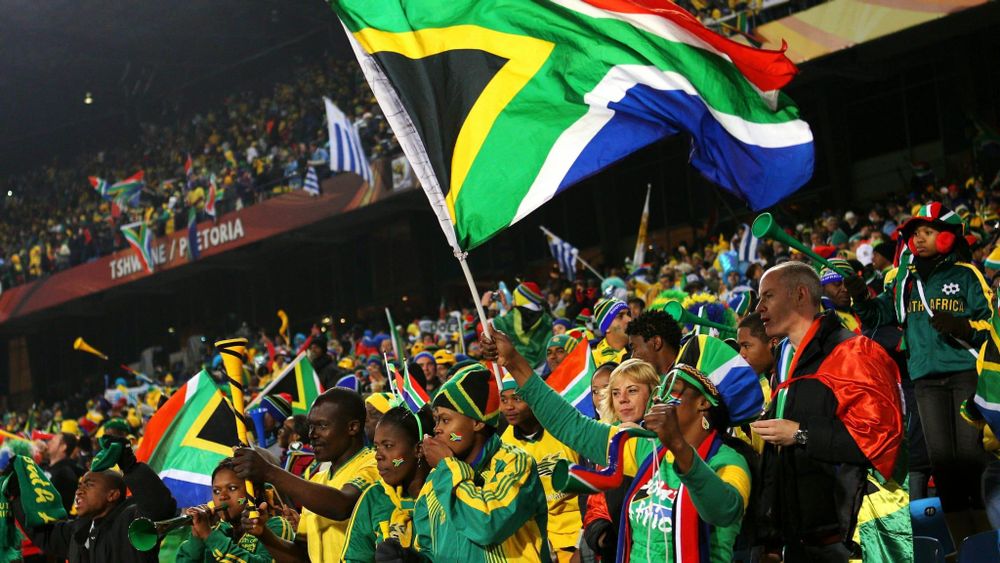
The Parliament Committee on Sport, Arts and Culture has been requested to intervene in long-dispute between artist Thembani Hastings Mqhayi and the Department of Sport, Arts and Culture over the ownership of the national flag.
The ongoing dispute over authorship and credit for the design of South Africa’s national flag has been intensified after Parliament has requested to intervene and establish an independent inquiry.
Activist Bandile Magibili has called on the Parliament Portfolio Committee on Sport, Arts and Culture to provide him and artist Thembani Hastings Mqhayi with a formal platform to present the research and supporting evidence of Mqhayi’s intellectual property ownership of the South African national flag design.
Mqhayi claims that he submitted five designs for the new national flag in 1994, and that the current democratic flag is based on his work.
He argued that the designs were allegedly plagiarised and wrongfully credited to the late former State Herald, Frederick Brownell.
The Department of Sport, Arts and Culture, under multiple leadership, including Minister Gayton McKenzie, consistently refuted these claims, stating that historical records confirm Brownell as the rightful designer.
As South Africa celebrates Heritage Day on September 24, Magibili said this month remains a painful reminder of a history he believes has never been corrected properly.
In a statement issued ahead of Heritage Day, Magibili said thousands of South Africans were invited to submit proposed flag designs during the country’s democracy and Mqhayi also participated, submitting five original designs.
He claimed that some of Mqhayi’s original material was subsequently recovered from the archives.
Magibili, who is currently in Mauritius to seek international academic cooperation over the disputed flag, said the fact that the official historical position credited Brownell raises questions he believes should be tested against primary evidence.
The questions read as follows: What happened to the public submissions? Who received and assessed them? Who had access to them? How did the final design emerge? And how did the institutional roles of those administering the process intersect with the design eventually adopted?
He said the Department of Sport, Arts and Culture should be invited to the same parliamentary process and given an equal opportunity to present the documentary foundation for the official historical position.
“Invite us to Parliament. Invite the Department. Let us put the original designs, archival material, terms of reference, timelines and other evidence on the table. Parliament must interrogate both versions rather than simply allowing the matter to circulate indefinitely through correspondence,” he said.
Asked if the committee will commit to scheduling a joint session where both Magibili and Mqhayi can present their research alongside the Department of Sport, Arts and Culture, the committee’s spokesperson Sibongile Maputi requested that questions should be sent to Fiona Clayton who serves as content and advisor and researcher for the committee.
However, Clayton also referred the inquiry to Maputi who did not respond.
“Kindly note that I am not in a position to speak on behalf of the committee or the Department of Sport, Arts and Culture. You will need to send your request to the Parliamentary Communication Services and the Department, respectively. The Principal Communications Officer assigned to the Portfolio Committee on Sport, Arts and Culture is Mr Sibongile Maputi,” said Clayton.
McKenzie, on the other hand, said the relevant records, including copies of Mqhayi's archived submissions, were made available to the complainants through PAIA request.
McKenzie said the matter was taken to the court and had not been pursued after the department opposed the application on the merits.
“Because the matter remains before the high court, the department will not comment on it in detail beyond what is already on record,” he said.
McKenzie added that a comprehensive investigation into the matter was conducted and Mqhayi’s designs do not contain any of the elements incorporated into the flag.
“If the committee chooses to consider this matter, the department will cooperate fully and make the digitised records available. That includes the original submissions and Mr Mqhayi's archived designs,” said McKenzie.
Mqhayi filed court papers against the department and the State Herald to compel the government to disclose archival details and developmental design records in August 2022.
However, Magibili said the legal challenge stalled because Mqhayi became ill after being affected by the long-running dispute surrounding the flag.
“There were also challenges involving the attorneys who were handling the matter, including their own circumstances. The court matter is therefore temporarily on hold while we work towards placing new attorneys on record and determining the appropriate way forward,” he said.
Magibili also stated that he believes that the ongoing dispute over the flag highlights a critical need for an autonomous investigation into how South Africa’s national symbols were historically established.
He said such an inquiry should examine authorship, public participation, institutional responsibilities, archival preservation and how the country’s official historical narratives were subsequently established.
“Heritage Month cannot simply be about displaying national symbols. It must also provide an opportunity to interrogate whether their histories have been accurately preserved,” he said.