AOC Wants Power That Likes Can’t Buy
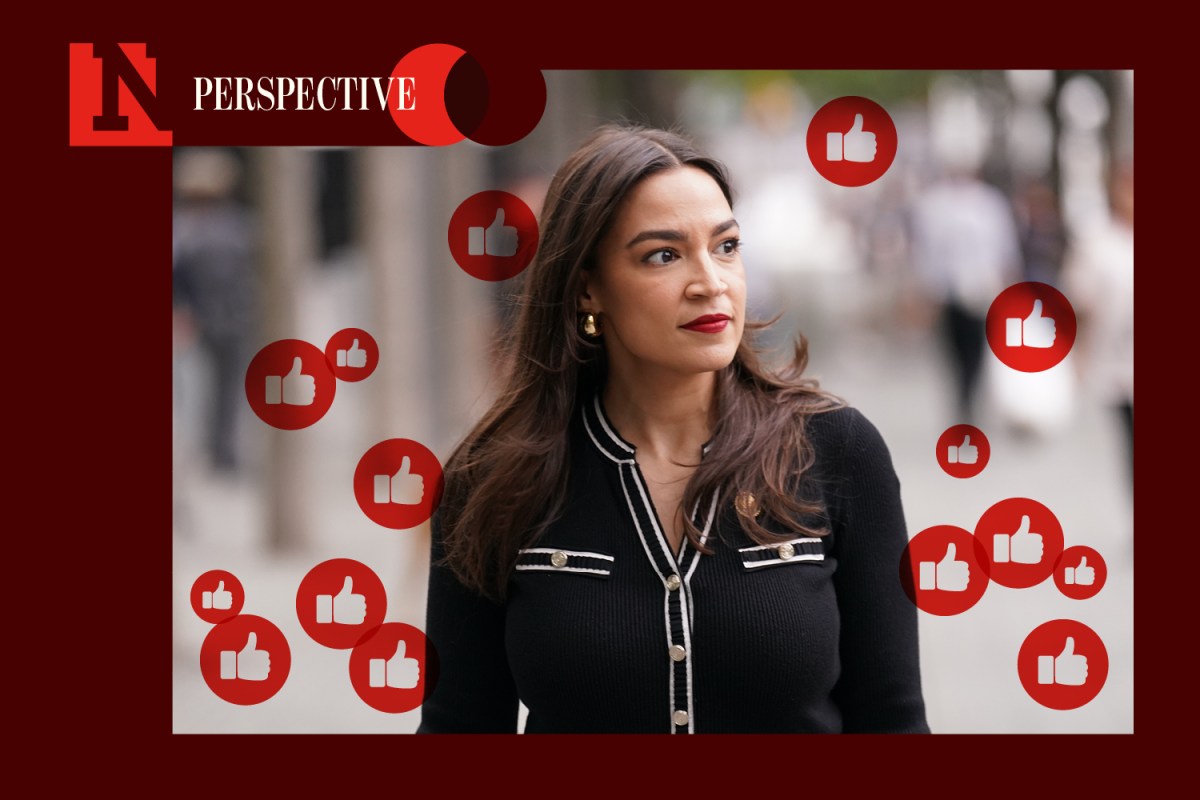
In New York politics, $300,000 does not buy much. It will not blanket the state in television ads, for example, or transform a governor’s campaign finances. What matters about this specific check in question, though, is that Kathy Hochul came asking Alexandria Ocasio-Cortez for it as part of the Democrats’ statewide coordinated campaign.
AOC gave more than any other member of New York’s congressional delegation, directing the money toward voter organization rather than advertising, with half of it reserved for Spanish-language outreach, while planning campaign stops in Buffalo, Syracuse and Ithaca.
The check captures a reversal that showcases the trajectory of the politician’s career. Ocasio-Cortez became famous by showing how little a politician needed the Democratic establishment. Now, though, she is increasingly demonstrating how useful she can be to it.
Her first political currency was attention, amplified by social media and a political culture in which visibility itself had become a form of power. Her next challenge is converting all that into the harder currencies of political power: money that can be moved elsewhere, candidates who want her help, organizations that endure between elections and a coalition capable of extending beyond the people already inclined to follow her.
The numbers explain why the experiment is possible. Between January 2025 and June 2026, Ocasio-Cortez’s campaign raised $32.6 million and finished the period with almost $16 million in cash, according to Federal Election Commission records. Nearly $32 million of those receipts came from individual contributions.
This is a fundraising operation large enough to leave her with resources to spend on political objectives beyond keeping her House seat, which is very much an evolution from 2018, when her victory over Joe Crowley in the Democratic primary for New York’s 14th Congressional District ended the career of a senior House Democrat and made her the most visible face of a new progressive insurgency. Her political identity was forged in opposition to a party hierarchy that had accumulated money, endorsements and institutional relationships over decades.
Eight years later, a Democratic governor is asking her for money.
It’s not that Hochul and Ocasio-Cortez have suddenly become ideological allies (perhaps?), but about a change of the structural kind: The progressive now has something the institution wants, and it seems like she’s more interested than ever before in what can be built with it.
Ocasio-Cortez described her contribution as an attempt at “transforming the way Democrats go about building a coalition.” The choice to spend on field organizing is important to that idea because advertising buys exposure, but organizing tries to build relationships, identify voters and get them to act. For a politician already capable of generating exposure almost at will, tackling the second problem makes most sense.
The development also bears directly on the speculation around her political future: Ocasio-Cortez has said she will weigh her next move after the midterms, with reelection, a Senate race or a 2028 presidential campaign among the possibilities. Each step upward would pose a question that cannot be answered by social media reach or fundraising totals alone: Can her politics travel?
A statewide race would require Ocasio-Cortez to speak to Democrats far from the Bronx and Queens, including voters whose politics and communities look little like her congressional base. A presidential campaign would enlarge that problem exponentially. The asset that made her unusual in Washington—the ability to command a national audience without first climbing through party institutions—would still matter, sure, but it would no longer be sufficient.
We could also try to be a bit less dramatic when analyzing this whole thing: Democrats have elections to win, Ocasio-Cortez has accumulated a large campaign treasury, and politicians with money routinely help their party. She herself has cautioned against treating the New York effort as a disguised 2028 announcement, saying she will make those decisions after November.
But perhaps the two explanations can coexist, as political careers alter when the direction of dependence changes. The first phase of AOC’s career proved that a politician could become powerful without the Democratic establishment. The next may test whether she can become powerful enough that the establishment needs her.