Anti-terror war: Funding gaps strain MNJTF as Nigeria bears regional burden in Lake Chad - The Guardian Nigeria News
• CAN seeks action over 78 Borno pupils still in captivity after 100 days • Nigeria bears 72% of regional displacement burden • $209m disbursed by FG over six years, EU commits €234.4m in 10 years • 80% rise in security incidents recorded in two years • Olukoju: Nigeria must protect its security interests • Adamu seeks coordinated regional funding for MNJTF
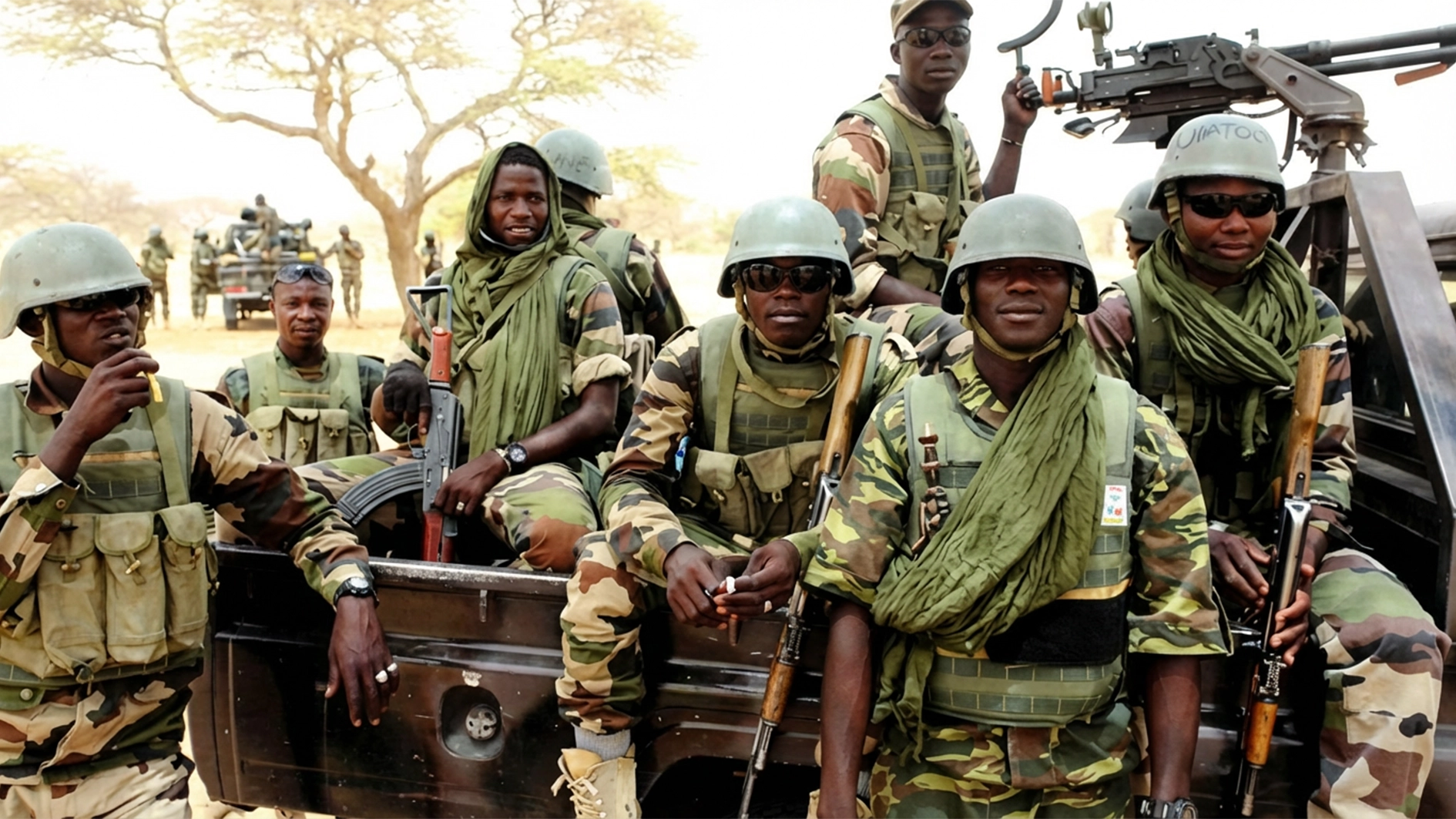
As Nigeria grapples with 17 years of insurgency, the country is bearing a significant share of the financial and logistical burden of the Multinational Joint Task Force (MNJTF). This is as persistent funding and capability gaps threaten efforts to contain the onslaught of Boko Haram and Islamic State West Africa Province (ISWAP) across the Lake Chad Basin, the terrorists’ theatre of war.
The MNJTF, comprising Nigeria, Cameroon, Chad, Niger and Benin, was established as a regional response to the Boko Haram insurgency and later expanded its focus as ISWAP emerged as a major threat in the region. The concern comes as the MNJTF and its partners continue to identify gaps in equipment, logistics and operational support.
Despite various kinetic and non-kinetic operations by the military to contain the insurgency threats, including a reported ceasefire between the government and insurgents, attacks have continued unabated.
Yesterday, the Christian Association of Nigeria (CAN), Borno State chapter, urged the Federal Government, the state government and security agencies to step up efforts to rescue 78 schoolchildren and other victims who have remained in captivity for more than 100 days. The state CAN Chairman, Most Reverend John Bakeni, appealed during a prayer session held in Maiduguri as part of activities marking the 50th anniversary of the association.
Bakeni said the security situation in Borno had made it difficult for the Christian community to celebrate the milestone with the usual festivities, noting that many residents were still grappling with insecurity and economic hardship. Bakeni said the prayer session was specifically organised to seek divine intervention on behalf of the country, Borno State and those being held captive.
Bakeni said the prolonged captivity of the children had placed an enormous emotional burden on their families, urging authorities to consider the ordeal from the perspective of the affected parents.
“These kids have spent over 100 days in captivity. You can imagine what their parents are going through, and the pain, agony, trauma that these people (victims) are going through. And you know, the best way to feel this thing is to put yourself in the shoes of any of these parents. If your child is in captivity, what will you do? Therefore, while we pray for them, we also encourage them,” he said.
The victims include 42 students and pupils who were abducted on May 16 after suspected Boko Haram terrorists attacked Mussa Primary and Junior Secondary School in Askira/Uba Local Government Area of Borno State. Another 36 students and a teacher were reportedly abducted on June 29 when suspected Boko Haram terrorists invaded Government Day Secondary School, Lassa, also in Askira/Uba Local Government Area. The two incidents brought the number of abducted students and pupils to 78.
THE funding challenge of military operations has put the sustainability of the MNJTF regional force under scrutiny, with Defence Minister Christopher Musa calling for greater African ownership of the financing and sustenance of regional security mechanisms amid continued reliance on support from international partners. Musa raised the issue last week during a high-level discussion organised by the Ministry of Defence on the margins of the 81st United Nations General Assembly High-Level Week in New York.
The defence minister said that while regional mechanisms such as the MNJTF had received support from international partners, including the European Union, African member states needed to increasingly finance and sustain their own security frameworks. He argued that countries benefiting directly from regional security arrangements must increasingly take responsibility for sustaining them.
The Guardian gathered that Nigeria has continued to shoulder a significant portion of the financial, troop and logistical burden of the regional force, with the imbalance raising concerns about the sustainability of the arrangement.
Records from the Lake Chad Basin Commission showed that Nigeria directly disbursed about $209.08 million to the MNJTF between 2015 and 2021. But the current consolidated financial contribution of each of the troop-contributing countries, however, remains unclear.
A senior defence official told The Guardian on Sunday that the situation had persisted partly because Nigeria contributes a significant proportion of the troops and equipment deployed under the MNJTF. The official said the funding gap could remain a challenge if other countries in the Lake Chad Basin do not increase their financial and operational contributions to the joint campaign.
According to the source, while Nigeria has the strongest interest in sustaining operations because it bears the brunt of the insurgency, a more sustainable arrangement would require greater commitment from all the participating countries. Indeed, Nigeria’s contribution has also come alongside substantial international assistance to the regional force.
The European Union, the largest external contributor to the MNJTF, said its support had reached €234.4 million to date, covering areas including operational and logistical support, mobility, medical services, intelligence, surveillance and reconnaissance, infrastructure and equipment.
The United Kingdom has also mobilised £5 million through the African Union Commission, while the African Union in May 2026 provided $1 million from its Peace Fund Crisis Reserve Facility. The EU has also provided training and equipment for counter-IED and anti-drone operations, while its recent support included drones, anti-drone systems, boats and the refurbishment of a nautical base.
Indeed, for Nigeria, the challenge is particularly significant because the country is not only providing critical logistical support to the MNJTF but is also at the centre of the insurgency it was created to contain.
Borno remains the epicentre of the crisis, while the activities of Boko Haram and ISWAP continue to generate displacement, disrupt livelihoods and place pressure on military and humanitarian resources across the region.
At the time of the MNJTF’s reactivation in 2015, announced national contingents included 3,750 troops from Nigeria, 3,000 from Chad, 2,650 from Cameroon, 1,000 from Niger and 750 from Benin, bringing the combined strength to about 11,150 personnel.
However, the composition and strength of the force have changed over the years following Niger’s suspension of participation, which has also made the security burden facing the regional force substantial as violence and displacement continue to rise across the Lake Chad Basin.
According to the United Nations High Commissioner for Refugees (UNHCR), recorded security incidents across the region increased by 80 per cent between January 2024 and April 2026. Between September 2025 and May 2026 alone, nearly 1,800 security incidents and more than 5,700 fatalities were recorded across the Basin.
The incidents included attacks on civilians, killings, kidnappings, explosions, clashes between armed groups and raids on villages. The worsening violence has also triggered fresh displacement. UNHCR said more than 3.5 million people are forcibly displaced across the wider Lake Chad Basin, while 8.2 million people require humanitarian assistance.
Since January 2026, more than 77,500 people have been displaced across Nigeria, Cameroon, Chad and Niger, including more than 16,000 people who fled attacks in northeastern Nigeria into Niger’s Diffa region.
In Chad’s Lac Province, recurrent attacks and military operations have displaced about 60,000 people, while persistent attacks and abductions continue to affect communities in Cameroon’s Far North.
The displacement burden is heavy in Nigeria. The International Organisation for Migration’s April 2026 displacement dashboard put the number of internally displaced persons across the four affected countries at more than 3.3 million, with Nigeria accounting for 2,333,190, or 72 per cent, followed by Cameroon with 510,855, Chad with 242,927 and Niger with 167,597.
The humanitarian consequences are also extending beyond displacement. UNHCR said one in five households in affected areas reported no longer feeling safe in their communities, while about half of children in the hardest-hit areas are out of school. In Chad’s Lac Province, the proportion exceeds 78 per cent.
Speaking with The Guardian, former Director-General of the Land Forces Simulation Centre, Major General Dayo Olukoju (rtd.), said Nigeria’s substantial contribution to the regional force reflected its strategic position in the crisis.
Olukoju said Nigeria must, however, continue to restrategise following Niger’s withdrawal to ensure that the development did not create operational gaps that could be exploited by terrorists. He said no country should be allowed to hold Nigeria to ransom over the regional security arrangement, stressing that Nigeria, as the largest country and a major troop contributor, must continue to protect its national security interests.
Olukoju also expressed confidence in the ability of Musa, a former commander of the MNJTF and former Chief of Defence Staff, to address the challenges confronting the force.
But security and intelligence expert and Managing Director of Beacon Consulting Limited, Kabiru Adamu, offered a different perspective, cautioning against attributing the funding difficulties solely to a lack of commitment by other countries.
Adamu wondered why the Minister of Defence had to raise such an issue in far-away New York while arguing that the affected countries needed to develop stronger regional solutions to the problem.
Adamu said the countries participating in the MNJTF also had their own economic and security challenges, adding that a sustainable funding arrangement required a coordinated regional approach.
According to him, Nigeria, Cameroon, Niger, Chad and Benin remain important components of the regional security arrangement and should collectively develop a mechanism for financing the force. He, however, said the security crisis could not be solved through military funding alone.
Adamu said governments in the region must address underlying factors such as poverty, unemployment and lack of access to education, while political leaders must take a more comprehensive approach to the crisis.
On his part, Administration and security sector governance expert at the University of Abuja, Prof. Philip Dahida, said the challenge went beyond funding, stressing the need for stronger political commitment by governments in the region.
Dahida said the MNJTF remained relevant because of its role in intelligence sharing and coordination among countries facing cross-border movements of terrorists, weapons and other criminal networks. He argued, however, that military operations alone could not eliminate the underlying causes of insecurity across the Lake Chad Basin.
According to him, governments must tackle the social and economic conditions that continue to create an environment for insecurity to thrive. He called for greater transparency in the management of foreign security assistance, saying international funding could sometimes come with conditions that governments needed to disclose and properly account for.