Amtrak Blames NJ Transit as Cut Fiber Line Disrupts Hundreds of US Flights - Newsweek
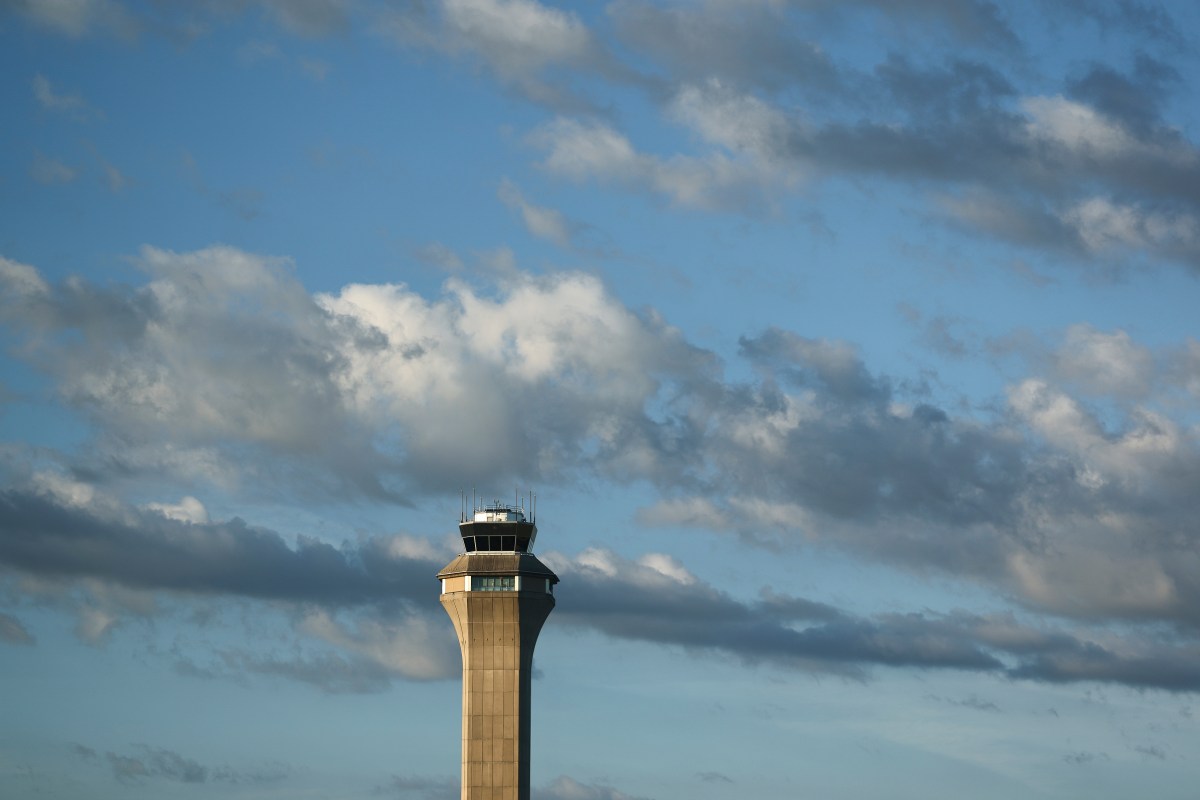
Hundreds of flights were delayed, canceled or diverted Monday after equipment failed at a Federal Aviation Administration (FAA) air traffic control facility.
While the issue was initially blamed on Amtrak work being conducted in New Jersey, the train operator later told Reuters that a New Jersey Transit contractor was to blame for the issue. NJ Transit later responded, telling Newsweek repairs were underway.
The FAA told Newsweek that the technology failure, involving a fiberoptic cable, was affecting flights across the Northeast United States.
"An FAA technology outage is affecting all airlines in the Northeast, including United’s operation at Newark Liberty," an FAA spokesperson told Newsweek on Monday.
Secretary of Transportation Sean Duffy said on X just after 6 p.m. ET that flights were resuming in the Northeast, adding that it would take some time for delays to be cleared.
United told Newsweek it was experiencing widespread disruption to flights into Newark Liberty International airport.
"Flights that had been destined for Newark have either been held at their departure airport or diverted to alternative airports. Once the FAA outage is resolved, we will work to safely get our customers to their destinations and have issued a travel waiver to give our customers flexibility to manage their travel plans," United Airlines told Newsweek.
The outage affected communications at Philadelphia TRACON, according to the report, prompting ground stops at Newark Liberty International Airport, Philadelphia International Airport and Teterboro Airport before delays spread to New York's John F. Kennedy International Airport and LaGuardia Airport.
Transportation Secretary Sean Duffy said in a post on X, "an Amtrak construction crew accidentally cut into a fiber line in New Jersey which caused a telecom outage and forced FAA to pause flights in the Northeast.
"Right now:—Flights are resuming at LGA and PHL—Flights into EWR, JFK, and Teterboro Airport are paused. This incident underscores the need for additional funding to modernize aging infrastructure and prevent disruptions like this in the future," he continued.
Amtrak later said that it was not involved in the work, pointing to the service which shares some of its Northeast track: New Jersey Transit. Newsweek reached out to Amtrak for further comment.
In a statement to Newsweek, New Jersey Transit said it was working with contractors to quickly fix the issue Monday evening.
"At approximately 9:45 a.m. today, a construction crew working on the Delco Lead project between New Brunswick and North Brunswick accidentally severed a fiber-optic cable while working at the site. We've been made aware that this cable served as a back-up to a primary circuit system that failed," a spokesperson said, adding that the crew appeared to have been working around 10 feet from utility markings, which were either made by Verizon or the contractor.
"We will continue to work closely with Verizon and the contractor as the circumstances surrounding the incident are being investigated. We will provide additional updates as information becomes available," the spokesperson said. "36 out of the 56 fiber cables are done. They should be coming back online shortly. The rest should be done and tested shortly."
The cut fiber line is also impacting Verizon service, with a spokesperson for the company emailing Newsweek a statement saying, "We have a fiber cable running adjacent to an Amtrak rail line in New Jersey. Construction contractors working in the area dug up and cut our cable. Verizon's facilities were fully functional up to that point. Verizon bears no responsibility for this incident."
"We immediately deployed our technicians to the scene. We and our partners are actively working to repair the damaged cable and restore connectivity as quickly as possible," the statement said.
The flight disruptions come as New York City enters the busiest week of the year for international travel and security operations, with world leaders converging on Manhattan for the high-level debate of the United Nations General Assembly.
City officials have warned of heavy traffic, heightened security and significant transportation delays as delegations from around the world arrive for meetings and speeches at U.N. headquarters.
President Donald Trump traveled to New York on Monday amid the flight issues ahead of his scheduled address to the General Assembly and was set to meet New York City Mayor Zohran Mamdani at Gracie Mansion. According to the mayor's office, the meeting was expected to focus on issues affecting New York City and its residents and marks the third face-to-face meeting between the two leaders since Mamdani took office.
The outage affected both domestic and international travel, with dozens of inbound international flights from countries including Iceland, France, Spain, Greece and Egypt diverted from Newark, while hundreds of domestic flights across the Northeast faced delays, cancellations and ground stops.
As of 4 p.m. ET Monday, FlightAware reported 4,833 delays and 781 cancellations within, into or out of the U.S.; however, not all were directly linked to the outage.
"When the controllers lose access to essential communication and surveillance systems, the FAA may need to temporarily halt flights in the affected airspace until the systems are restored. This ensures passenger and aircraft safety, which is always the primary goal of the FAA," Rich Davis, Senior Security Advisor at International SOS, told Newsweek.
"While the immediate effects are being felt in the Northeast, disruptions like this one can create a nationwide ripple effect. When a major airport like Newark experiences a ground stop, flights from other airports may be unable to land there, which can lead to nationwide delays, diversions and cancellations."
Newark saw 282 flights canceled and 208 delays.
The affected flights included international services arriving from Iceland, France, Spain, Greece and Egypt, CNBC reported.
A spokesperson for United, which has a major hub at Newark Liberty, told Newsweek that flights headed for the airport had been held at their departure airport or diverted elsewhere.
"To enable an orderly resumption of operations, United is canceling the remainder of Monday’s planned domestic mainline and United Express flights to and from Newark, and will prioritize remaining international departures," the spokesperson said.
"We know this outage is a significant disruption for our customers. Once it is resolved, we will work to safely get them to their destinations, and we have issued a travel waiver to give them the flexibility to manage their travel plans."
Philadelphia was directly affected because the outage occurred at Philadelphia TRACON.
According to FlightAware.com, 124 flights were canceled at Philadelphia International, while another 395 were delayed.
The FAA also halted flights into Teterboro Airport in New Jersey. According to reporting cited by multiple outlets, delays at the airport stretched for hours as the FAA worked to resolve the communications problems.
The disruption later spread to New York City's two largest airports. The FAA issued temporary ground stops and delays at Kennedy and LaGuardia as air traffic congestion built across the region.
The FAA said the disruption stemmed from problems with radio frequencies at Philadelphia TRACON. FAA Administrator Bryan Bedford told CBS New York that the facility's primary circuit failed, and a backup line also broke. He said officials believed a damaged fiber connection between New Brunswick and Newark caused the issue.
Bedford told reporters on Monday afternoon that it could take up to 13 hours and that crews were installing a replacement circuit.
"We didn’t know about the fiber break until after we lost the primary circuit," he said.
An initial attempt to quickly restore normal operations was unsuccessful, the outlet reported. Service was being brought back to JFK and LaGuardia, while Newark, Philadelphia and Teterboro were likely to remain under restrictions as crews continued repair efforts.
The FAA has advised passengers to check directly with their airlines for updated flight information. Even after the technical problem is fixed, delays are expected to continue as airlines work through aircraft diversions and scheduling disruptions across the region.
Contact Newsweek editors on this story: Samantha Beech and Sam Wilson.