
Amici curiae: Should absent senators be allowed to vote? - GMA Network
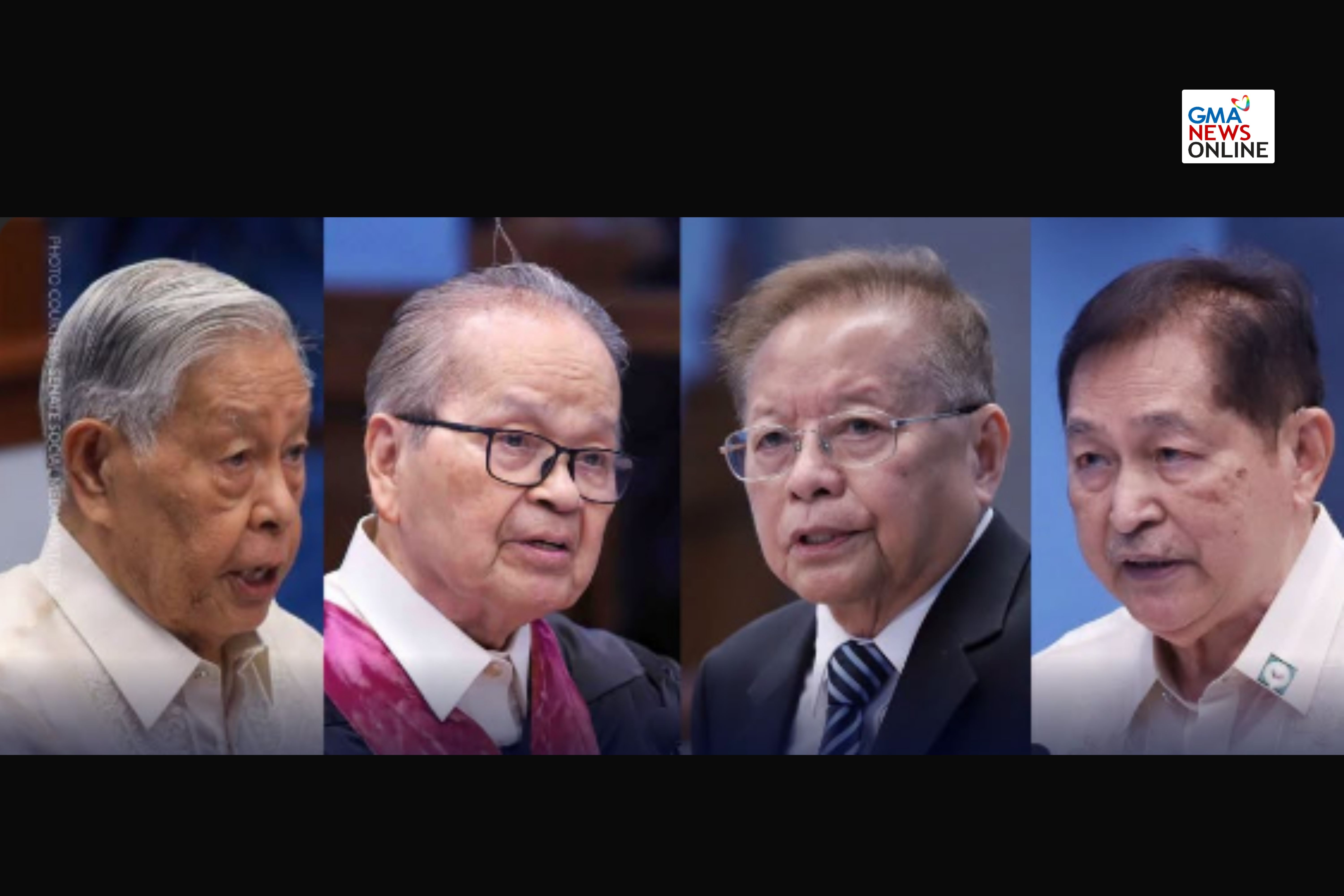
Former Supreme Court (SC) justices on Wednesday gave their expert opinions on whether senator-judges who have not been present during Vice President Sara Duterte’s impeachment trial should be allowed to vote.
Former chief justices Reynato Puno, Hilario Davide Jr., Artemio Panganiban, and former Associate Justice Adolfo Azcuna were invited as amici curiae or friends of the court to provide their opinion on the vote threshold needed to convict an impeached official.
Except for Davide who gave his written position to the Senate impeachment court, Puno, Panganiban and Azcuna personally delivered their opinion before the court.
The 1987 Constitution states that "no person shall be convicted without the concurrence of two-thirds of all the Members of the Senate."
Davide: “Nevertheless, in light of the disquisitions above on the first issue, we now can conclude that those who are detained, abroad, suspended or whose whereabouts are unknown cannot be included, or must be excluded, from the phrase ‘all the Members of the Senate.’”
According to Davide, the framers of the Constitution could never have intended to include in “all members” senators who have resigned or were expelled, those who suffer from mental infirmity, those suffering from physical incapacity or those in hospitals, those who cannot participate in the hearings and deliberations, those who by reason of some legal impediment or restraints cannot exercise or perform their rights and privileges as an official.
Davide said the last group include those who are charged with plunder and for violation of the Anti-Graft and Corrupt Practice Act as well as those who have been convicted and are serving their sentence.
Panganiban, meanwhile, questioned whether it was truthful or fair to allow senator-judges to cast their vote despite being absent from the proceedings.
Panganiban: “Should the senators be allowed to vote though they were there in hiding, abroad, legally detained, sick, hospitalized, or otherwise absent, and have not been able to access and examine the documents, have not heard the testimonies, and have not observed the demeanor of the witnesses? To put it more picturesquely, Your Honor, is it truthful and fair? To the parties, to our country, and to our people, to allow those abroad, those looking at the pyramids along the Nile or shopping in the fashion houses of Paris, or riding the romantic gondolas of Venice, or deliberately hiding in the dark corners of the world, while everyone here, everyone here in this hall, is sweating it out, listening to sometimes irrelevant and loquacious lawyers or to humble an ancient amicus curiae like me.”
He said that meaningful adjudication requires active participation in the search for truth and fairness.
For his part, Puno believes that a judge does not need to personally see the demeanor of a witness, although he added that it would be ideal.
Puno: “Thus, an RTC judge who succeeds another RTC judge can decide the cases left by the latter, even if the succeeding judge did not personally hear some of the witnesses who have previously testified. The succeeding judge can rely on the testimony of witnesses as reflected in the transcripts of stenographic notes.”
Meanwhile, Azcuna said that senator-judges who have missed hearings should be allowed to vote as long as they believe that they can render impartial judgement.
Azcuna: “If he or she feels that he or she can render impartial judgment, honestly, according to the Constitution and the laws, then even if he missed one or two, or maybe even substantially, most of the hearings were still...Based on the record, he or she feels that she can honestly judge the respondent, I would allow.”
Senator Rodante Marcoleta is detained over a P75-million plunder case while Senator Jinggoy Estrada is detained over a P573-million plunder charge and a graft charge.
Meanwhile, Senator Ronald “Bato” Dela Rosa has not appeared in public since his departure from the Senate premises on May 14, after authorities attempted to serve an International Criminal Court (ICC) warrant against him.
In early September, Marcoleta insisted that he still has a voting capacity as a senator-judge. — RSJ, GMA News

