After Senate passes bill, will 2026 barangay, SK polls be postponed? - Rappler
Already have Rappler+? Sign in to listen to groundbreaking journalism.
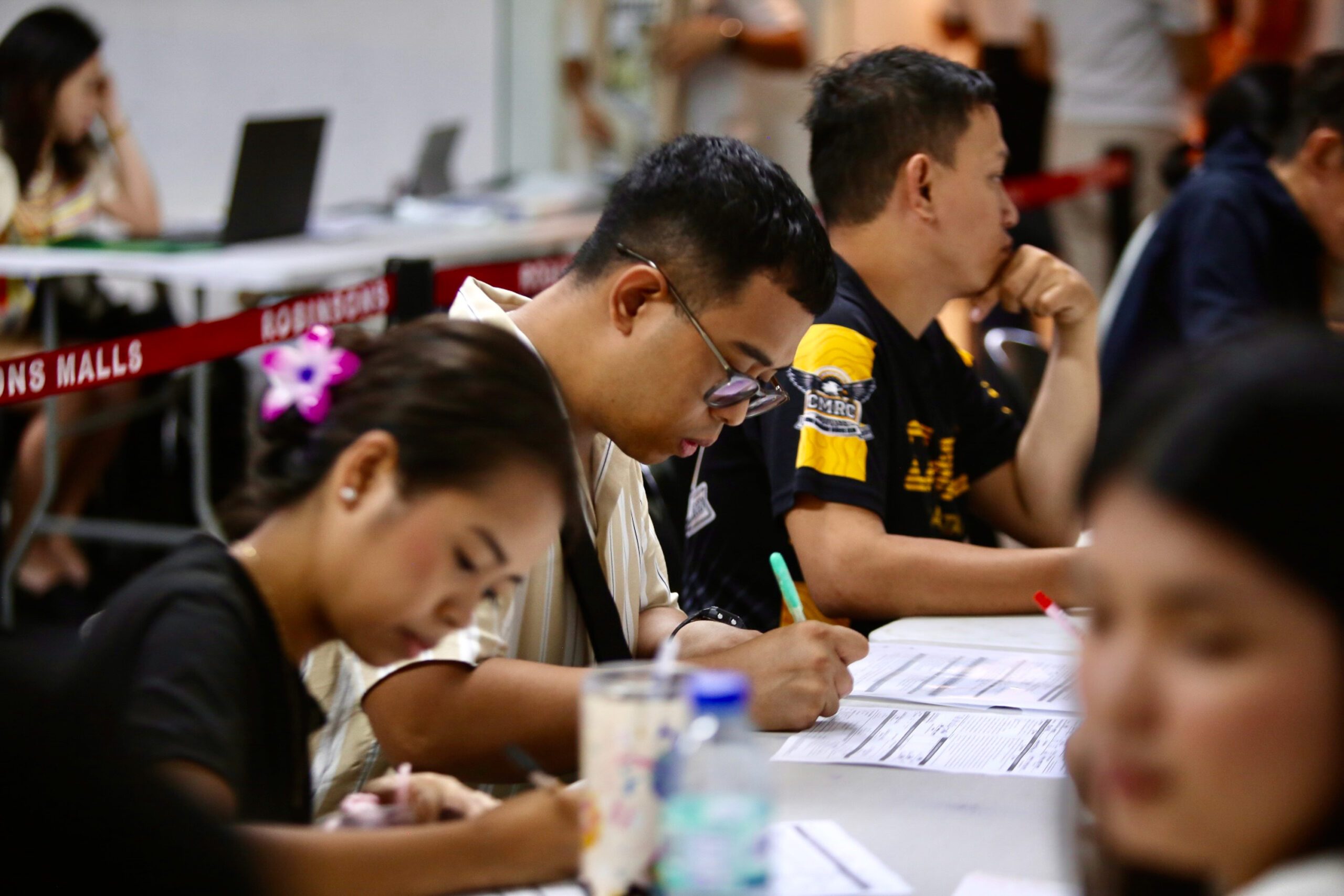
REGISTRATION. Eligible voters line up at a Commission on Elections satellite registration site on the final day of registration to secure their eligibility for the upcoming barangay and Sangguniang Kabataan elections (BSKE), at a mall in Cebu City on May 18, 2026.
This is AI-generated. Read the article for full context. Report any errors.
Over two months before the 2026 barangay and Sangguniang Kabataan elections (BSKE), the Senate approved a bill fixing the term of barangay and SK to five years, effectively postponing the elections again.
On Monday, September 14, 13 senators voted to approve Senate Bill (SB) No. 2387 on third and final reading, while five others — Senate President Pro Tempore Vicente “Tito” Sotto III, and Senators Risa Hontiveros, Bam Aquino, Kiko Pangilinan, and Joel Villanueva — voted against it.
Authored by Senator Chiz Escudero, SB No. 2387 seeks to amend Republic Act (RA) No. 12232 by fixing the term of all elected barangay and SK officials from four to five years. It also sets a two-term limit for barangay officials and one term for SK officials.
The bill resets the November 2, 2026 BSKE to the second Monday of November 2028, and subsequent elections to every five years thereafter.
What does this mean for incumbent officials?
Once enacted, SK officials would continue serving in holdover positions, unless they are suspended or removed from office. In case of vacancy, it provides that the rule of succession will prevail for SK chairmanships while mayors are authorized to appoint SK councilors to fill the vacant seats.
The terms of incumbent barangay officials, meanwhile, would be extended to two more years, deeming them to have completed one term in their respective positions. Those who are serving their last or third consecutive term would then be considered ineligible to run for the same post in the 2028 November BSKE.
Sotto, who strongly opposed the passage of the bill, said suspending the polls may violate the voters’ right to suffrage. He also pointed out that fixing the terms of office of barangay officials may be done without amending the law.
“Are we not violating the citizenry’s right of suffrage by denying voters to choose their local leaders?…Fixing the terms of our barangay officials to five years, must be balanced with the interest of the voting public to elect a new mandate… I hope that the November 2026 elections will push through and just apply the new fixed term prospectively if possible,” said Sotto.
The House of Representatives approved its version of the bill on September 8. Fast-tracking its passage, the lower chamber adopted the Senate version of the measure on Wednesday, September 16.
After hurdling Congress, it is now in the hands of President Ferdinand Marcos Jr. whether to approve or veto the bill. It may also lapse into law should he decide not to act on it within 30 days of receipt.
The last BSKE was held in November 2023. The next elections was initially scheduled for November 2025 but Marcos Jr. enacted a law moving the local elections to November 2026.
The Commission on Elections (Comelec) previously said it will continue its preparations for the BSKE amid proposals for its postponement. The poll body also said it will abide by the Congress’ decision whether or not to push through with the elections.
Some election watchdogs including Legal Network for Truthful Election (LENTE) and National Citizens’ Movement for Free Elections (NAMFREL) expressed opposition to the postponement.
“The long-term costs of delay outweigh the short-term savings. Fiscal relief from postponing one election cycle is temporary and one-time; the erosion of institutional stability, voter trust, and local accountability that repeated postponements produce is cumulative and lasting,” said NAMFREL.
“A government that keeps the electoral calendar predictable earns more durable public confidence — and more durable cooperation from citizens on economic recovery — than one that keeps moving the goalposts,” it added. – Rappler.com