
Africa's shifting role in the global drug trade
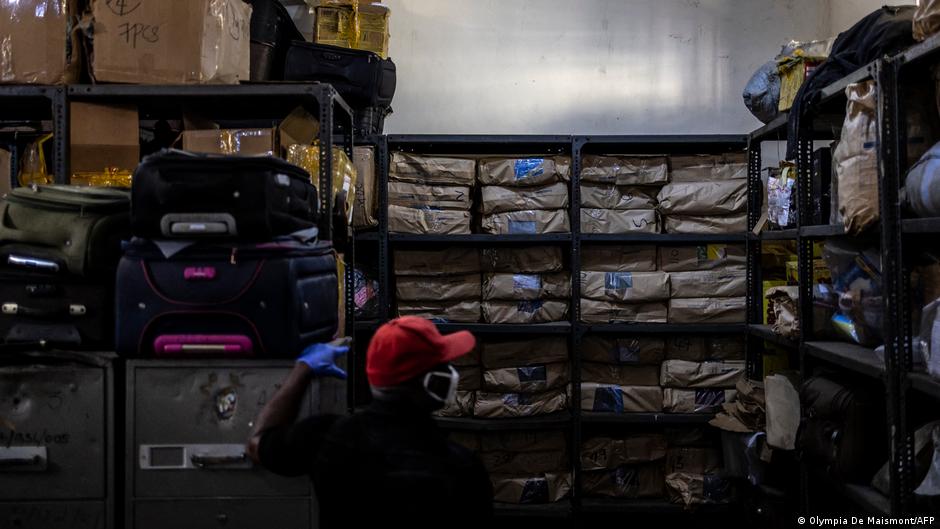
Once seen mainly as a transit route for drugs, parts of Africa are now emerging as production hubsImage: Olympia De Maismont/AFPAdvertisementFor years, Africa was primarily known as a transit point for international drug trafficking networks.
But recent drug seizures and laboratory discoveries show that illicit drugs are no longer only passing through African countries — they are increasingly being manufactured there.
Recent discoveries of methamphetamine laboratories in countries such as Nigeria, South Africa, Kenya and Mozambique have fueled concerns that Africa is becoming a significant production hub for synthetic drugs.
According to the UN Office on Drugs and Crime (UNODC), synthetic drug production increasingly involves transnational criminal networks and clandestine laboratories capable of supplying both local and international markets.
The debate gained new urgency this year after Nigeria's National Drug Law Enforcement Agency (NDLEA) dismantled what the agency described as the largest clandestine methamphetamine laboratory ever uncovered in the country.
The operation in Nigeria's southwestern Ogun State led to the arrest of 10 suspects, including three Mexican nationals whom the NDLEA said had been brought into the country to help manufacture methamphetamine.
NDLEA's chairman, Mohamed Buba Marwa, said officers seized more than 2.4 metric tons of methamphetamine, precursor chemicals and other materials with an estimated international market value of about $363 million (€312 million).
The scale of the operation attracted widespread attention in Nigeria.
"It is no longer something you only see in movies," said DW correspondent Olisa Chukwumah. "The discovery raised serious questions about the level of local consumption if production is now happening in Nigeria."
Chukwumah said Nigerian authorities have uncovered meth laboratories before, but the size and sophistication of recent operations suggest that drug manufacturing networks are becoming more deeply established.
Dokun Adedeji, co-founder of the Compassionate Care Recovery Initiative, said Nigeria's drug landscape has evolved significantly over the past decade.
"We used to think we were only a transit nation," he explained. "Then we became a consumer nation. Now we are discovering that we are also a production nation."
He noted that authorities have uncovered dozens of smaller laboratories over the years, with meth production sites identified in multiple states.
According to the UNODC, increasing local drug consumption and the expansion of illicit drug markets have coincided with the growth of synthetic-drug production in West Africa.
Adedeji described the impact of drug laboratories as "devastating and destructive."
He said substance abuse is contributing to school dropouts, family breakdowns, mental health challenges and rising criminal activity. Many families struggle to seek help because of stigma and fear of public judgment.
"We see families suffering every day," he said. "Many people are unable to speak openly about addiction because of concerns about reputation and discrimination."
The UNODC says young people are increasingly affected by drug-use disorders, with 34% of people receiving treatment for such disorders in Africa under the age of 25.
In addition to traditional drugs such as cannabis, users are increasingly turning to synthetic substances, including methamphetamine, often known on the streets as "ice." There is also growing misuse of prescription medications and reports of experimentation with dangerous inhalants and other toxic substances.
Nigeria's National Drug Law Enforcement Agency has intensified enforcement efforts in recent years, leading to a series of high-profile drug seizures and arrests.
NGOs have increasingly stepped in to fill the gap through awareness campaigns, particularly on university campuses where drug use is becoming more visible.
Chukwumah said there is still no coordinated, top-down policy approach and that much of the awareness work is being carried out by civil society groups.
Adedeji argues that policies based solely on punishment often drive users underground, making it harder for authorities and healthcare providers to identify and support people struggling with addiction.
UNODC and civil society groups advocate a broader response that extends beyond law enforcement.
Among the proposals being discussed are stronger national policies on substance abuse, expanded rehabilitation services, workplace drug prevention programs and increased regional cooperation across West Africa.
This article has been adapted from an episode of DW's AfricaLink podcast.


