Abdul El-Sayed makes history as first Muslim elected to US Senate - The Independent

Want to bookmark your favourite articles and stories to read or reference later? Start your Independent Membership today.
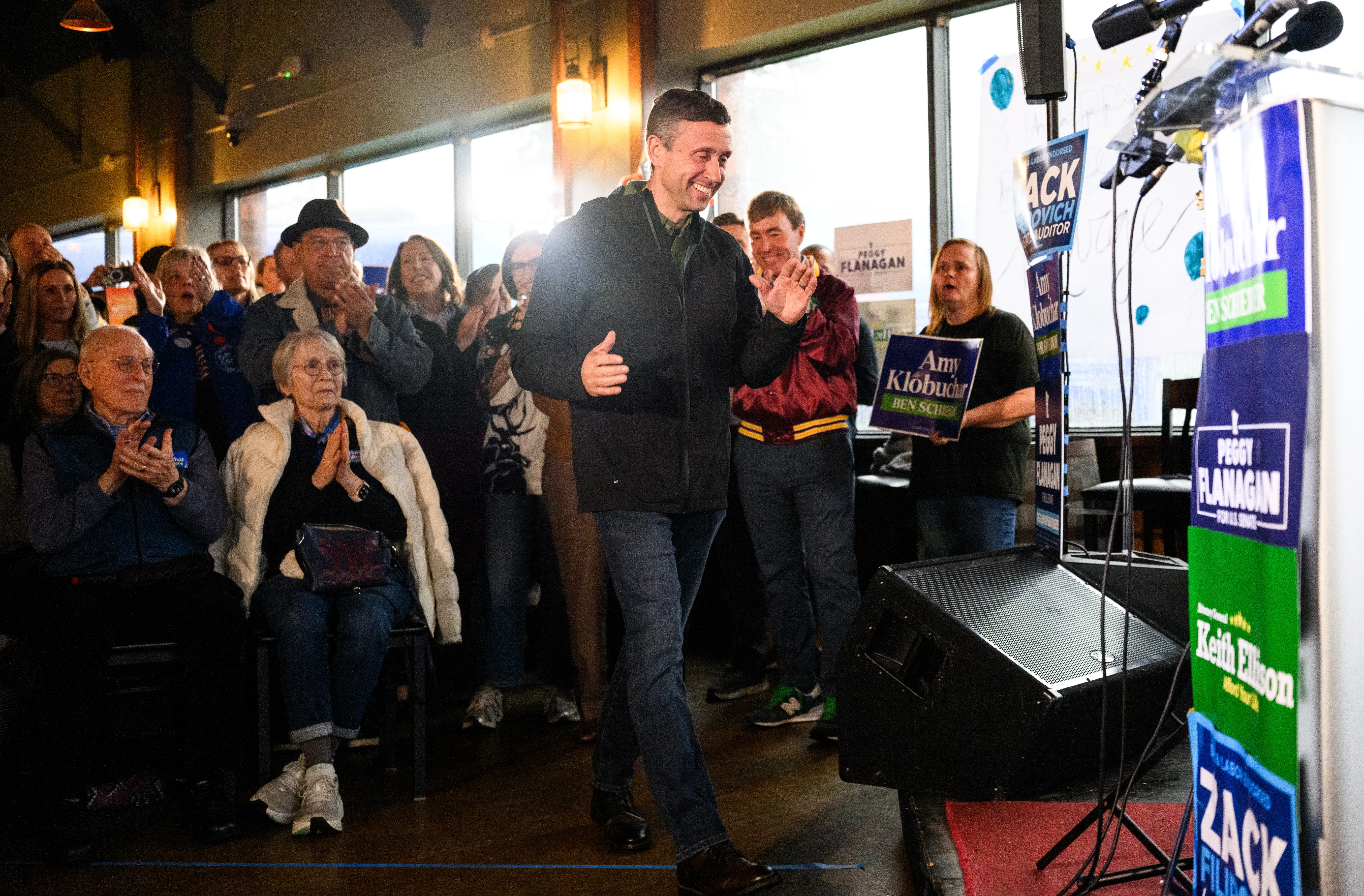
Abdul El-Sayed, the progressive favorite, has won Michigan's open Senate seat, beating Republican Mike Rogers after a bitter campaign and handing the Democratic Party's left wing a breakthrough in one of the nation's most important swing states.
El-Sayed, the son of Egyptian immigrants, will become the nation's first Muslim senator.
He is a former public health official who has never held elected office.
Eight years ago, he suffered a double-digit defeat in Michigan's Democratic gubernatorial primary; now he has won a U.S. Senate seat.
His grassroots campaign focused on universal health care, removing outside money from elections, and sharp criticism of Israel.
It carried him past massive outside spending in both the Democratic primary and the general election.
Progressive leaders, including Rep. Alexandria Ocasio-Cortez, backed him.
His victory will bolster the movement ahead of the 2028 presidential election, offering evidence that candidates embracing its agenda can win in critical battleground states.
Republicans had cleared the field for Rogers, a former congressman who narrowly lost a Senate race to then-Rep. Elissa Slotkin two years ago.
But Rogers struggled to balance his loyalty to President Donald Trump with concerns over rising prices tied to the war in Iran and economic turmoil from the president's tariffs.
The campaign also featured bitter attacks over El-Sayed's criticism of Israel.
Trump and other Republicans repeatedly sought to link him to terrorist organizations, despite no evidence of such ties, and questioned his loyalty to the United States.
El-Sayed faced questions about whether he could unite Democrats after a contentious primary, particularly among Black voters in Detroit and Jewish voters in its suburbs.
His primary opponent, Rep. Haley Stevens, shocked Democrats by endorsing Rogers on Nov. 1, saying the Democratic candidate hadn't done enough to address her and the Jewish community's concerns.
The race became a focal point in the national battle for Senate control after two-term Democratic Sen. Gary Peters decided not to seek reelection.
El-Sayed emerged from a bruising August primary against the establishment-backed Stevens that drew nearly $60 million in outside spending.
The American Israel Public Affairs Committee, or AIPAC, spent nearly $30 million opposing El-Sayed, its largest investment in a single race.
El-Sayed has been a staunch critic of Israel.
The contentious primary exposed divisions within the Democratic coalition.
El-Sayed faced criticism from some in Michigan's Jewish community over his rhetoric, including his statement that “hurt people hurt people” following an attack on a Michigan synagogue earlier this year.
He later apologized, saying he was “sorry” to “anyone who feels like my comments might have been hurtful.”
His campaign appearances with Hasan Piker, a popular political streamer who has made inflammatory comments about Israel, Jews and the Sept. 11 attacks, also became a target of criticism.
Some Democrats worried about Black voter turnout in Detroit after Stevens carried Wayne County in the primary.
Former President Barack Obama and former Vice President Kamala Harris were among the high-profile Democrats who campaigned with El-Sayed in the city to help mobilize voters.
El-Sayed campaigned on an unapologetically progressive platform that made some moderate Democrats uneasy.
Central to his campaign was Medicare for All, which would replace the current mix of private and public health insurance with a government-run, single-payer system. Independent Sen. Bernie Sanders helped build momentum for El-Sayed early in the campaign. Ocasio-Cortez joined him for a final campaign swing through Michigan's Upper Peninsula and the Detroit area.
The victory will give progressives a powerful argument heading into the 2028 presidential election that their agenda can win, even in the nation's most competitive battleground states.
Republicans opted to run it back with Rogers after his razor-thin 2024 loss, when Slotkin prevailed even as Trump won Michigan by more than a percentage point. Once a CNN contributor who criticized Trump, Rogers has aligned himself more closely with the president in recent years.
Rogers tried to expand his support among Democrats and independents, particularly Black and Jewish voters. But the political environment raised a fresh challenge for the Republican nominee.
Rogers, who chaired the House Intelligence Committee and built much of his career around national security, had to navigate high fuel prices and an unpopular war with Iran while remaining aligned with Trump. “The war with Iran needs to end, and end quickly,” Rogers wrote on social media in September.