
Aapki bhookh itni hai: PM slams corporates for pocketing profits, freezing jobs, wages
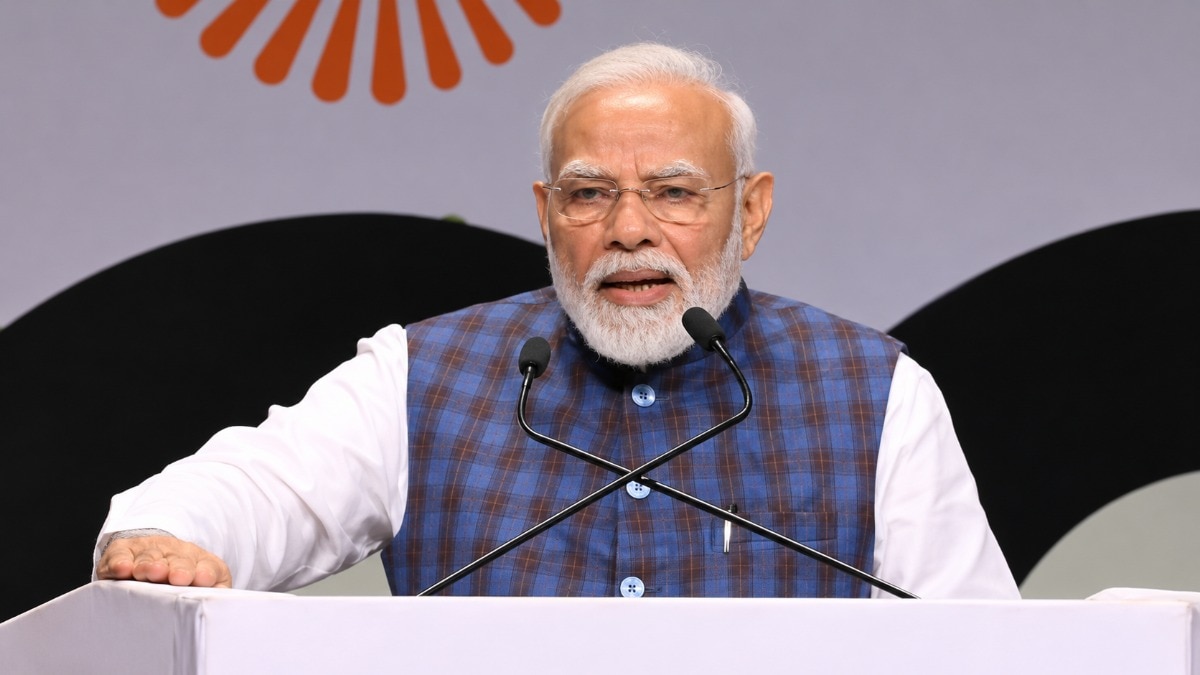
In a scathing criticism of India's corporates, Prime Minister Narendra Modi on Thursday blamed them for pocketing all the gains from the government's tax breaks, and not creating jobs or increasing wages. The stern remarks, the PM's first to business leaders, came with many of them sitting right across from him at an event of industry body FICCI at New Delhi's Bharat Mandapam on Thursday.
PM Modi said that the government had reduced the rate of corporate tax from 30% in 2014 to 22% in 2019, and also made income on a salary of Rs 12 lakh tax-exempt. However, corporates didn't match the steps. He questioned if this was how things would continue.
Talking about the government's initiatives to facilitate the ease of doing business, Modi told the business leaders, "Mujhe maloom hai taali nahi bajaoge. Achhi tarah jaanta hoon kyunki aapki bhookh itni hai, kitna hi khilao, pet bharta nahi hai (I know you won't applaud. I know that very well, because your appetite is so enormous that no matter how much you are given, it is never enough)."
"Have you increased the salaries of your employees? Have you increased the number of people you employ? No. Your attitude is: 'Modi ji, you do it. We will just watch'," said Modi, questioning, "Is this how things will continue?"
Real wage growth in India has either stagnated or declined in the last one decade. Experts say the private sector is not doing enough to create quality jobs with most employment being added in the gig industry.
The government expected the private sector to create jobs and hike wages when it reduced corporate taxes, but the benefits weren't passed on. What India saw instead was that the share of income tax overtaking earnings from corporate taxes, even as the middle class battled high inflation. This also hit economic growth as household consumption accounts for 61.5% of India's GDP.
Talking about how the government was doing its bit to increase household consumption, Modi said, "We have taken the bold step of providing such significant relief in income tax. This has substantially increased the purchasing power of our people."
The prime minister also said that tax refunds now reach the payee within a week, and not months.
"We have also simplified the system of tax returns and refunds so that taxpayers' money does not remain unnecessarily stuck in the system. Earlier, you would receive a letter after eight months. Today, refunds arrive within a week. Do they or don't they? At least applaud that," PM Modi said sarcastically.
A June 2026 report by Motilal Oswal Financial Services noted that corporate profits had grown substantially faster than the economy, with Nifty-500 earnings expanding at a 28.7% compound annual growth rate (CAGR) between FY20 and FY26, compared with 9.5% CAGR for the country's GDP.
Amid the profits, outward foreign direct investment (FDI) by Indian companies has risen significantly in recent years.
"Indian companies have announced overseas equity investments worth more than $14bn in the first four months of the fiscal year that began on April 1, compared with $18.7bn in the previous 12 months," reported The Financial Times in July this year.INDIVIDUALS PAY MORE TAXES THAN CORPORATES IN INDIA
The Modi government has rolled out multiple rounds of corporate tax relief since 2016, including successive extensions of the lower 25% tax rate to smaller companies and the landmark September 2019 reform that offered domestic firms an optional 22% rate, down from the earlier basic rate of 30%.
At the same time, the government has extended tax relief to individual taxpayers, most recently announcing a rebate that effectively makes annual incomes of up to Rs 12 lakh tax-free under the new tax regime, subject to applicable conditions. Yet, personal income-tax collections, including Securities Transaction Tax (STT), now account for a larger share of India's direct tax collections than corporate taxes.
The Income Tax Department's official time-series data show that personal income-tax collections, including STT, stood at Rs 10.45 lakh crore in FY2023-24, surpassing corporate tax collections of Rs 9.11 lakh crore.
The crossover first occurred in FY2020-21, when personal income-tax collections reached Rs 4.88 lakh crore, against Rs 4.58 lakh crore in corporate taxes. Corporate collections moved ahead again in FY2021-22, before personal income-tax collections regained the lead in FY2022-23.
The August 2025 report by the New Delhi-based financial services group, JM Financial Institutional Securities, meanwhile, found that the share of personal income tax in total direct taxes rose from 38.1% in FY14 to 53.4% in FY24, while the corporate tax share fell from 61.9% to 46.6%.CORPORATE PROFITS AT A RECORD HIGH
Alongside having to pay lower taxes, Indian corporates are also enjoying record high profits.
According to the Reserve Bank of India's March 2026 assessment, profits after tax of 7,992 non-government, non-financial public limited companies increased by 23.1% in FY2024-25.
The RBI also found that aggregate corporate profits rose from Rs 2.5 trillion in FY2020-21 to Rs 7.1 trillion in FY2024-25. Net profit margins also reached double-digit levels in FY25, driven largely by manufacturing companies.
A June 2026 report by Motilal Oswal Financial Services, meanwhile, found that the corporate profit-to-GDP ratio for Nifty-500 companies reached an all-time high of 5.2% in FY2025-26. For listed India Inc as a whole, the ratio stood at 5.7%, an 18-year-high.
According to the Motilal Oswal report, combined profits of Nifty-500 companies rose 15.6% year-on-year to Rs 18.1 lakh crore in FY26, nearly doubling from Rs 9.8 lakh crore in FY22.TAXES DOWN, PROFITS UP. ARE EMPLOYEES BENEFITTING?
India's employment indicators have improved over the past few years, with the Worker Population Ratio (WPR) for people aged 15 and above rising from 46.8% in 2017-18 to 58.2% in 2023-24, according to the Ministry of Statistics and Programme Implementation's Periodic Labour Force Survey (PLFS). The unemployment rate over the same period fell from 6% to 3.2%.
However, the increase in employment has not necessarily translated into a comparable expansion of secure, formal-sector jobs. A Niti Aayog report, based on PLFS 2023-24 data, estimated that nearly 87% of India's 63.4 crore employed workers were in informal employment, with only around 13% in formal jobs.
There is also a significant mismatch between workers' qualifications and the jobs they hold. The Economic Survey 2024-25 found that more than 53% of graduates and around 36% of postgraduates were employed in occupations below their educational qualifications.
The figures suggest that much of India's employment remains outside the formal, organised workforce that the large corporates usually provide, and are instead transitioning into informal and gig work, without the necessary benefits given by formal jobs such as medical insurance and provident funds.
Similarly, as far as wage and salary growth is concerned, it has also stagnated, even as corporates keep raking in profits.
The Economic Survey 2024-25, citing Periodic Labour Force Survey (PLFS) data, found that inflation-adjusted average monthly earnings of regular salaried male workers fell 6.4% between 2017-18 and 2023-24, from Rs 12,665 to Rs 11,858. For women, real earnings declined by 12.5%, from Rs 10,116 to Rs 8,855.
The Economic Survey, citing an SBI analysis of around 4,000 listed companies, reported that corporate profits grew 22.3% in FY2023-24, while employment increased by just 1.5%.
Employee expenses rose 13%, slower than the 17% growth recorded in the previous year. More recently, the PLFS 2025 annual report showed that average monthly earnings of regular salaried workers increased from Rs 21,455 in 2024 to Rs 22,699 in 2025, a nominal rise of around 5.8%.SITHARAMAN HAD ASKED INDIA INC FOR CAPACITY EXPANSION
Finance Minister Nirmala Sitharaman had in September 2025 said that the government had "lived up to the expectations of India Inc with supportive policies", and it was "now the industry's turn to invest more and expand capacities".
After the GST reforms in September 2025, Sitharaman said at an event in Kolkata, "More the demand, companies will invest more to create capacities. More production will lead to more jobs which means a wider tax base," according to a report in Business Standard.
On Thursday, PM Modi, for the first time, criticised business leaders for not doing enough to boost the India Story, by creating jobs and hiking wages.- EndsMust Watch
A history and geopolitics buff, Shounak is a newly minted writer. He looks to bring his interests into his stories. When not at work, he can be found consumed in books, videogames and drawing.


