A new digital ID is coming to South Africa — here’s how it works - IOL
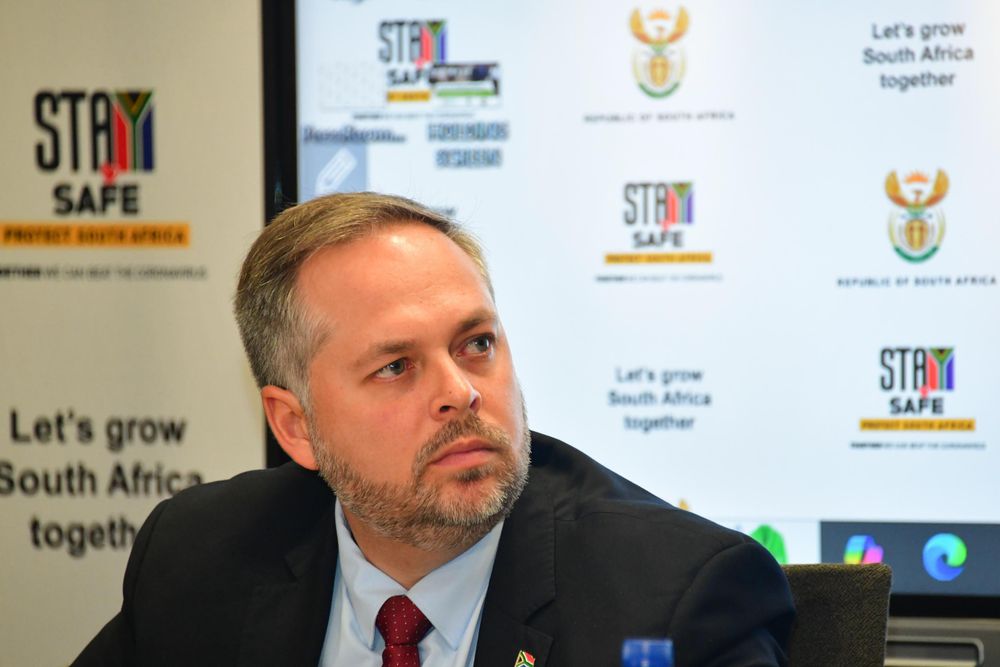
Home Affairs Minister Leon Schreiber demonstrates South Africa’s first working digital ID as the department moves to replace fraud-prone identification processes with biometric and digitally verified systems.
South Africa has unveiled its first working digital ID as Home Affairs moves to shut down identity theft, document fraud and manipulation of government systems through a sweeping shift towards biometric verification and automated services.
Home Affairs Minister Leon Schreiber demonstrated the working prototype on Thursday as part of the department’s “Quantum Leap” reform programme, saying the smartphone-based identity system would allow South Africans to securely prove who they are without relying solely on physical documents.
The digital ID will be linked directly to the population register and secured through biometric verification, with users able to control what personal information they share and see when their data has been accessed.
“It is a revolution that Home Affairs is delivering and you are the very first people ever to see digital ID in action,” Schreiber said after demonstrating the system.
The system is intended to replace the fraud vulnerabilities associated with paper-based identification while allowing citizens to carry verified Home Affairs credentials on their smartphones.
Schreiber said digital ID would not simply be a photograph or electronic copy of an ID card.
“Digital ID cannot and will not be a photograph of your ID card on your phone. That's not what it is. Digital ID is a remote verification tool,” he said.
“It is a secure tool linked to your biometrics that enables you to confirm who you are without anyone having the ability to interfere with that.”
The prototype demonstrated on Thursday was linked to Schreiber’s actual information on the population register.
During the demonstration, an immigration official requested information from Schreiber’s digital ID using a QR code. Schreiber was able to choose which information to disclose, approve the request and, during a second demonstration, deny access altogether.
The department says the system will also create an audit trail allowing citizens to see when their information is accessed.
“Surveillance is the state watching the citizen. What we are building is the opposite, the citizen watching the state and other users of their data,” Schreiber said.
The digital ID rollout forms part of a broader move to eliminate vulnerable paper-based identification.
Schreiber announced that Home Affairs will stop producing green ID books on March 31, 2027, before the document loses its status as a valid form of identification on March 31, 2028.
He said independent research had identified the green ID book as one of the most defrauded documents on the African continent, with its paper format and manually attached photograph making it vulnerable to manipulation.
“Because it is paperbased and contains a manual photograph that can easily be manipulated, this document sits at the core of the scourge of identity theft in our country,” Schreiber said.
“What many people may not realize is that it is also a critical pull factor for illegal immigrants seeking to obtain fraudulent papers.”
About 14.7 million South African citizens and permanent residents still rely solely on green ID books, down from 16 million six months ago, according to the minister.
Once production ends in March 2027, holders will have another 12 months to switch to smart ID cards before green books cease to be recognised as valid identification.
The department does not intend to abolish physical identification altogether.
Schreiber said use of the digital ID would be voluntary and the physical smart ID card would remain available.
“Effectively, we are moving from a situation where we currently have two versions of valid ID in the form of the insecure green ID book and the smart ID card to two new versions in the form of the secure smart ID card and smartphone-based digital ID,” he said.
The department is processing public submissions on draft digital ID regulations, with Schreiber saying the final rules would place limits on how personal information could be used.
The digital wallet is also expected eventually to hold other Home Affairs credentials, including birth and marriage certificates.
The department is extending the same anti-fraud strategy to immigration and passports.
Its Electronic Travel Authorisation system uses biometrics, document verification and machine learning to process visa applications, with additional categories, including work and study visas, expected to be added in early 2027.
Schreiber said automation was intended to remove opportunities for officials or intermediaries to manipulate processes.
The department is also working towards a biometrically secured e-passport containing a chip with a traveller’s biometric information.
Once implemented, the passport could be read by electronic airport gates, while automated border gates are also planned as the Electronic Travel Authorisation system expands.
Schreiber summed up the department’s anti-corruption argument for automation in stark terms: “You cannot bribe a computer.”
Home Affairs said its internal crackdown had resulted in 144 dismissals, 73 arrests and 10 convictions across the department and Border Management Authority since July 2024.
The department ultimately wants digital systems to replace processes historically dependent on paperwork and human intervention.
“The fraud prone green ID book is being replaced by a modern and secure digital identity system,” Schreiber said.
“Corruption is not only being fought, it is being replaced by automation.”