'58th': A New Visual Language for a Horrific Story - GMA Network
Near the end of “58th” — the new heart-wrenching documentary film about one of the most heinous crimes in Philippine history — I thought I saw a familiar mansion flash by.
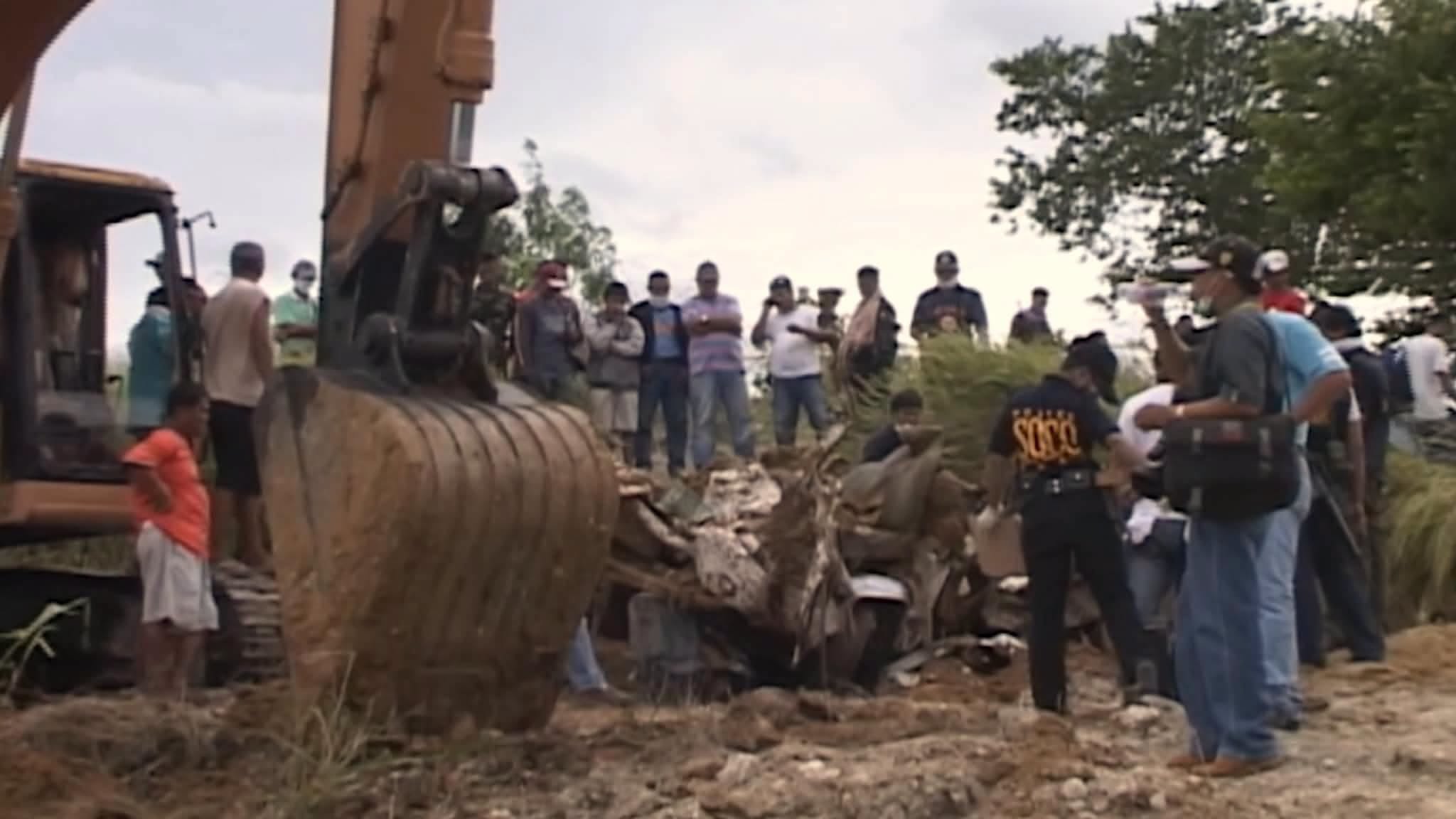
In 2003, I was face-to-face with the Ampatuans in their fortified house in Maguindanao. That was six years before a backhoe dug a half-finished mass grave for 57 dead bodies, including 32 journalists.
While doing my own documentary for "I-Witness" about revenge killings in Mindanao, I had made an appointment to interview the patriarch, then-Maguindanao Governor Andal Ampatuan, Sr., about the recent murder of his son, Saudi Ampatuan, the mayor of a small town in the same province.
Before my cameraman and I could set foot in the governor’s heavily guarded compound, we had to go through an intermediary who berated me about what he claimed was inaccurate reporting by Manila-based journalists. After unloading that grievance toward people in my profession, he told me to proceed to the governor’s mansion. Looking back now, especially after watching “58th,” I was probably foolish to believe my media ID offered me any real protection.
On November 23, 2009, members of the rival Mangudadatu clan thought having journalists in their convoy provided a shield too. They vastly underestimated the ruthlessness of their adversaries. Everyone in the convoy was killed in what became known as the Ampatuan Massacre – 57 dead bodies and one missing.
The missing body, Reynaldo "Bebot" Momay, a photojournalist for the Sultan Kudarat-based Midland Review, would have been number 58. Yet to this day, the government has not legally recognized him as one of the murder victims because his corpse was never found.
Told through the crusade of Momay’s daughter Nenen for recognition and closure, “58th” revives attention on the massacre at a pivotal time for Mindanao. After decades of conflict, the inaugural parliamentary elections last Monday in the Bangsamoro Autonomous Region offers new hope for addressing the roots of regional violence.
Held under new anti-dynasty rules that constrain political clans like the Ampatuans from monopolizing local power, this effort to curb the dominance of dynasties is more progressive than anything in this realm the national Philippine Congress has achieved.
Watching “58th” with its harrowing themes against the backdrop of this political transition triggers mixed feelings. Even the opportunity to see this film this week has been a cause for rejoicing, and the culmination of a different kind of struggle. After initially being denied a permit for commercial screenings because it could influence ongoing legal cases, “58th” was finally allowed to be seen in movie theaters starting this Wednesday.
What viewers will see is an original, hybrid approach to nonfiction storytelling. Plenty of news footage exists to illustrate the gruesome aftermath of the Ampatuan Massacre, but none that shows what happened before it: the quiet anxiety of the convoy, the terror of the victims, and the cruelty of the killers.
Traditional documentary filmmakers might have dramatized those missing moments through live-action re-enactments. “58th” fills those voids through animation instead, creating a striking nonfiction film that departs from conventional documentary visual language. The real innovation here is not merely the choice of animation but the creative solution to the subject matter’s core dilemma: the absence of archival material for the most crucial aspects of the story.
Directed by Carl Joseph Papa, “58th” uses rotoscope animation to convey the horror of what happened on that remote hilltop in Sitio Masalay in Ampatuan town. By having artists trace frame-by-frame over live-action video, the technique captures authentic human proportions, physical movement, and facial expressions.
Animation is also used to tell the tender story of Momay’s family: their simple joys before the tragedy and the torturous emotional limbo of not finding the body of their loved one. The voices of Glaiza de Castro and the late Ricky Davao bring a sensitive realism to the lead animated roles, marking one of Davao’s final, unforgettable performances before his passing in 2025.
Animation gave the filmmakers the freedom to explore emotions and visualize testimony to reveal truths that might have been unattainable otherwise. But they also shot new footage with Nenen on location that made possible its haunting, meditative ending.
The seeds have certainly been planted for others to employ this blend of archival footage, stylized animation, and fresh video. Yet this style must be wielded discerningly, because it won’t work without narrative necessity.
The real ambition of this film lies not in its form, but in its controversial substance. The producers led by Nessa Valdellon and Johnson Tam could have chosen a much safer topic for this innovative approach. Instead, they shepherded a project through a needle’s eye just to be seen publicly. It’s not an isolated experience.
Another recent feature-length documentary, “Lost Sabungeros,” by some of the same professionals — all colleagues of mine at GMA — has gone through its own gauntlet just to be screened because it dared to investigate crimes linked to powerful interests.
I like to think that this kind of commitment is embedded in the DNA of our growing community of nonfiction filmmakers – journalists who started out producing documentaries for local television two decades ago and are now crafting award-winning projects for international audiences.
We have long realized that real life in the Philippines is as magical, fascinating and, yes, horrific as anything we could ever make up.
58th is showing in Shangri-La Plaza theaters in Mandaluyong, September 16-22, 2026. — LA, GMA News