5 things to know about Tilcayo, the newly identified cat species - GMA Network
Tilcayo has just been discovered and it's already taking over the internet!
Netizens are fawning over the tiny wild cat found living in Bolivia’s cloud forests. It has been identified as a previously unknown species, marking the first time in more than a century that a new living cat species has been formally named and described.
1. It’s one of five genetically distinct tiger cats
Tilcayo belongs to a group of wild cats known as tiger cats, which are found across much of South America. Tiger cats were previously considered a single species, but genetic studies have since revealed multiple distinct species within the group.
The new study found that there are five genetically distinct tiger cat species, including Leopardus tilcayo, the scientific name given to the newly identified species.
The name Tilcayo was retained from what local communities call the cat.
Per National Geographic, Nogales-Ascarrunz asked local residents why they called it Tilcayo. One resident explained that their grandfather called it Tilcayo, and the name was passed down locally. The name does not appear to have a particular meaning in Spanish or Quechua.
2. It’s smaller than your average house cat
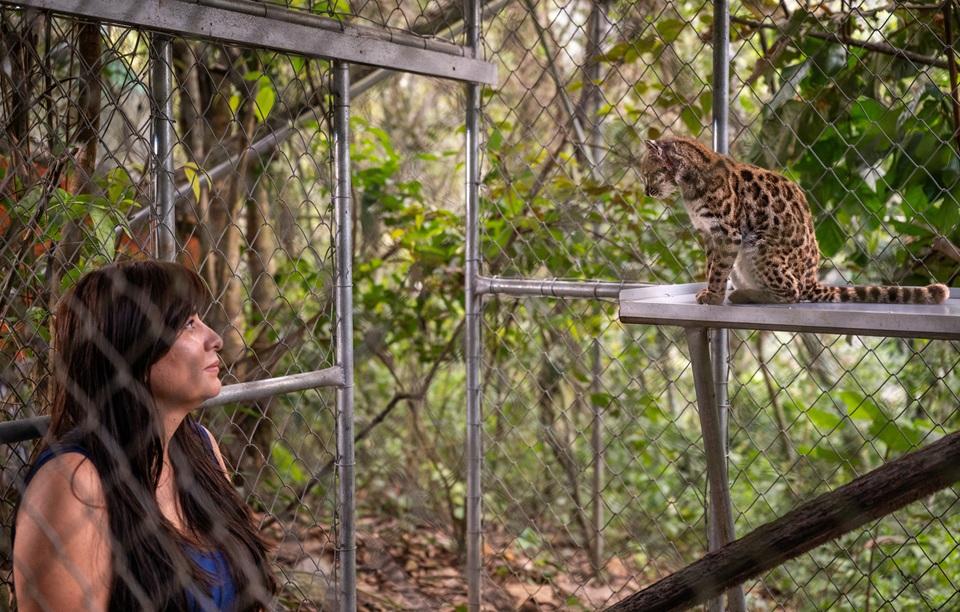
Tilcayo is a particularly small wild cat, measuring about 18 inches (46 centimeters) long and weighing around 3 pounds (1.4 kilograms), smaller than the average domestic cat.
It has light brown fur with irregularly shaped rosettes across its body.
When biologist and National Geographic Explorer Paola Nogales-Ascarrunz first encountered the cat, she also noted its small, scrunched-up face, short and round ears, and long whiskers.
Its appearance also helped spark researchers' interest. Nogales-Ascarrunz previously said some of the cat's characteristics did not match descriptions that were mostly based on Brazilian tiger cats.
National Geographic reported that she first saw the animal in 2016 after a wildlife sanctuary contacted her about a “weird cat.” A local man had found it as a kitten on a road near a forest and initially took it home, believing it was a domestic breed.
3. Its DNA tells a 1.4-million-year-old story
According to an earlier report, the species was found in Bolivia’s lush Yungas forest, a mountainous region where forests are often covered by clouds and surrounded by high humidity.
The Yungas forest ecoregion lies on the eastern slope of the Andes Mountains.
Researchers analyzed DNA from 38 cats sampled across several South American countries, including eight museum specimens. Their analysis showed that the Tilcayo lineage separated from other tiger cats about 1.4 million years ago.
Evolutionary biologist Jonas Lescroart previously said the genetic differences and the estimated length of physical separation support treating the Bolivian tiger cat as a species of its own.
Per National Geographic, genomic analyses are increasingly considered a key tool for distinguishing closely related small wild cats, since physical characteristics alone may not be enough to tell them apart.
Researchers also described a new tiger cat subspecies in Peru's Yungas, named Leopardus tigrinus antisuyo.
4. It may hunt small rodents at night
There is still much to learn about how Tilcayo lives in the wild.
Researchers found remains of small rodents in scat samples, suggesting they may be part of its diet. Camera-trap evidence also indicates that the cat could be more active at night, as previously reported.
For now, researchers' information is limited to two live individuals they examined and a small number of camera-trap records.
One of the live cats is a 10-year-old male currently living at Senda Verde Wildlife Sanctuary. He was previously kept by a local family in their home.
National Geographic said that many basic details about the species remain unknown, including what it eats, what eats it, how it reproduces, and other aspects of its day-to-day life.
The discovery could lead to a closer look at the species’ conservation status.
The International Union for Conservation of Nature (IUCN) Red List currently treats tiger cats as two vulnerable species with declining populations. Researchers have shared their findings with the IUCN, which will assess the five lineages separately in an upcoming review. They added that Tilcayo could potentially be considered endangered when assessed on its own.
The Yungas itself is one of the region's most threatened ecosystems. As previously reported, its mountain forests face growing pressure from deforestation, agricultural expansion, human-caused fires and mining.
Researchers said restoring forest areas damaged by fires, protecting remaining native forests and maintaining connections between habitats are urgent priorities.
National Geographic stated that the researchers hope the methods used to identify Tilcayo can be applied to other small wild cats around the world and potentially help inform conservation efforts. —JCB, GMA News