5 Hard Truths for Mark Carney’s Anti-Trump Pivot - Newsweek
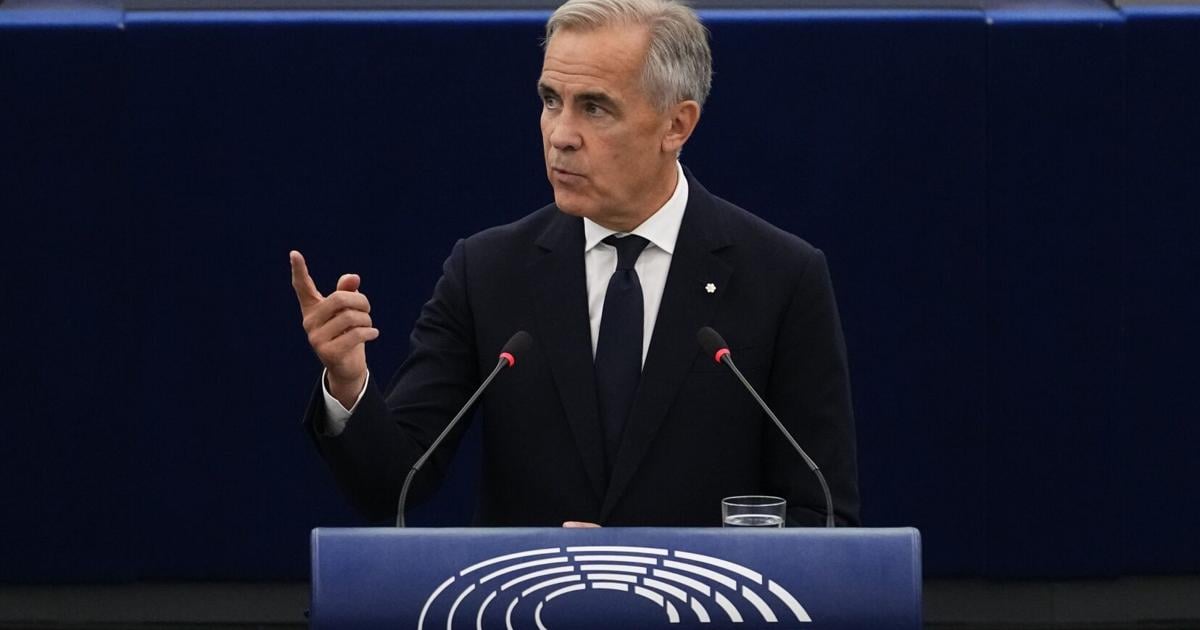
When Mark Carney told the European Parliament on Thursday that economic integration has become a form of leverage, it was an argument delivered in Strasbourg but pointed squarely at Washington, D.C.
Canada’s deteriorating relationship with the U.S. was the orange-hued specter hanging over the prime minister’s speech to his European friends. What Carney was proposing with Europe, he insisted, was not “a great-power rival, only with better manners.”
"We do not seek power to dominate others,” the mild-mannered Carney said in Strasbourg.
“On the contrary, we are pursuing resilience so no one, no one can control our open markets, impair our sovereignty, threaten our territorial integrity, or undermine our freedoms, our democracies, our rule of law.
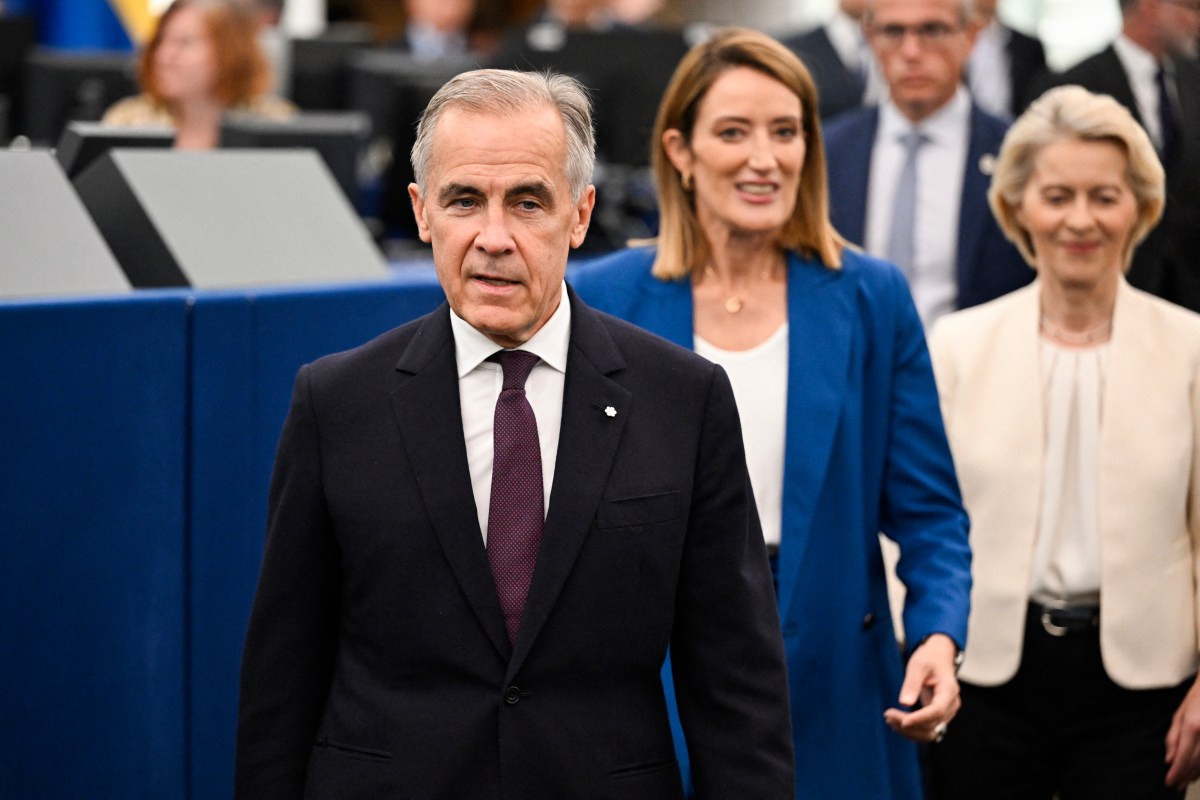
Carney got a standing ovation. A day earlier, European Commission President Ursula von der Leyen had proposed making Canada the European Union’s first associate member.
Trump called the idea potentially “hostile,” and threatened much heavier tariffs on Europe if he deemed it so. His tariffs, his demands for economic concessions, and his repeated talk of a 51st state have sharpened Ottawa’s incentive to reduce its exposure to the U.S.
Having looked earlier to China, Carney is now turning to Europe in his pursuit of greater autonomy from Canada’s southern neighbor. But how far can diversification actually alter an economy built around continental integration?
On the evidence, not as far as the applause for Carney in Strasbourg suggests.
Canada can change governments, treaties, and alignments. But it cannot change the map.
After a year of determined diversification, 66.3 percent of Canadian merchandise exports still went to the U.S. in July. The infrastructure beneath is where Carney’s politics cannot reach.
Global Affairs Canada counts more than 100 cross-border oil and gas pipelines and electricity transmission lines, and reports that about 94 percent of Canadian crude exports to the U.S.—roughly 4 million barrels a day—move through transboundary pipe.
Energy alone is about 29 percent of what Canada sells to the U.S. All of that infrastructure connects Canada to the U.S. None of it reaches a market—a heavily fortified one at that—across an ocean.
Carney’s case is true enough. Exports to countries other than the U.S. hit a record C$25.6 billion ($18.3 billion) in July, or 33.7 percent of the total, with China, Germany, and the Netherlands driving the gain. Canada plainly has somewhere else to sell.
The difficulty, though, is scale and cost. The Bank of Canada warns that finding new markets and building new supply chains will take time and money, and flags a detail that complicates the whole project.
American content accounts for roughly one-fifth of the value of what Canada sells to the U.S.
Europe and Asia can widen Canada’s options, certainly. But what they cannot offer is the same combination of proximity and decades of supply chains built to cross a single border.
Associate membership is not a status the EU treaties currently contain. It would have to be created, and it is not yet clear who must approve it or by what route. Carney himself acknowledged the term has still to be defined, as did Von der Leyen.
The EU is famous—infamous, perhaps—for being a complex, slow-moving bureaucracy that struggles to reach consensus and get things done.
Canada also has a cautionary example directly in front of it. CETA, the existing Canada-EU trade agreement, has been running provisionally since September 2017.
Nearly nine years later, 10 of the EU’s 27 member states have still not ratified it nationally—France, Italy, Ireland and Poland among them.
Announcements from Brussels and implementation across 27 sovereign democracies are different things, as Canada has bitter experience of already.
Carney has spent the year urging middle powers to refuse economic coercion rather than absorb it. Europe has chosen differently.
Brussels struck its tariff framework with Washington in July 2025, accepting a 15 percent ceiling on most of its exports, and on July 31 this year extended the suspension of its own retaliatory measures with no end date.
Canada went the other way. After Ottawa suspended negotiations in August, it imposed counter-tariffs of up to 50 percent on C$27.6 billion (nearly $20 million) of U.S. goods, effective September 8—nine days before Carney addressed the European Parliament.
That is not a criticism of Brussels so much as a description of what Brussels actually is. It is 27 governments with divergent industries, domestic politics and appetites for confrontation. Ottawa is not swapping dependence on one capital for access to another.
Routine trade policy is decided in Brussels, often by majority. But the treaties reserve unanimity for association agreements, and in practice nearly every EU trade deal has been concluded as a mixed agreement requiring all 27 national ratifications.
As Trump will tell you, trading with the EU is not easy.
The IMF estimates that Canada’s own non-geographic barriers between provinces and territories operate like a tariff of roughly 9 percent, and that removing them could raise real GDP by as much as 7 percent over the long run.
So Canada is negotiating unprecedented integration across an ocean while the market inside its own borders remains unfinished.
Before Ottawa can become meaningfully less dependent on the U.S., its most promising alternative market may be Canada itself.
The Canada-EU summit takes place in Montreal on October 29-30.
Can it produce a defined associate-membership framework—with real obligations and an approval route that avoids the national-ratification bottleneck still preventing CETA’s full entry into force?
Also keep an eye on the non-U.S. share of Canadian exports. If that continues climbing past 40 percent, rather than settling in the mid-30s, then Carney may have found an escape hatch from dependence on the U.S.
But Carney’s real objective is harder than just turning toward Europe. It is making Canada less vulnerable to America without pretending that the U.S. is replaceable.
Canada can acquire alternatives to the U.S. But it cannot acquire another U.S.