Xi, Putin and Trump walked into a room and one walked out the biggest winner - ABC News & Headlines – Australian Broadcasting Corporation
The highly anticipated and historic summit between Donald Trump, Xi Jinping and Vladimir Putin resulted in few key deliverables. (Reuters: Eloisa Lopez/Ng Han Guan)
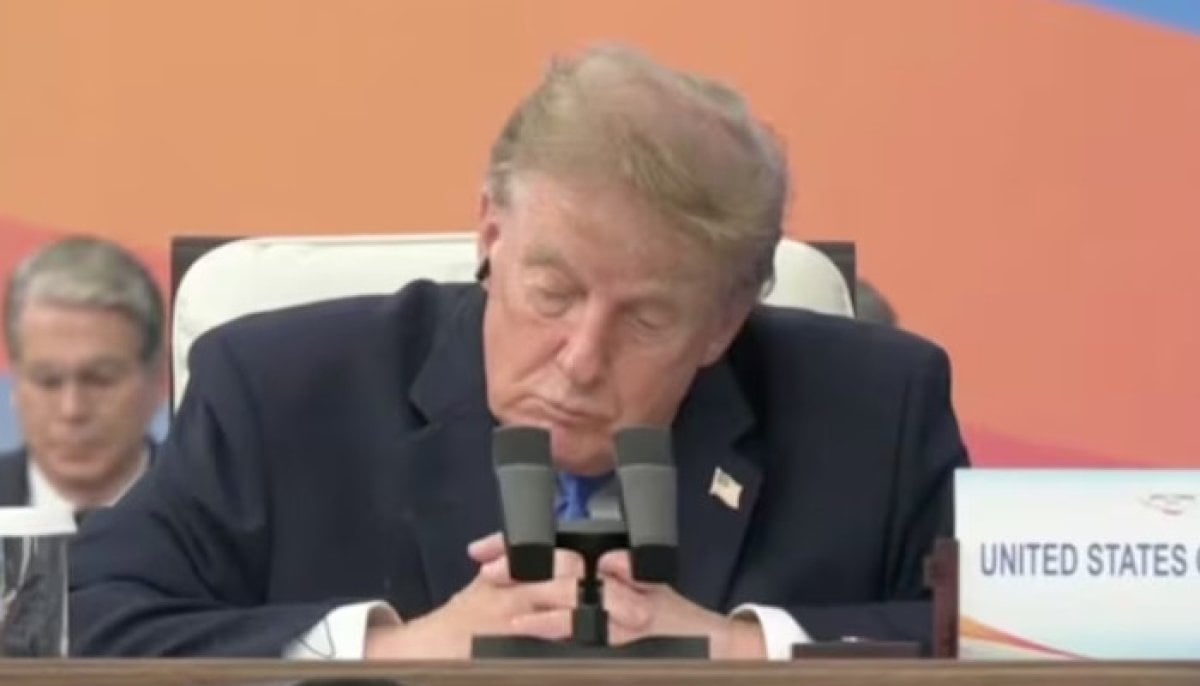
The image of Donald Trump, Xi Jinping and Vladimir Putin seated together, talking for the very first time, is a monumental moment in history.
But the striking photo is likely to be the only lasting impression from the powerful trio's trilateral meeting in China.
The outcomes, or lack thereof, will become a footnote on a history page, instead of the main event.
The presidents of America, China and Russia came into the summit with very different motivations and, even before the meeting, the expectations of a major diplomatic breakthrough were low.
Political analysts say the significance of the talks was not just in who was meeting, but the message it sent. (Reuters: Sputnik/Vyacheslav Prokofyev)
But three consequential global topics had been placed on the agenda: nuclear disarmament, the war in Ukraine and the war in Iran.
With some of the world's most powerful and influential men coming together, and the world watching closely, there was always a chance for a surprise outcome.
After 90 minutes behind closed doors, the leaders went their separate ways and released a joint "declaration of peace" statement, outlining their shared talking points.
The contents of the communiqué may have caught some off guard, with its pledge to reform the United Nations, its critique of the International Criminal Court, and an agreement that nuclear war must never be fought.
But the brief note was in fact a (very) short list of the few things the leaders could actually agree on, revealing just how far apart they still are on so many critical issues.
What good is a declaration of peace, with no plan to achieve it?
Even on the issue of nuclear non-proliferation, the three couldn't agree to future talks.
Trump himself conceded that a mutual agreement to limit nuclear weapons would be hard to achieve in the future.
Finding a resolution to the deadly and intractable conflicts in Ukraine and Iran also remained untouched by the trio, which, to some people, might seem like a good place to start when trying to map out a "declaration of peace".
So, what was the point of the meeting and how could the three leaders possibly be hailing it such a success?
It was, in fact, an optics bonanza that allowed each president to emerge with a personal victory, without giving any concessions.
Trump was lavished with the attention and praise he relishes, particularly after his crushing domestic defeat in the midterm elections.
The US leader got to stand side by side with the strongmen he openly admires on his path to building a foreign policy legacy. He even declared at the start of the meeting: "We're making history."
The summit was also a diplomatic coup for China's President Xi Jinping.
As the organiser and mediator making that history happen, the symbolic event furthered Xi's ambitions to be seen as a diplomatic powerbroker.
Beijing would be celebrating the smooth conclusion of the summit as evidence of Xi's growing influence, as the only person who could bring these three countries together, all without getting pressure on a sensitive issue such as Taiwan.
But perhaps the biggest winner out of the meeting was Vladimir Putin.
The Russian president, who is subject to an International Criminal Court (ICC) arrest warrant over alleged war crimes, has been ostracised from the world stage and become a global pariah since his invasion of Ukraine.
Now, he has been invited back to the top table of global politics, in a very public way, and given equal stature with two superpowers.
Trump even praised Putin and called him "my friend", later telling Europe it could save money and lives by ending the war with Russia, according to Politico.
The Russian leader's influence can also clearly be seen in the "declaration of peace" action points, which largely align with Putin's priorities and push back against institutions that have been critical of him, such as the ICC.
All of this, without the autocrat making any compromises on the war in Ukraine.
It's no wonder Putin was reportedly in a "brilliant mood", according to a Kremlin aide, when asked about the meeting.
The irony of Putin preaching about peace, when the war in Ukraine continues to kill record numbers of civilians, is perhaps one of the only real, concrete outcomes of this whole event.