Will your next heart surgeon be a human or a robot?
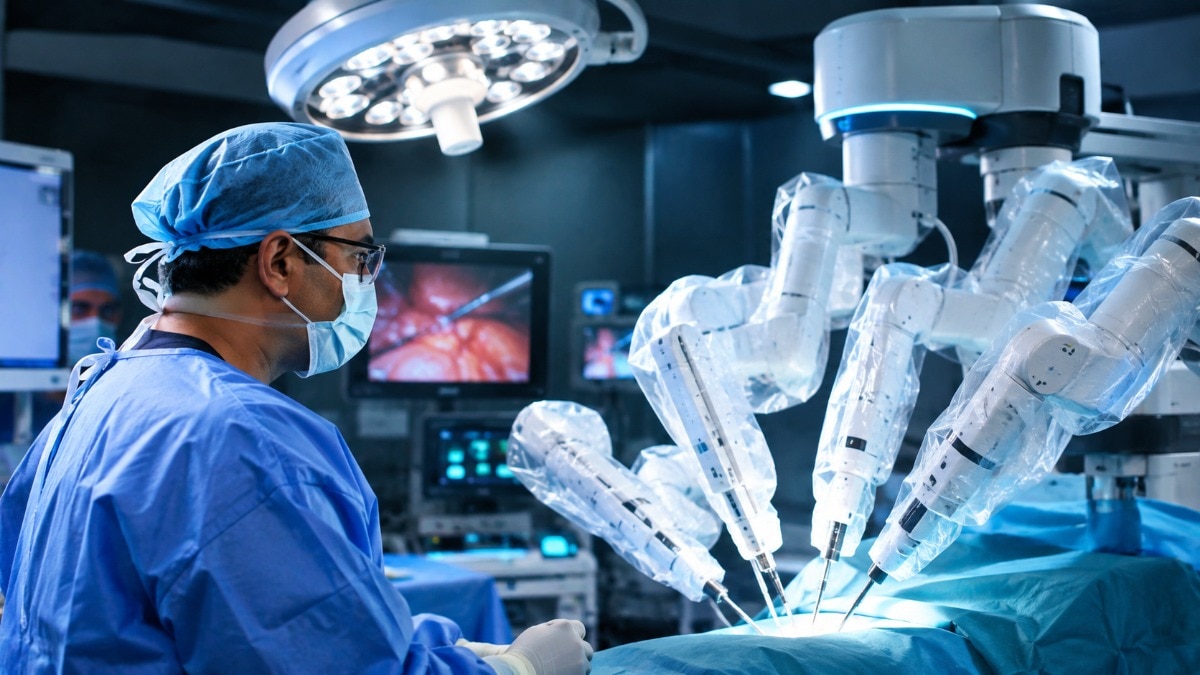
The operating room of the future may look very different from what we see today. Robotic arms, advanced cameras and artificial intelligence are gradually changing how doctors perform complex surgeries. From making smaller incisions to allowing surgeons to collaborate through robotic systems, technology is opening up possibilities that were once difficult to imagine.
But as machines become more involved in medical procedures, an important question emerges: Could robots eventually take over the work of human surgeons?
The answer, according to doctors working with robotic surgical technology, is not so simple. While robots can improve precision, reduce hand tremors and help surgeons perform complicated procedures through smaller openings, they do not independently make surgical decisions or operate on patients. Human surgeons continue to control every movement.
Speaking about the future of robotic surgery, Dr Sudhir Srivastava, Founder, Chairman and CEO of SS Innovations International, Inc., Dr Nitin Kumar Rajput, Robotic and Minimally Invasive Cardiac Surgeon at Medanta, Gurugram, and Dr Lalit Malik, Chief Cardiac Surgeon at Manipal Hospital, Jaipur, explained how these developments could change surgery in the coming years.
Their experience with robotic beating heart bypass surgery also offers a glimpse into how technology could make operations less invasive and potentially more accessible to patients.
Traditionally, coronary artery bypass grafting (CABG), commonly known as bypass surgery, involves making a large incision in the chest and sometimes splitting the breastbone to reach the heart. In many procedures, the heart is also stopped temporarily.
However, robotic technology is changing how surgeons approach these operations.
Dr Srivastava explained that robotic bypass surgery allows doctors to perform complex procedures through small openings between the ribs, instead of making a large incision across the chest.
The robotic arms are inserted through small openings, while the surgeon controls their movements using a console. This allows doctors to operate on the heart with greater precision.
He said robotic surgery can also help surgeons use internal mammary arteries, which are blood vessels located inside the chest, for bypass grafts. These arteries can remain open for many years and are considered valuable conduits for bypass surgery.
According to Dr Srivastava, smaller incisions can help patients recover faster and return to their normal activities sooner.
He recalled that during his experience performing robotic bypass surgeries in the US, some patients were discharged within 24 hours, while many others went home within two days.FIVE ROBOTIC ARMS AND TWO CONSOLES COULD CHANGE HOW SURGEONS WORK
One of the recent developments in robotic cardiac surgery is the introduction of a five-arm, dual-console system.
Dr Srivastava explained that conventional robotic systems generally allow one surgeon to control four robotic arms. This means the surgeon has to perform several tasks alone, including holding instruments, managing tissues and carrying out delicate surgical movements.
The new system allows two surgeons to participate in the same operation using separate consoles. While one surgeon controls four arms, the second surgeon can control the fifth arm and assist with specific steps.
This additional arm can help with tasks such as holding tissues, improving exposure and assisting with suturing.
The development could make complex operations easier and allow surgeons to work together more effectively.
Dr Srivastava said the system could change how cardiac surgery is performed and may also have applications in other surgical specialities.ROBOTS DO NOT REPLACE SURGEONS, THEY HELP THEM OPERATE WITH GREATER PRECISION
Despite these developments, doctors say robotic systems are not designed to replace human surgeons.
Dr Rajput explained that robotic surgery is still performed entirely by doctors. The robot acts as a tool that replicates the surgeon's movements inside the patient's body.
One of its major advantages is that it can minimise hand tremors and provide a magnified view of the surgical area. This allows surgeons to perform delicate movements with greater precision.
He explained that the robotic instruments enter the chest through openings measuring around 8 to 10 millimetres. This avoids the need for a large incision in selected patients.
According to Dr Rajput, this could also reduce the fear of undergoing surgery among patients who are worried about large surgical cuts.
However, he stressed that robotic surgery is not suitable for everyone. Patient selection remains important, and traditional bypass surgery will continue to be necessary in certain cases.REMOTE SURGERY COULD ALLOW DOCTORS TO COLLABORATE ACROSS CITIES
Another possibility that robotic technology is opening up is remote surgical collaboration.
Dr Srivastava explained that robotic systems could eventually allow two surgeons to participate in an operation even if they are located in different places.
For instance, one surgeon could be physically present in the operating room while another specialist, sitting in a different city, could assist by controlling the fifth robotic arm.
He said the company has already conducted more than 30 cardiac telesurgeries, demonstrating the potential of technology to extend surgical expertise beyond geographical boundaries.
However, he clarified that such collaboration would need to develop carefully, with patient safety remaining the priority.
This could be particularly useful for hospitals in smaller cities that may not always have access to highly specialised surgeons.CAN ROBOTIC SURGERY BECOME MORE AFFORDABLE IN INDIA?
Cost remains one of the biggest barriers to the wider adoption of robotic surgery.
Dr Srivastava said India has significantly fewer robotic surgical systems than countries such as the US, partly because of the high cost of the technology.
However, Indian made systems could help address this gap by reducing the initial investment required by hospitals, along with maintenance and disposal costs.
Dr Rajput added that affordability could encourage more hospitals in tier 2 and tier 3 cities to adopt robotic surgery.
He pointed out that government hospitals also need cost-effective technology because they treat large numbers of patients, many of whom cannot afford expensive procedures at private hospitals.
The technology could therefore help make advanced surgical treatment more accessible, provided hospitals have trained surgeons and the necessary infrastructure.WILL AI AND ROBOTS EVER REPLACE HUMAN DOCTORS?
While robotic technology is advancing, doctors believe human expertise will remain essential in the operating room.
Robots can assist with precision, movement and visualisation, but decisions about whether a patient needs surgery, which procedure is appropriate and how to respond to complications still require medical judgement.
Dr Rajput also emphasised that robotic surgery is not suitable for every patient. Although doctors are currently performing selected procedures, they expect the range of patients who can benefit from the technology to expand as surgical experience increases.
The future of surgery, therefore, may not be about machines replacing doctors. Instead, it could be about doctors using increasingly advanced tools to perform procedures that are safer, less invasive and more accessible.
For now, the surgeon remains in control. The robot simply makes it possible to do more with greater precision.- EndsMust Watch
Smarica Pant is a senior digital media content writer and editor with over 13 years of experience in news reporting and feature writing. A natural storyteller with a keen eye for emerging trends, she has consistently delivered impactful content that informs, engages and resonates with diverse audiences.
With strong expertise in multimedia storytelling, social media strategy and SEO-led content, Smarica has successfully navigated and adapted to the rapidly evolving digital landscape. Her strength lies in shaping compelling narratives while upholding the highest standards of journalistic integrity. Over the years, she has also mentored young writers, led key editorial initiatives and played an active role in building content strategies that balance reach with relevance.