‘We need a new trade logic,’ says top Brazilian climate negotiator - Valor International
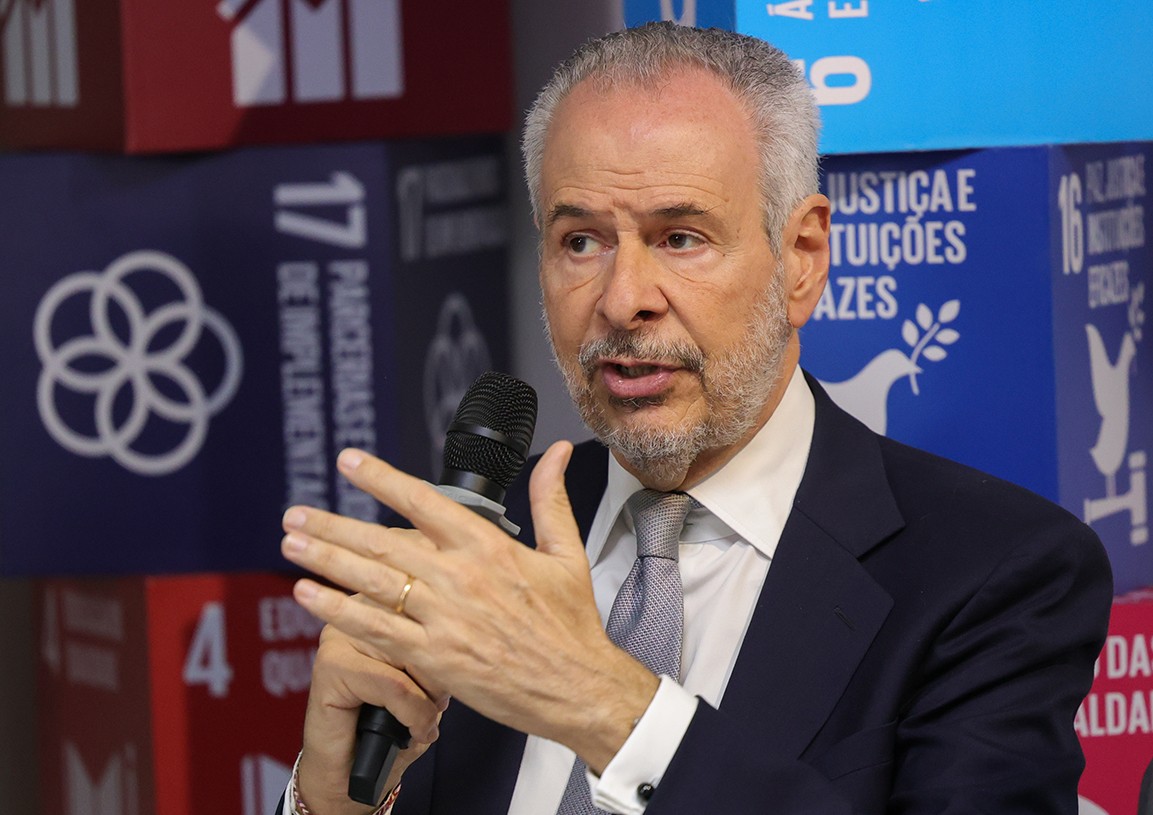
Global trade and the climate crisis are increasingly intertwined, and increasingly fraught with tension. “We need more contemporary thinking about the economy and climate,” says Ambassador André Corrêa do Lago, who chaired the UN climate conference in Belém, COP30. “There are many inconsistencies between these two agendas.”
BNDES expects to mobilize R$39bn for climate investmentsLula urges rich nations to honor climate commitmentsClimate finance could reach $1.3tn by 2035, roadmap says
The diplomat, who is also an economist, spells out the contradictions. Countries such as China, which invests heavily in clean technologies and manages to export climate-friendly products at affordable prices, are penalized with tariffs in the trade arena. “Our economies need to adapt better to what is happening, and so does trade,” he argues. “We need a new logic suited to the new climate.”
“China, for example, gets no credit for selling products that have a very positive impact on the fight against climate change. Several African countries are achieving an energy revolution thanks to Chinese products,” he adds.
In his view, trade analysis must account for the extent to which China is cutting greenhouse gas emissions in other countries. “Statistics show that Chinese exports of solar panels and electric cars result in annual emission reductions equivalent to those of medium-sized countries.”
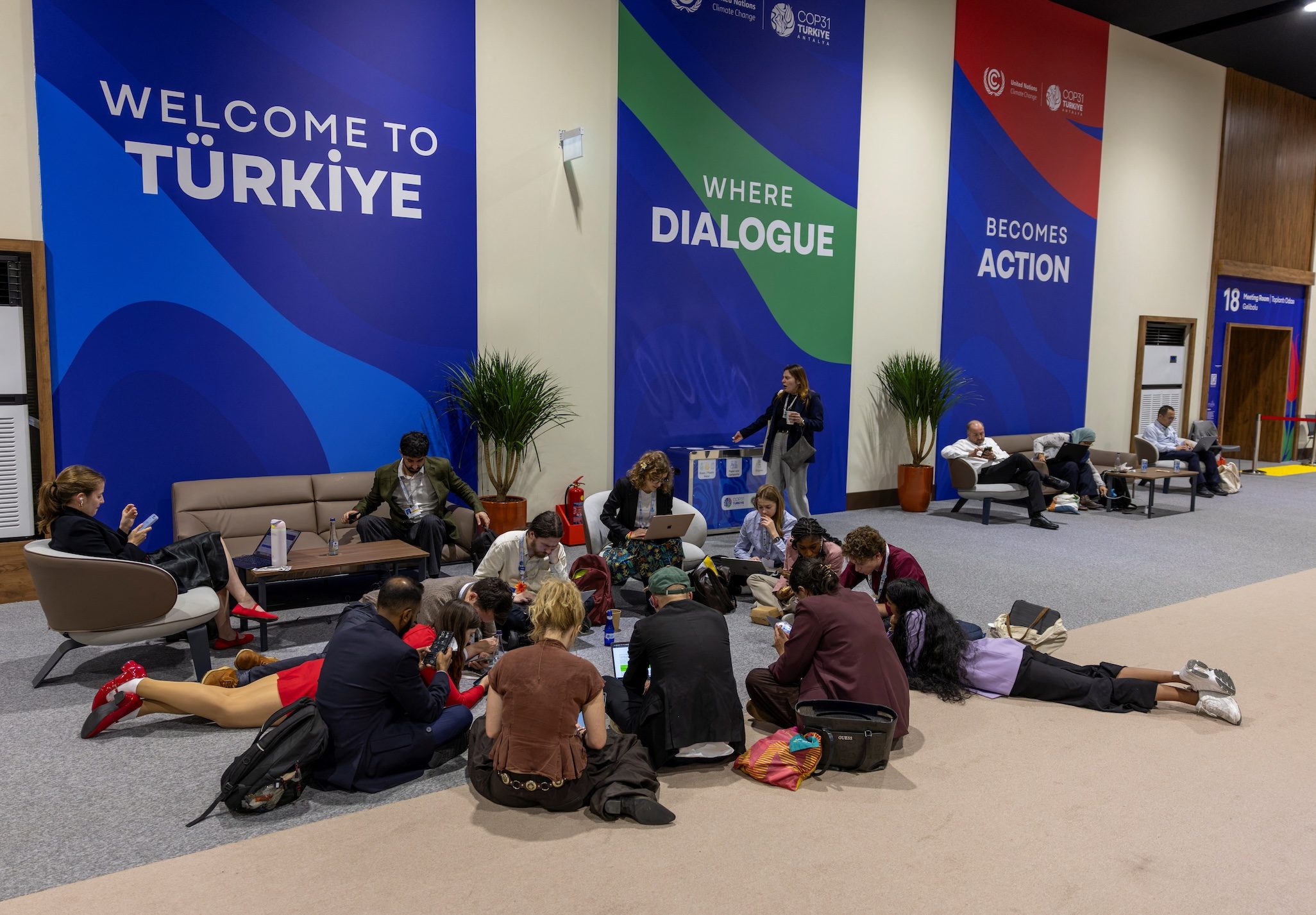
Corrêa do Lago gave this interview to Valor just hours before leaving Antalya, the host city of COP31, and returning to Brazil. Below are the main excerpts:
Valor: The climate and trade agendas are closely intertwined, and they clash. You mentioned inconsistencies. What are they?
André Corrêa do Lago: Well, every country is divided over climate change. People think it’s only in Brazil that the Agriculture Ministry disagrees with the Environment Ministry, which disagrees with the Energy Ministry, which disagrees with the Transport Ministry. It happens everywhere, from Germany to Somalia. Each ministry has to defend its own area. It’s normal for these divisions to exist, and it’s nothing unique to Brazil. But trade is a particularly interesting issue because it’s sensitive in every country. We’ve seen that since the start of the Trump administration, when he upended relations with countries around the world precisely because his first move was to change trade policy.
Valor: What are relations between countries like, particularly with China?
Corrêa do Lago: It’s a simple story. Fifteen or 20 years ago, the United States and Europe began talking at length with China about the importance of changing its energy mix. This was against the backdrop of China’s tremendous growth, 10% to 11% a year, in a country that depended essentially on coal.
Corrêa do Lago: Like everyone else, China doesn’t like having its development path dictated by others. It carried out a very serious internal assessment of how to combine its enormous economic growth with something more sustainable. China ended up developing technologies for cars, solar panels, and wind power infrastructure. By making good use of its scale, as a country of more than 1.3 billion people, it brought the cost of these technologies down dramatically. Those responsible for climate policy in the United States and Europe welcomed that greatly.
Valor: Did China’s progress eventually spark resistance?
Corrêa do Lago: Yes. China built such impressive production capacity that it began manufacturing for export, because thanks to economies of scale its prices are lower than those in the countries where these technologies originated. But when it starts exporting large volumes of cars, solar panels, and wind turbine blades, the issue falls to trade ministries, whose mandate doesn’t include climate concerns. So China has an extraordinary ability to export products that are highly beneficial from a climate perspective, yet those products come to be assessed from a purely trade standpoint—as goods from a country accused of providing subsidies, and so on. China gets no credit for selling products that have a very positive impact on the fight against climate change.
Corrêa do Lago: I asked several economists to help us develop more contemporary thinking about the economy and climate. One of them, Michael Greenstone of the University of Chicago, calls this Chinese phenomenon—its enormous contribution to expanding climate-friendly energy through domestic consumption and exports—“The Chinese Gift to the World.” China is enabling countries such as those in Africa to undergo an energy revolution, thanks to the scale and affordability of its climate-friendly products. The West, instead of viewing China merely as a country “abusing,” in quotation marks, its advantages in producing these goods, should consider how much these products contribute to the fight against climate change.
Corrêa do Lago: In Nigeria, more people have access to electricity through solar panels than through fossil fuels, even though the country is one of the world’s largest oil and gas producers. Thanks to the affordable prices of Chinese electric cars, Ethiopia has banned imports of gasoline- and diesel-powered vehicles since 2025.
Valor: What would a more contemporary global trading system look like?
Corrêa do Lago: Economies better adapted to what is happening. I believe any assessment of the negative aspects of this trade must factor in how much China is reducing greenhouse gas emissions in other countries. Statistics show that Chinese exports of solar panels and electric cars result in annual emission reductions equivalent to those of medium-sized countries.
Valor: Could this be a way out of this distortion?
Corrêa do Lago: We can’t expect China to pursue a revolutionary climate policy and then punish it because that policy has an impact on trade. Somehow, the positive element of China’s policy has to be factored in.
Valor: Do you have examples of countries taking steps toward this new economic rationale?
Corrêa do Lago: Going back to Ethiopia, the country is building a second major hydroelectric plant and will become a major electricity supplier for itself and its neighbors—just as Bhutan is building hydropower plants to export electricity to India. Ethiopia has plenty of renewable electricity, so since 2025 it has imported only electric cars. Why? Because it has no oil. It’s a country of [over] 100 million people that doesn’t manufacture cars and had been importing oil for transportation. But since it has electricity, it will import only electric cars. It’s the first country to ban combustion-engine vehicles. It makes perfect sense, but it’s a new kind of logic. And there’s something else.
Corrêa do Lago: The major solutions are coming from developing countries. Why? Because they have less money. They’re forced to look for cheaper solutions, and they face an urgent need for answers. Pakistan’s solar revolution, for example, is impressive.
Valor: You mentioned another inconsistency related to countries’ vulnerability to extreme weather events.
Corrêa do Lago: Yes. Countries such as Barbados have suffered extreme weather events that cut their GDP by 4% to 5%. Nepal suffered an enormous tragedy that also had a profound impact on its economy. These countries expect greater solidarity from the rest of the world given their circumstances, but at the same time they’re afraid to disclose the threats they face openly. Showing how vulnerable a country has become to climate change makes it less attractive to investors. You can understand an investor’s position: no one wants to invest in a country that is showing it will be among the biggest victims of climate change.
We have to deal with these new factors. We need to consider how climate policies must be integrated with countries’ trade, investment, and management policies. Brazil was very fortunate to have a Finance minister, Fernando Haddad, who advanced this issue during Lula’s third term and created the Ecological Transformation Plan at the Finance Ministry. The idea was to build a policy on the premise that there is a very positive side to this for Brazil, and that we should approach it much more in terms of opportunities than threats.
Valor: Where are these issues discussed? At UN climate conferences or at the World Trade Organization? Does each side pass the matter to the other, leaving everything unresolved?
Corrêa do Lago: The WTO welcomed the idea we proposed, which is included in the COP30 Mutirão Decision: creating a Trade and Climate Forum (Integrated Forum on Climate Change and Trade) that belongs neither to the WTO nor to the UN climate convention. Ambassador Guilherme Patriota, Brazil’s permanent representative to the WTO, strongly believes in this agenda and secured this solution. The Forum held its first meeting in Bonn in June, and there is considerable willingness to open a dialogue on the issue. Climate negotiations had hit obstacles that made dialogue difficult. The Belém COP opened the door to changing that.
Corrêa do Lago: By moving issues toward implementation. At this point, issues are being taken out of the negotiating rules, where everything must be approved by consensus.
Valor: You are passionate about architecture. How can architecture evolve in response to all these changes? How can major cities adapt to the new climate?
Corrêa do Lago: I believe urban planning needs to be renewed in response to climate change, with an approach to urban development that is resilient to it. We need a new kind of architecture and urban planning adapted to the fact that we’ll need far more air conditioning. The International Energy Agency says the increase in energy consumption from greater air conditioning use will be much larger than that driven by artificial intelligence. A new kind of urban planning must emerge from the reality of climate change, because most of the solutions to fight climate change and reach more of the population will have to come from cities. They won’t be national decisions. They’ll be decisions made by cities.
Valor: Do you see a more sophisticated form of climate denial today?
Corrêa do Lago: Climate denial today is focused on abandoning mitigation — giving up on trying to prevent the worst and reduce emissions. It’s happening for economic and political reasons. Unfortunately, climate denial has taken on a new dimension. It’s no longer even about distrust of science. It’s about distrust of the solutions to fight climate change.
* The reporter’s travel costs were covered by the Climate and Society Institute (ICS).