Wanted: A permanent end to gas flaring business - The Guardian Nigeria News
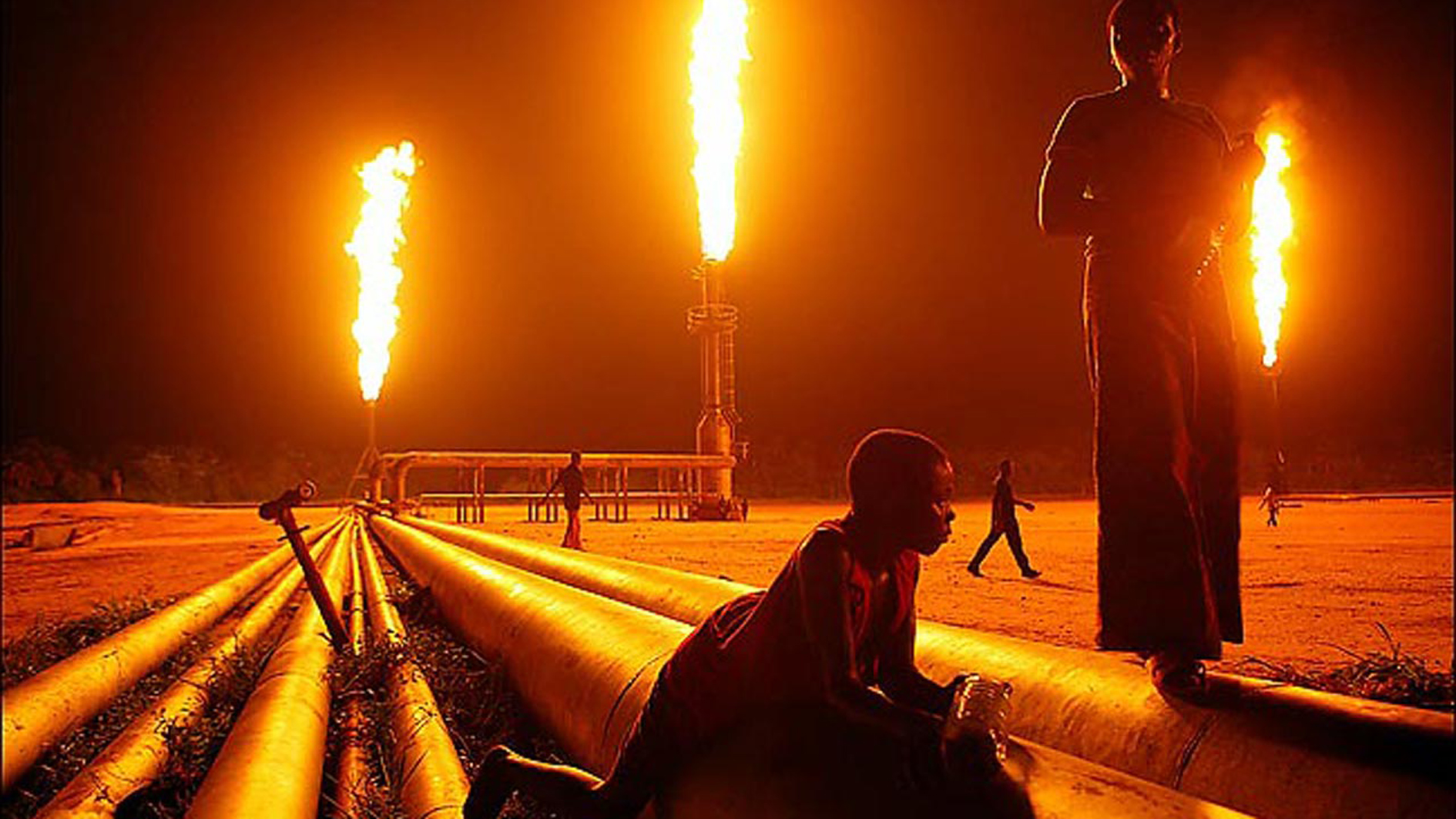
Nigeria’s latest warning to revoke the licences of investors who fail to develop projects under the Nigerian Gas Flare Commercialisation Programme (NGFCP) is well-directed, but it must not become another regulatory warning without measurable consequences, as many previous warnings have.
After decades of promises, deadlines, penalties and programmes, gas flaring remains one of the clearest manifestations of Nigeria’s failure to convert its abundant natural resources into economic value while protecting communities and the environment.
The Nigerian Upstream Petroleum Regulatory Commission (NUPRC) said 43 flare gas sites were initially identified under the commercialisation programme and 27 have so far been awarded for development. It has now warned that investors who fail to demonstrate sufficient progress one year after receiving an award could lose their permits.
The warning is significant because the NGFCP was conceived precisely to move Nigeria beyond the old approach of merely imposing financial penalties on oil producers. The programme seeks to allow technically and commercially competent investors to capture gas that would otherwise be flared and convert it into useful products and services. The Federal Government has also set 2030 as its target for ending routine gas flaring.
But the latest figures suggest that the country is still some distance from that objective. The World Bank’s 2026 Global Gas Flaring Tracker reported that Nigeria’s gas flaring increased by eight per cent in 2025, alongside an eight per cent increase in oil production. It specifically identified inadequate infrastructure for transporting associated gas to markets and ageing gas-processing facilities with high downtime as contributing factors.
This raises a fundamental question: Why has Nigeria been able to collect hundreds of billions of naira in gas-flaring penalties without eliminating the practice? The answer is partly embedded in the design of the system itself. Penalties are supposed to make flaring economically unattractive. But where the infrastructure to gather, process, transport and sell associated gas is inadequate, a producer may still regard a penalty as a cost of doing business rather than an incentive to make a much larger capital investment.
This is why the reported N521.87 billion collected in gas-flaring penalties in 2025 should not be celebrated simply as evidence of regulatory success. It is also evidence of the enormous scale of the continuing problem. If billions of naira are being collected while gas continues to be burned, the government must ask whether the penalty regime is actually changing behaviour or merely monetising non-compliance.
Government therefore cannot escape responsibility. Successive administrations have announced deadlines to end routine flaring, yet those deadlines have repeatedly shifted. The NGFCP was conceived in 2016 and subsequently relaunched in 2022 after years of delays and changes to the regulatory framework. The NUPRC’s own documentation acknowledges that the programme had to be restructured to reflect changing industry and market realities.
That history matters. It is difficult to hold investors entirely responsible for delays in a programme whose policy, regulatory and institutional architecture has itself taken years to stabilise. Government also has a responsibility to create the infrastructure and market conditions that make gas utilisation commercially viable.
Gas cannot simply be captured at the flare point and magically become electricity, LPG, CNG, feedstock or export revenue. It requires gathering systems, processing plants, pipelines, compression, transportation, financing and reliable markets.
The World Bank’s latest assessment is particularly instructive. Globally, it says the technologies needed to end routine flaring are already available; the continuing obstacles include inadequate regulation, insufficient capital, limited market infrastructure and failures by governments and operators to treat flaring reduction as a priority.
Nigeria therefore needs to stop approaching gas flaring primarily as a compliance problem and begin treating it as an infrastructure and industrial-development challenge. There is also a clear responsibility on the oil and gas companies. Operators cannot continue to argue that gas utilisation is difficult while investing heavily in oil production that generates the associated gas in the first place.
Where commercially viable solutions exist, producers should be compelled to install the necessary gathering and utilisation facilities. The NUPRC’s 2023 regulations already require operators to submit flare-elimination and monetisation plans, while its facility guidelines state that there should be no routine flaring during operations.
The argument, therefore, is not that companies should be punished regardless of circumstances. It is that legitimate technical or economic difficulties should be transparently identified, subjected to independent verification, and addressed within defined timelines, rather than allowed to become permanent excuses.
The government should also examine the economics of marginal and remote fields. Some flare sites may not support standalone commercial projects because the gas volume is small or the distance to markets is considerable. In such cases, shared infrastructure for gathering and processing, pooled investment, and targeted financing may be more effective than simply threatening revocation.
The NGFCP should consequently be redesigned around measurable milestones. Every awarded flare site should have a public development timetable covering financing, engineering, construction, gas capture and commercial production. Investors that fail without demonstrable justification should lose their awards.
But government agencies should also be held accountable where delays are caused by limitations in approvals, infrastructure, market access or regulatory uncertainty.
There is a further reason for urgency: the communities living around these oil fields have paid the price for decades. Gas flaring releases carbon dioxide, methane and other pollutants, while exposing oil-producing communities to persistent environmental and health burdens. The World Bank notes that gas flaring contributes to climate change and releases pollutants including unburnt methane and black carbon.
Nigeria cannot continue to speak of gas as the foundation of its industrialisation while allowing enormous quantities of the resource to be lost to flare stacks. With proven gas reserves now exceeding 215 trillion cubic feet, according to the NUPRC, the contradiction is difficult to justify.
The responsibility is shared, but not equally. Oil producers are responsible for complying with the law and investing in appropriate flare-elimination measures. Investors awarded flare sites are responsible for delivering the projects for which they received permits.
But government bears the greater institutional responsibility because it writes the rules, grants the licences, collects the penalties, designs the commercialisation programmes and controls much of the infrastructure and policy environment on which gas utilisation depends.
The way forward is therefore neither another deadline nor another threat. Nigeria needs a binding national flare-elimination roadmap with annual targets, transparent site-by-site reporting, strict enforcement, infrastructure investment and incentives for viable gas utilisation projects.
Penalties collected from flaring should also be transparently accounted for, with a clearly defined portion potentially directed towards gas-capture infrastructure, environmental remediation and affected communities, subject to the applicable legal framework.
Above all, the government must stop measuring success by how much it collects from flaring and start measuring success by how much gas is no longer flared. A country with severe electricity shortages, expensive energy, widespread reliance on generators and a vast gas resource cannot afford to continue burning away a valuable commodity. Nigeria has endured the consequences of wasted gas for too long. The time has come to make the gas work for Nigerians.