Rick Salutin: As a child I was told it was the ‘worst state’ in the union — that’s no longer true - Toronto Star
Why was Mississippi so severely repressive? Because those with most potential to endure and resist must be constantly beaten back.
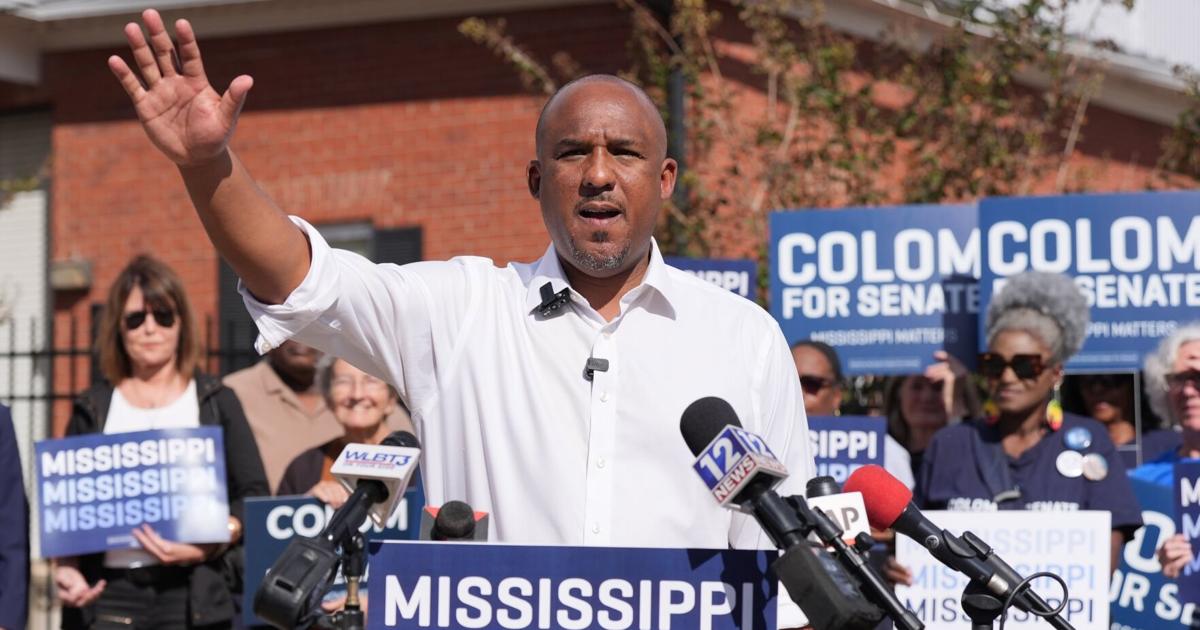
District Attorney and U.S. Senate candidate for Mississippi Scott Colom speaks on Nov. 4, in Jackson, Mississippi, a race Colom eventually won.
Rick Salutin is a freelance contributing columnist for the Star. He is based in Toronto. Reach him via email: salutinrick@gmail.com.
I’ll start with an apology to Americans.
I was fooled. I’d admired their resistance to U.S. President Donald Trump but assumed it comprised only a brave minority.
We know there’s always been internal dissent to U.S. racism, its imperial bearing, its self-congratulatory B.S. (“greatest country in the history of the world”). But I felt the resistance came from its most deprived sectors, who gave the world the most attractive U.S. stuff: jazz, rock, rap … But look, to win elections, in such stacked, moneyed circumstances, you need majorities, or at least pluralities.
And they pulled it out of the air in terribly unlikely places, like Mississippi, which elected prosecutor Scott Colom, its first black senator since the progressive Reconstruction phase after their civil war.
When I was 12, in the 1950s, I heard a guest speaker from the U.S. at Holy Blossom Temple in Toronto say Mississippi is the worst state in the union. Their own artists concurred. Nina Simone wrote “Mississippi Goddamn.” Phil Ochs sang, “Here’s to the land you’ve torn out the heart of, Mississippi find yourself another country to be part of.” I recalled those anathemas on the night Colom’s victory was finally declared.
Why was Mississippi so severely repressive, as in the lynching of Emmett Till, age 14, in 1955, or the murders of three young voting rights workers, two white and one black, in 1964, or Ronald Reagan’s major 1980 campaign rally, a piercing dog whistle held near the town where those three corpses were dug up? Because those with most potential to endure and resist must be constantly beaten back.
Elections viewed with a judicious skepticism can give you a feeling of partial total redemption and help you carry on toward future disasters.