
Mashatile explains how R25bn World Bank loan will support key economic reforms - IOL
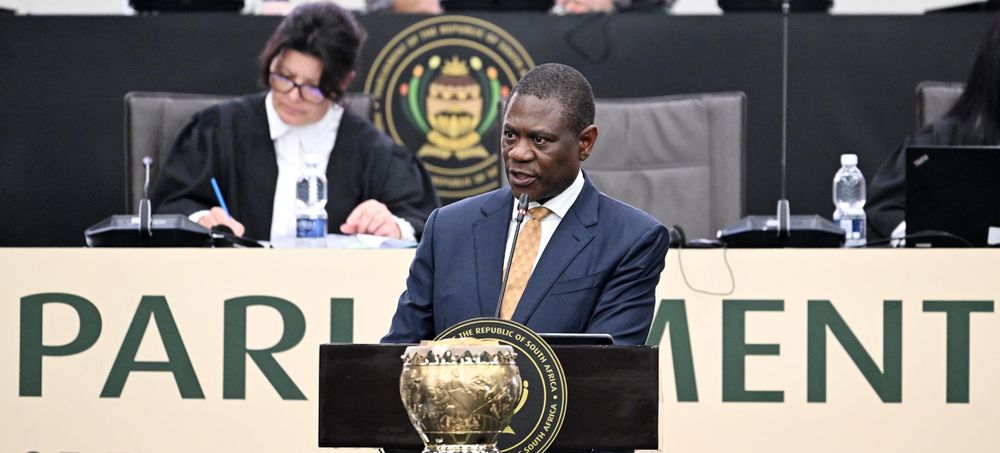
Deputy President Paul Mashatile has clarified that government's R25bn World Bank loan will support structural reforms in water, electricity and freight transport rather than fund specific infrastructure projects.
Deputy President Paul Mashatile says the government's R25 billion World Bank loan will support structural reforms in electricity, freight transport, water and sanitation rather than being allocated to individual infrastructure projects.
Mashatile said the US$1.5 billion loan, equivalent to about R25bn, would provide general budget support linked to agreed policy and institutional reforms, with National Treasury, the Presidency and the World Bank responsible for monitoring implementation and ensuring accountability.
This follows concerns about how the funding would address South Africa's water and sanitation challenges and how government would prevent the money from being mismanaged.
ANC MP Dr Nobuhle Nkabane asked which specific areas would benefit from the investment to address water and sanitation problems and what measures would strengthen accountability over the expenditure.
Mashatile explained that the loan was structured around three pillars: electricity, freight transport, and water and sanitation.
Under the water and sanitation pillar, the reforms are intended to strengthen regulatory oversight and accountability in water services, create opportunities for performance-based licences for private water service providers and give the newly established National Water Resources Infrastructure Agency greater financial autonomy to invest in bulk water infrastructure.
He stressed that the loan was not earmarked for specific infrastructure projects, but was intended to support the broader reform programme.
ANC MP Cameron Dugmore, who raised the first supplementary question on Nkabane's behalf, wanted to know how government would strengthen co-ordination between the three spheres of government, build municipal capacity and ensure that infrastructure reforms translated into lasting improvements.
Mashatile said government was working on measures to address weaknesses across the water supply value chain, including ageing infrastructure.
He said the funding would support the reform agenda and the modernisation of infrastructure, with government using existing agencies to address the challenges affecting water supply.
DA MP Stephen Moore challenged government over the management of existing infrastructure funding, arguing that municipalities were failing to spend money effectively and maintain infrastructure.
He cited water leaks in Gauteng and questioned whether water and sanitation infrastructure grants should be made conditional on maintenance requirements, clear targets and public identification of municipalities failing to meet their obligations.
Moore called for a tougher approach to consequence management, arguing that municipalities should face financial consequences when they failed to maintain infrastructure.
Mashatile said he agreed that accountability was necessary and pointed to his appointment by President Cyril Ramaphosa to lead the national water task team.
He said his responsibilities included following up on service delivery failures and ensuring that money transferred to municipalities was used for its intended purposes.
“It's not just about the loan that we have taken, but all resources that are going to municipalities have to be used responsibly. There must be accountability and we will take action where people are not complying and they are not ensuring that resources are used to serve the people,” he said.
He added that government would intervene where necessary and ensure there were consequences for those who failed to use public resources properly.
IFP MP Nhlanhla Hadebe questioned how the public could be assured that the loan would not increase the country's debt burden without addressing the institutional weaknesses, poor project management and lack of consequence management that had contributed to infrastructure failures.
He also wanted to know who would be held accountable if the funds were mismanaged or the promised improvements were not delivered.
Mashatile assured MPs that the money would be used for the purposes agreed with the World Bank.
“These resources will be ring-fenced for the purposes of which they have been agreed upon with those who have loaned us their resources,” he said.
He said National Treasury and the Presidency would put measures in place to ensure that the funding was properly managed and used to support the agreed reforms.
UDM MP Nqabayomzi Kwankwa raised concerns about Parliament's limited direct oversight powers over loans from international financial institutions.
He questioned why legislation had not been introduced to give Parliament the power to scrutinise and approve such loans, particularly given the potential implications of their conditions for public policy and national sovereignty.
Mashatile said he was open to legislation that would give Parliament a greater oversight role over international loans.
“I don't have a problem if we do require specific legislation to deal with resources that come into the account as loans, where Parliament can also have an oversight role,” he said.
He added that Parliament should monitor how the funds were used, particularly where allocations were made to municipalities through the agreed fiscal framework.
Dugmore also questioned how the newly elected municipal councils would contribute to improving water services.
He asked whether Mashatile was confident that the new local government leadership would help deliver improvements similar to those achieved in the electricity sector.
Mashatile agreed that municipalities had a critical role to play in addressing water challenges, but said national government would continue supporting them rather than taking over their responsibilities.
He said Treasury and Cogta had been tasked with developing measures to strengthen accountability at local government level.
The Department of Water and Sanitation was also continuing to support municipalities, with national government intervening where necessary.
Mashatile said implementation across the three reform pillars would be monitored jointly by Operation Vulindlela and the Government Structural Reform Co-ordination Unit in the Presidency.
The monitoring framework would be expanded to include indicators for the water and sanitation sector.
National Treasury would oversee the overall monitoring of the loan facility and report to Parliament on government expenditure and the achievement of fiscal targets.
The World Bank, working with Treasury, would also monitor progress against the agreed structural reform objectives.
The loan was signed in July as part of government's efforts to address infrastructure constraints affecting economic growth and job creation. It is the fourth development policy loan between South Africa and the World Bank since 2022, and the first in the series to extend support to water and sanitation alongside electricity and freight transport reforms.


