Branded in China, rooted in culture: The new face of premium - CGTN
By continuing to browse our site you agree to our use of cookies, revised Privacy Policy and Terms of Use. You can change your cookie settings through your browser.
Chinese brands are increasingly establishing themselves on the global stage. /VCG
Earlier this summer, a new kind of Chinese reality TV show gained wide traction on social media. Partners Season 2 followed mega-influencer Li Jiaqi (Austin Li), six celebrity partners, and 14 Chinese beauty, wellness and tech brands as they battled to open a pop-up, known as YanLab, in the heart of London for eight days.
The show is capitalizing on a substantial shift from the idea of 'Made in China' to 'Branded in China.' Long gone are the days when the global markets associated Chinese goods with budget e-commerce. Credible, high quality Chinese consumer brands have established a foothold on the global stage.
From alternative media campaigns and a renewed interest in storytelling to high-profile collaborations with established fashion figures, this year has seen Chinese brands confidently lean in to their cultural specificity. These brands are no longer proving they can sell abroad; they are proving they can enter the premium category, either by exporting a specific cultural story or by building within the European fashion establishment.
Pane boutiques attract customers from all over the world, and their stores are as minimalist as their sneakers. /VCG
Pane is a new Shanghai sneaker label that has found rapid success combining the designs of German Army trainers, ballet flats, and Chinese martial arts slippers. Its branding is built around Olympian imagery, and the name echoes both the high-quality panels of leather that adorn their products and the Greek God of shepherds, Pan.
This year, Shanghai store managers announced that foreign shoppers make up around 35% of revenue. The shoes became a regular hit on TikTok over the past two years, buoyed by the popularity of unboxing videos which showcased the attention to detail in the shoebox itself. The brand tied itself to the rising tide of racquet sports in China, and their tennis ball model references David Foster Wallace, the American author who wrote extensively on the sport.
Songmont, a more established Chinese luxury handbag label founded by an ex-Google UX designer in 2013, has also made waves this year. The first batch of bags were handmade in Shanxi by the founder's mother and a group of women in their 60s, pairing contemporary taste and function with traditional Chinese craft. 'Song' is the Chinese word for pine; 'Mont' is French for mountain. Natural imagery guides its exploration of traditional Chinese culture, poetry, and aesthetics.
The brand opened a pop-up in Bangkok last summer and their third annual exhibition in Paris this October. This winter it plans to open a store in Hong Kong. Its stores invest heavily in interior design, and each is inspired by a different Chinese idiom, poem, or koan. LVMH CEO Bernard Arnault has been seen purchasing their products.
In addition, the brand has pioneered an unexpected kind of media content for consumer brands – the long-form podcast. On Shan Xia Sheng ('Sound Under the Mountain'), an in-house journalist conducts interviews on themes of independence, creativity, and womanhood. Previous guests include tennis star Li Na, filmmaker Jia Zhangke, and actress Rosamund Pike. The format builds a community connected not just through consumption or fashion but by shared cultural taste.
Songmont's Taiyuan location, in the brand's home province of Shanxi, is named 'Wind on the Plateau Ridge.'/VCG
If the previous two brands focused on generating foreign demand through sophisticated, uniquely Chinese in-person shopping experiences, others have put down roots in the heart of European fashion.
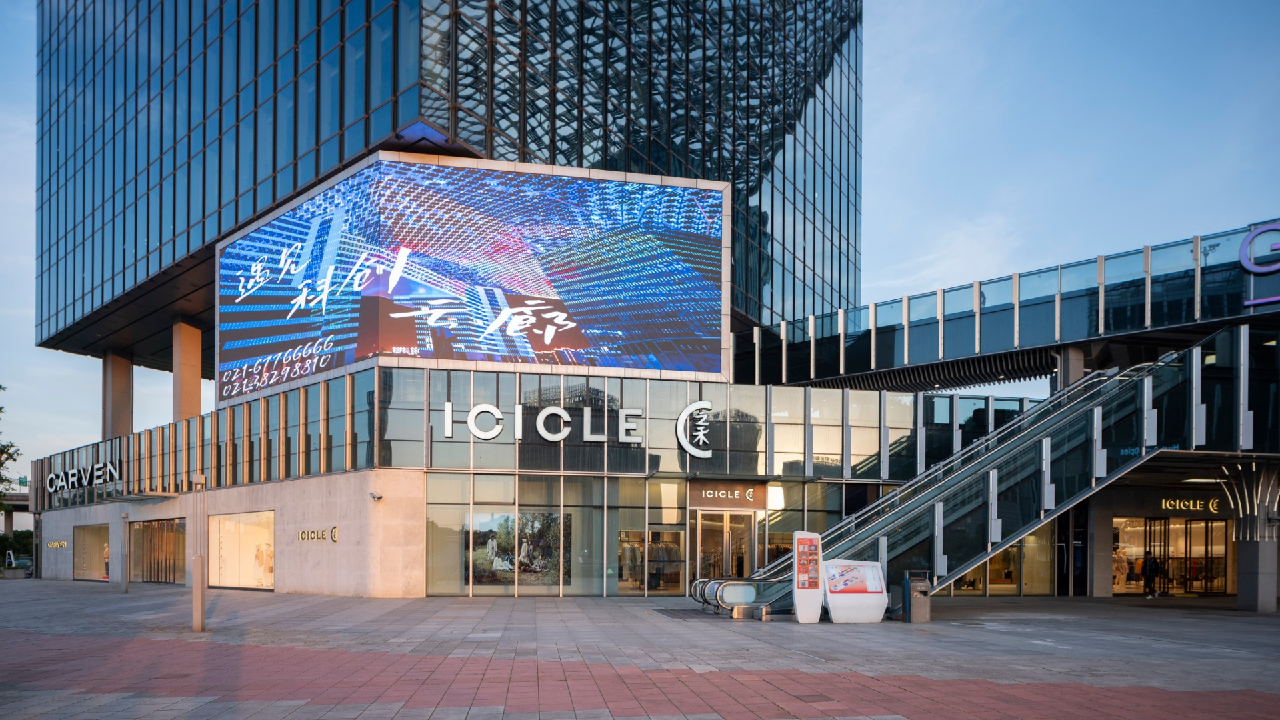
Icicle is a minimalist clothing brand that took a different path; as early as 2012, it opened an office in Paris. In 2013, it added a design studio, in 2018 it acquired distressed French fashion house Carven, and since 2019 it has opened four different brick-and-mortar stores in the French capital. In April of this year, Gucci-parent company Kering acquired a minority stake in the brand's parent company, and in September, Sabato De Sarno, previously creative director at Gucci, was given the same role at Icicle.
It follows other high-profile appointments of Western creative directors at Chinese-owned labels, such as Kim Jones, who collaborated with Bosideng on their sub-brand Areal.
Icicle is also vertically integrated, designing, sourcing, and manufacturing 80% of their garments in-house. Their fabrics come from Afghanistan, Belgium, Inner Mongolia, Italy, and Japan, and they are assembled in high-standard factories in the Yangtze Delta area. "In the past, Chinese companies often exported products. Today they are building global organizations," said Veronique Yang, a senior partner at Boston Consulting Group in Shanghai.
Finally, YanLab proved that the pop-up concept was not just good TV. It expanded China's claim on the high-end beauty sector, proving again that the country can shed the budget e-commerce label. It was sold to TV audiences as market research, with customer feedback from London serving both as content and guidance for the next stage of Chinese brands' overseas expansion.
Icicle demonstrates China's ability to offer haute couture to a new kind of cosmopolitan consumer. /VCG
These are not only marketing success stories. They speak to a broader cultural current where Chinese aesthetics, media strategies, and storytelling methods are increasingly embraced by both consumers and foreign tastemakers.
Guo Xiaoling, a professor of marketing at the Business School of the University of International Business and Economics in Beijing, has argued that China has been moving from manufacturing excellence to a more premium mode of branding: "Over the past two decades, China has made significant progress in the transition from Chinese products to Chinese brands."
2026 has been a watershed year for this transition, and while Chinese brands have made considerable progress in their standing, there is still space for further transformation in 2027. Songmont's regional expansion in Hong Kong and Icicle's first De Sarno collection will be important to watch. However, if this year has shown anything, it's that the most interesting shifts will come from brands that experiment with digital storytelling and in-person retail, showing foreign consumers a culture they can step into rather than simply a product they can buy.